CLEAN ENDINGS AND DIGNITY
Summary
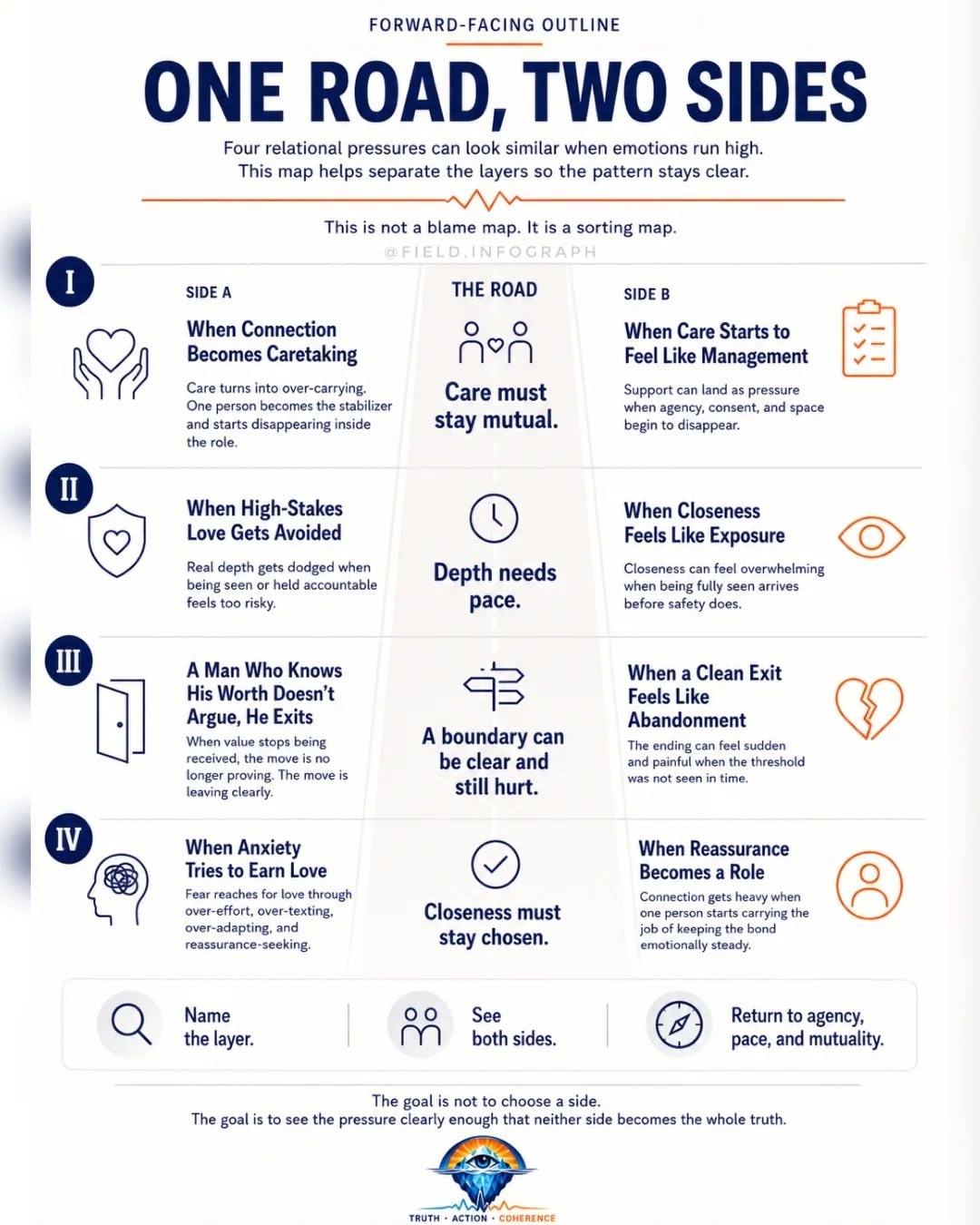
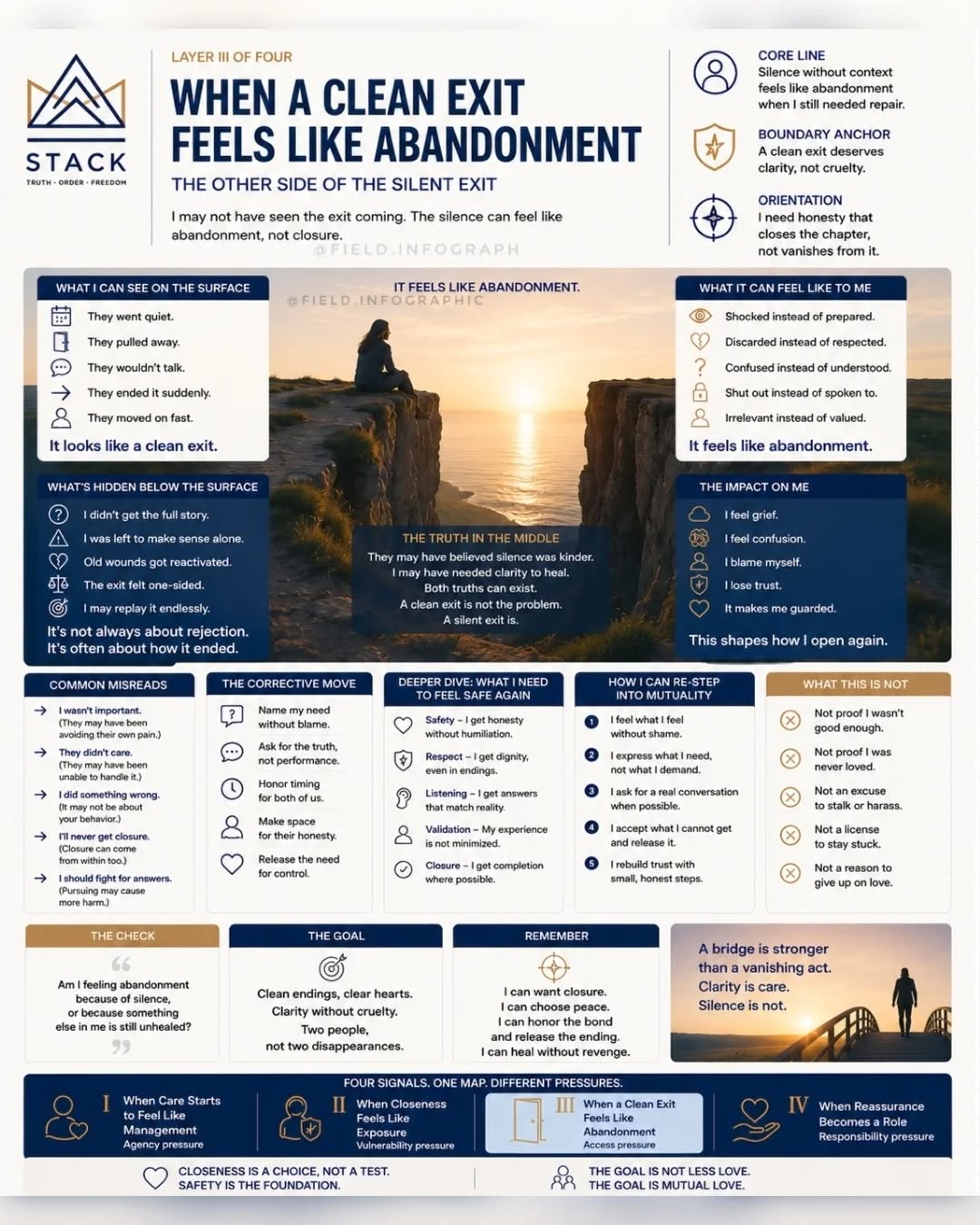
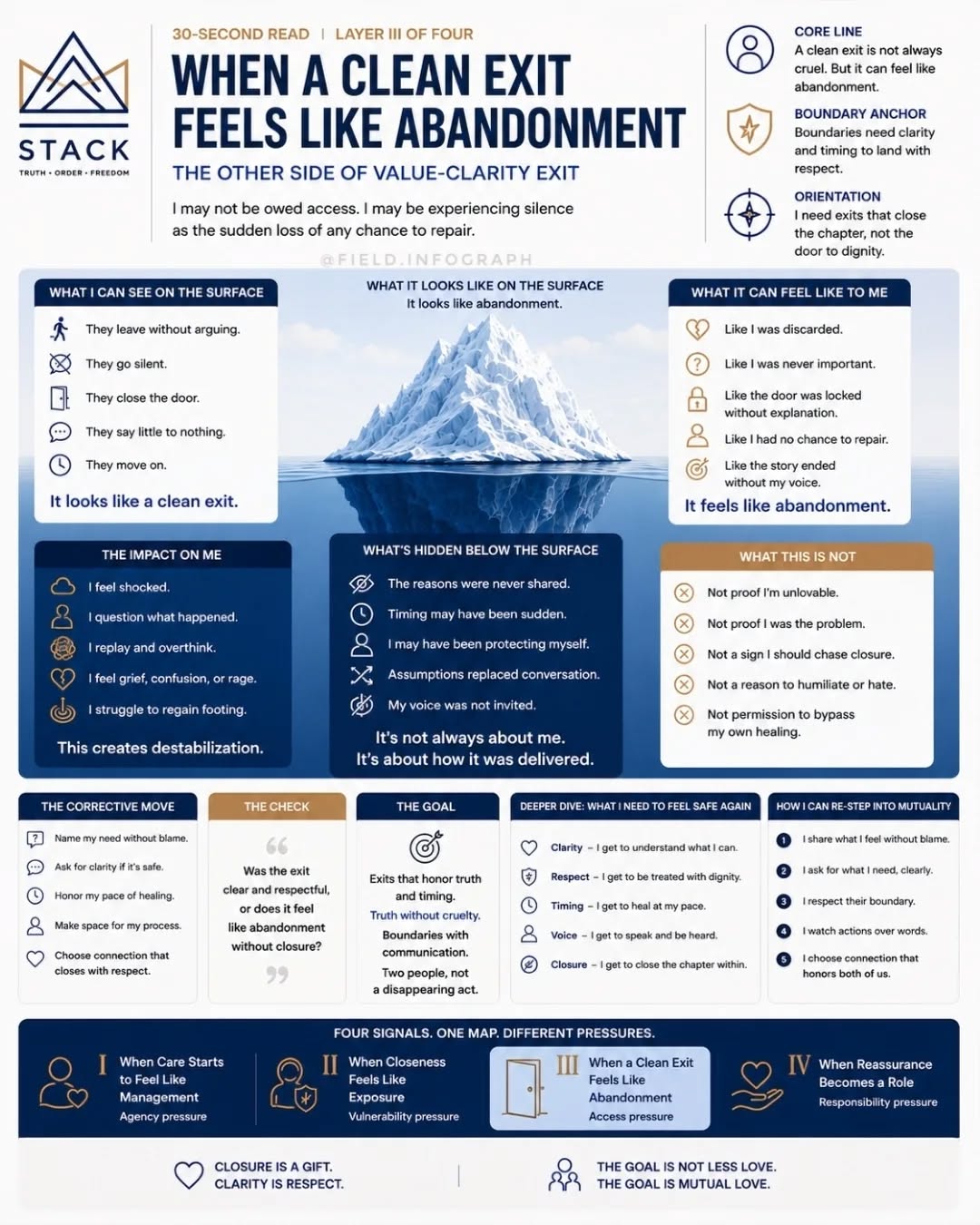
A reflection on the form of an ending as part of its ethical weight. It treats direct communication, appropriate explanation, boundaries, and follow-through as ways to reduce avoidable confusion while preserving dignity on both sides.
What it maps
Ending, acknowledgement, explanation, boundary setting, follow-through, silence, blame, disappearance, and the difference between necessary separation and careless exit. It also attends to the boundaries that determine whether ending or acknowledgement carries authority.
Why it matters
An ending cannot remove grief, but it can avoid adding needless uncertainty or humiliation. Clean exits help people orient to reality, protect agency, and begin repair without chasing an absent answer. It creates a clearer route for questioning how ending and acknowledgement are being carried.
This is an editorial interpretation of the ordered visual work. Display priority is a navigational choice, not an objective quality grade or proof claim.