FA-2026-070Primary
AI, POWER & THE BETTER OPERATING SETTLEMENT
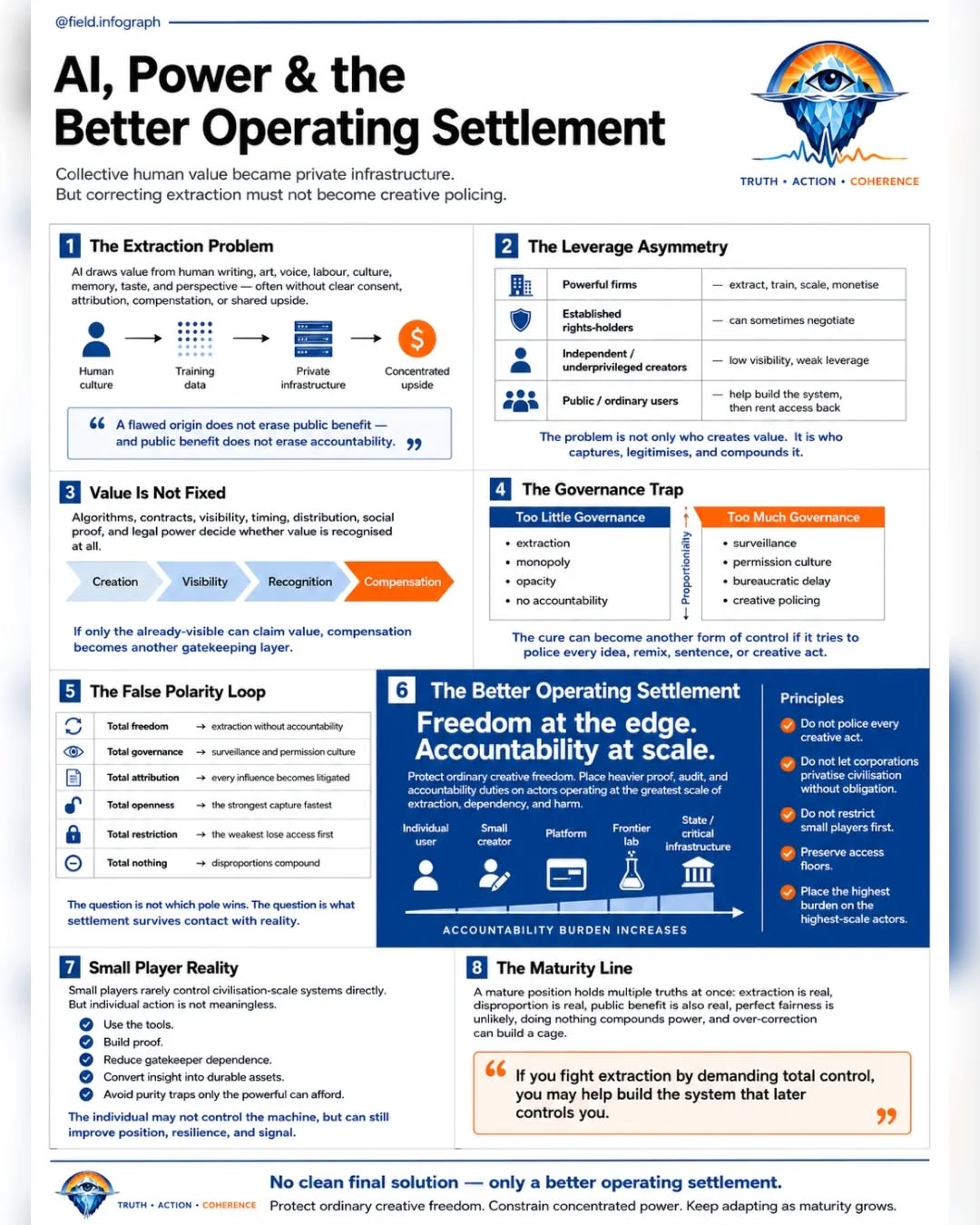
A one-page political economy map of AI extraction, leverage asymmetry, false choice, dependency, and the conditions of a fairer operating settlement.
Goldlevel portfolio / curated visual field
A living index of visual essays, systems maps, and ordered sequences. Six core fields provide the public entrance. Within each field, the clearest and most representative works appear first while stable IDs, routes, and frame order remain unchanged.
Field 01 · 16 works
Capability, dependency, power, context, responsibility, exit, and the conditions that keep consequential authority human.
Primary works lead this field; supporting works follow in curated reading order.
A one-page political economy map of AI extraction, leverage asymmetry, false choice, dependency, and the conditions of a fairer operating settlement.
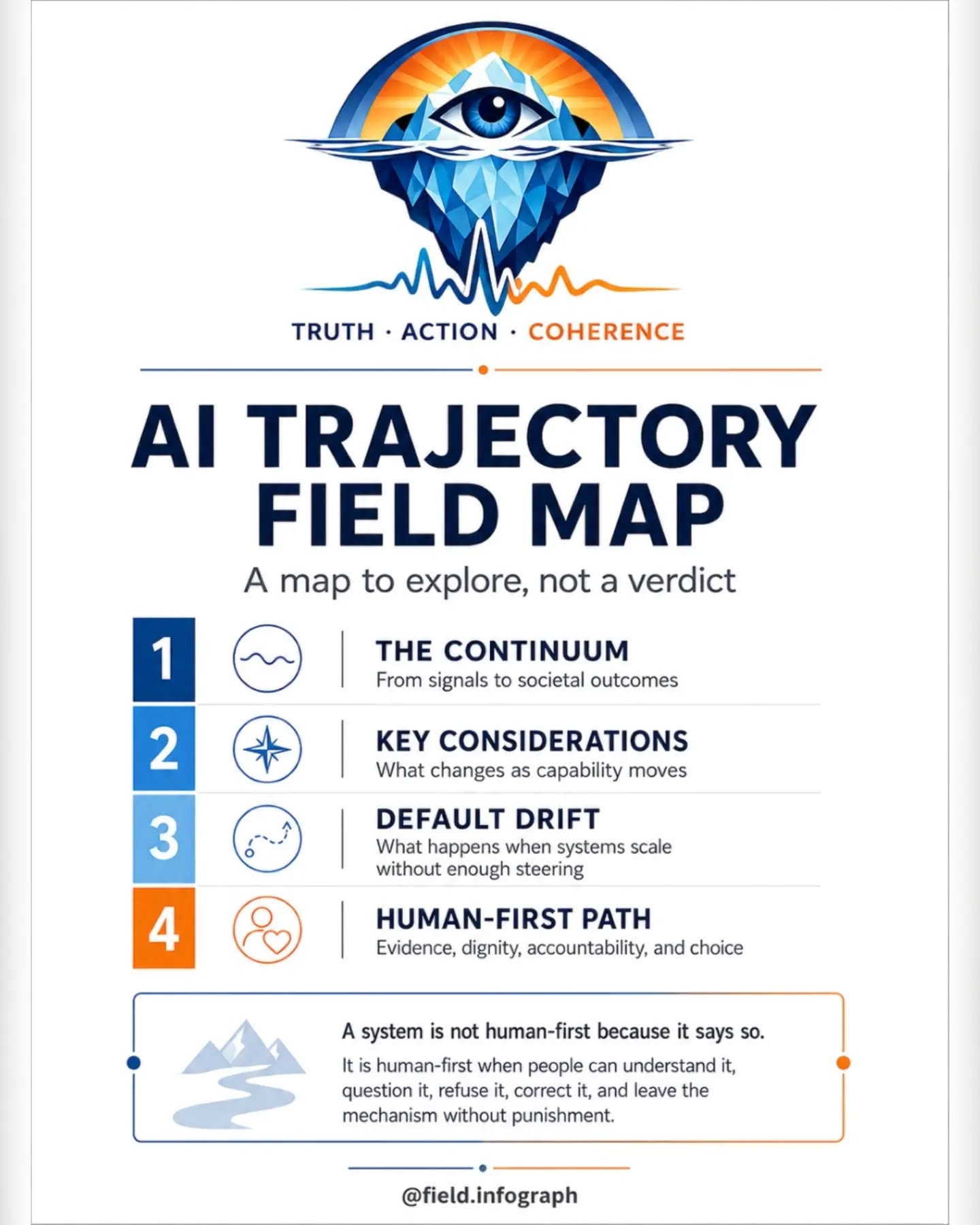
A six-frame mechanism test defining human-first systems through understanding, refusal, correction, exit, and freedom from hidden punishment. It links understanding and question through technical systems, human authority, and public consequence.
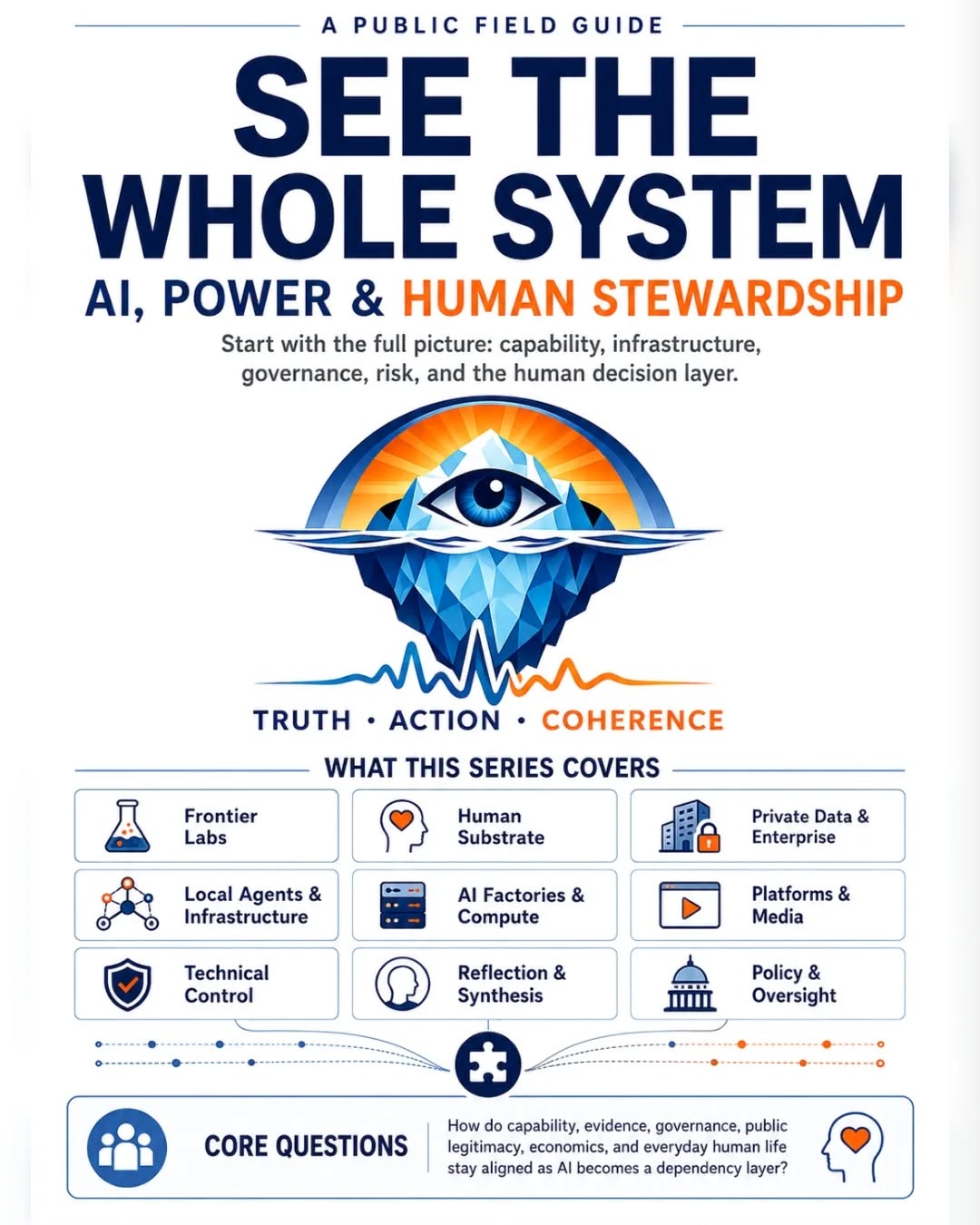
An eight-frame whole-system map of AI becoming infrastructure across policy, labour, finance, security, trust, and everyday life. It keeps infrastructure and dependency visible across technical systems, human authority, and public consequence.
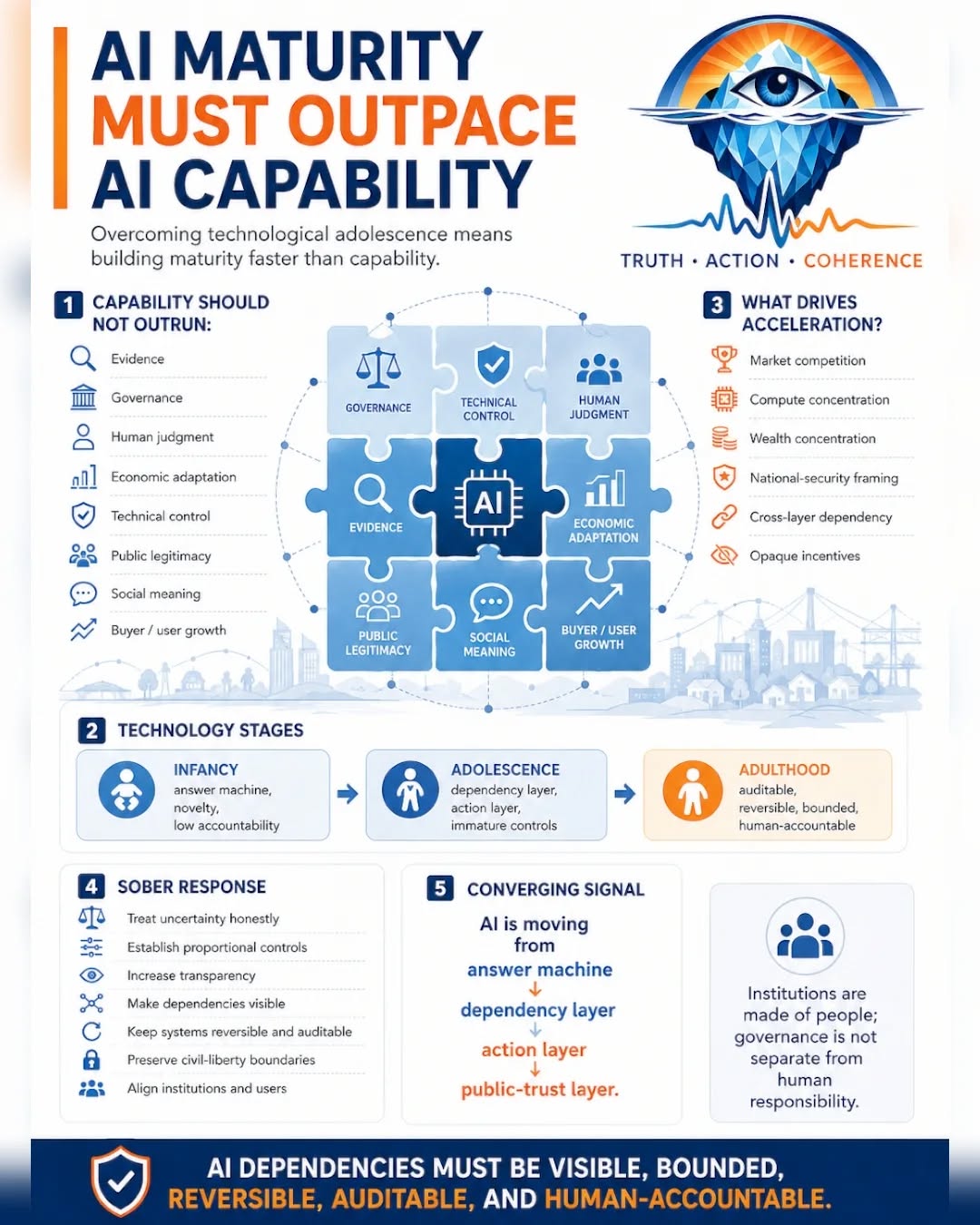
A one-page AI governance map requiring evidence, control, public legitimacy, social readiness, and human accountability to grow faster than capability.
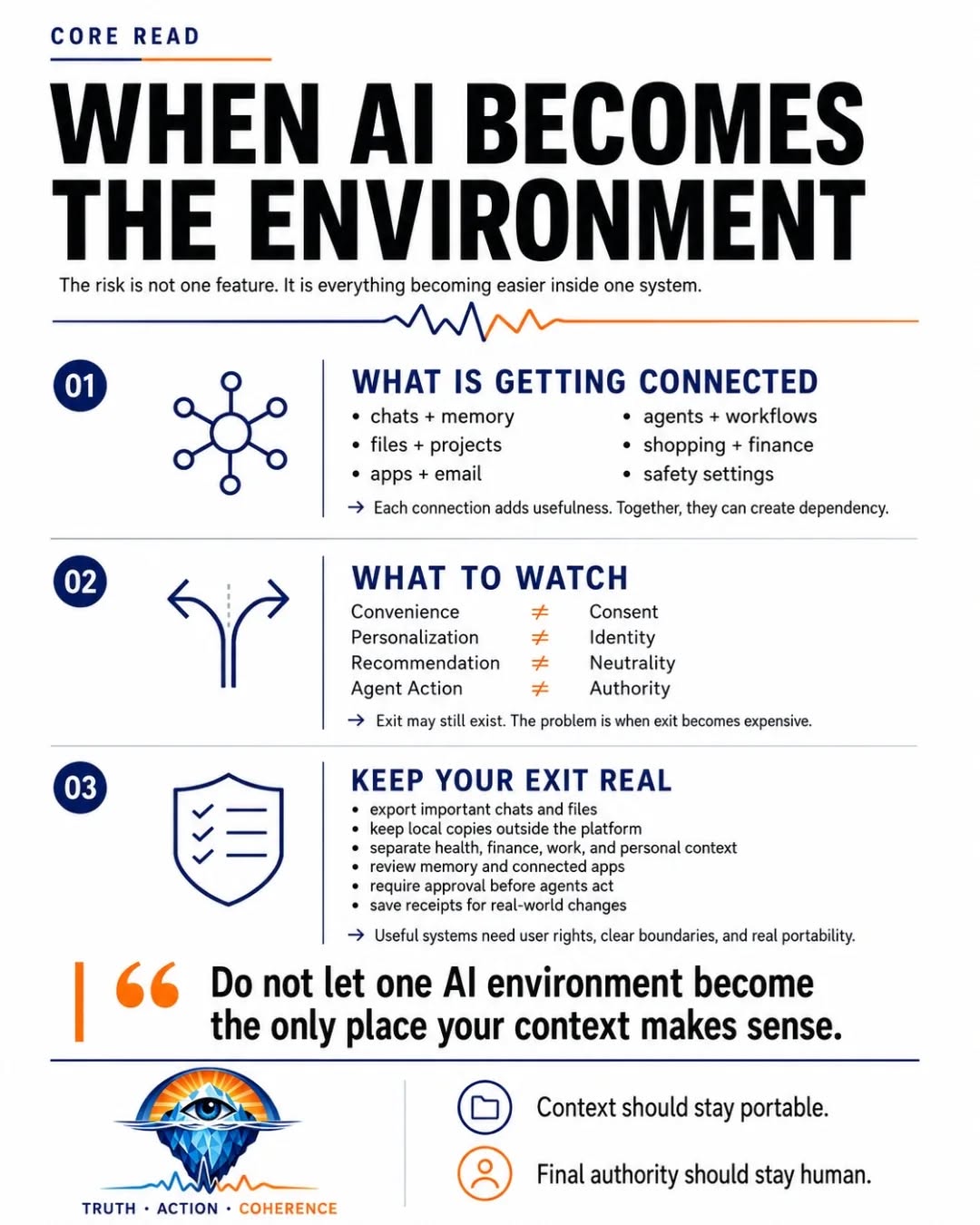
A practical AI boundary: use the tool, retain portable context and real exits, and keep consequential judgement with people.
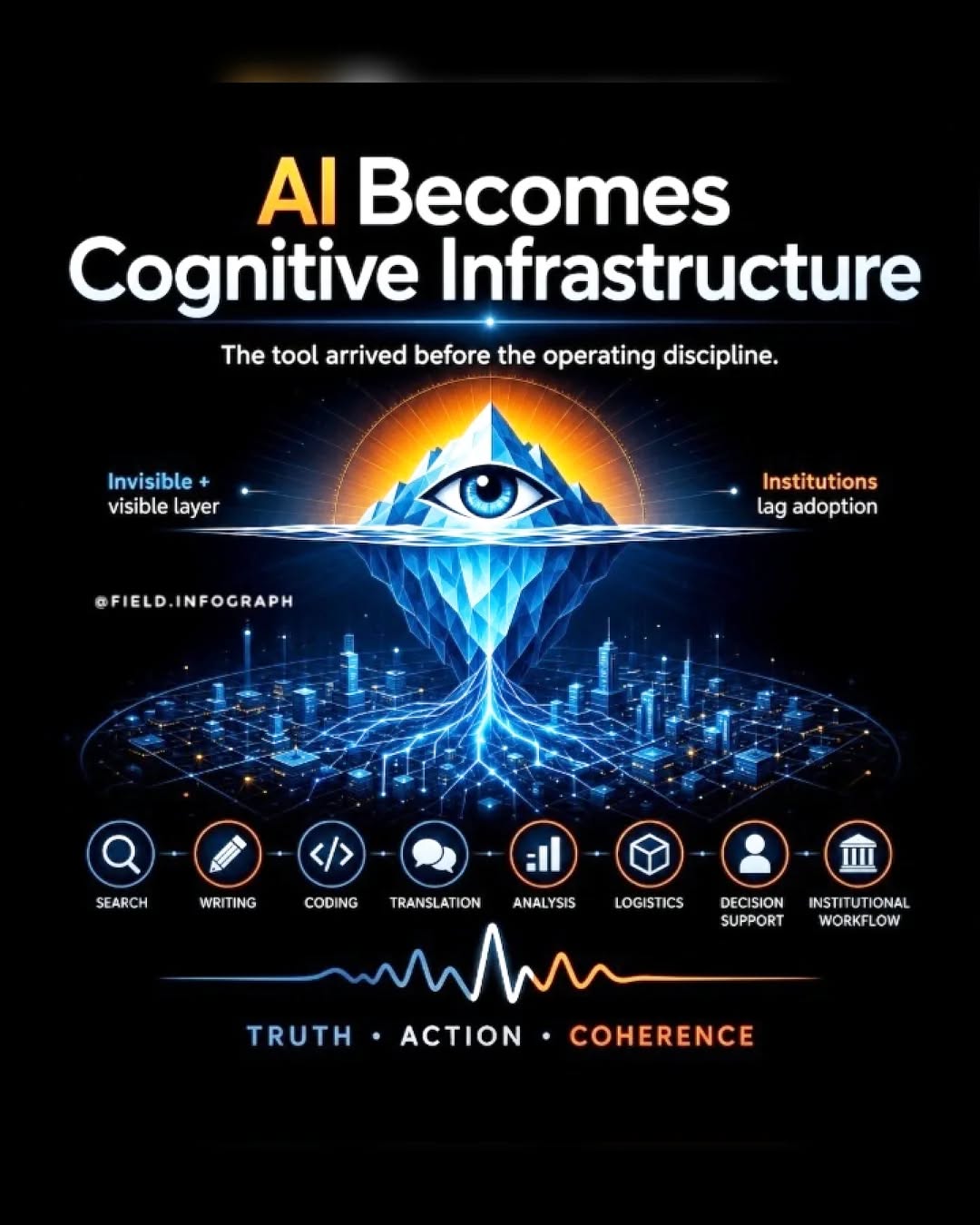
A human-centred AI map holding bodies, relationships, limits, consequences, and time as the ground beneath technological extension. It links technological extension and embodiment through technical systems, human authority, and public consequence.
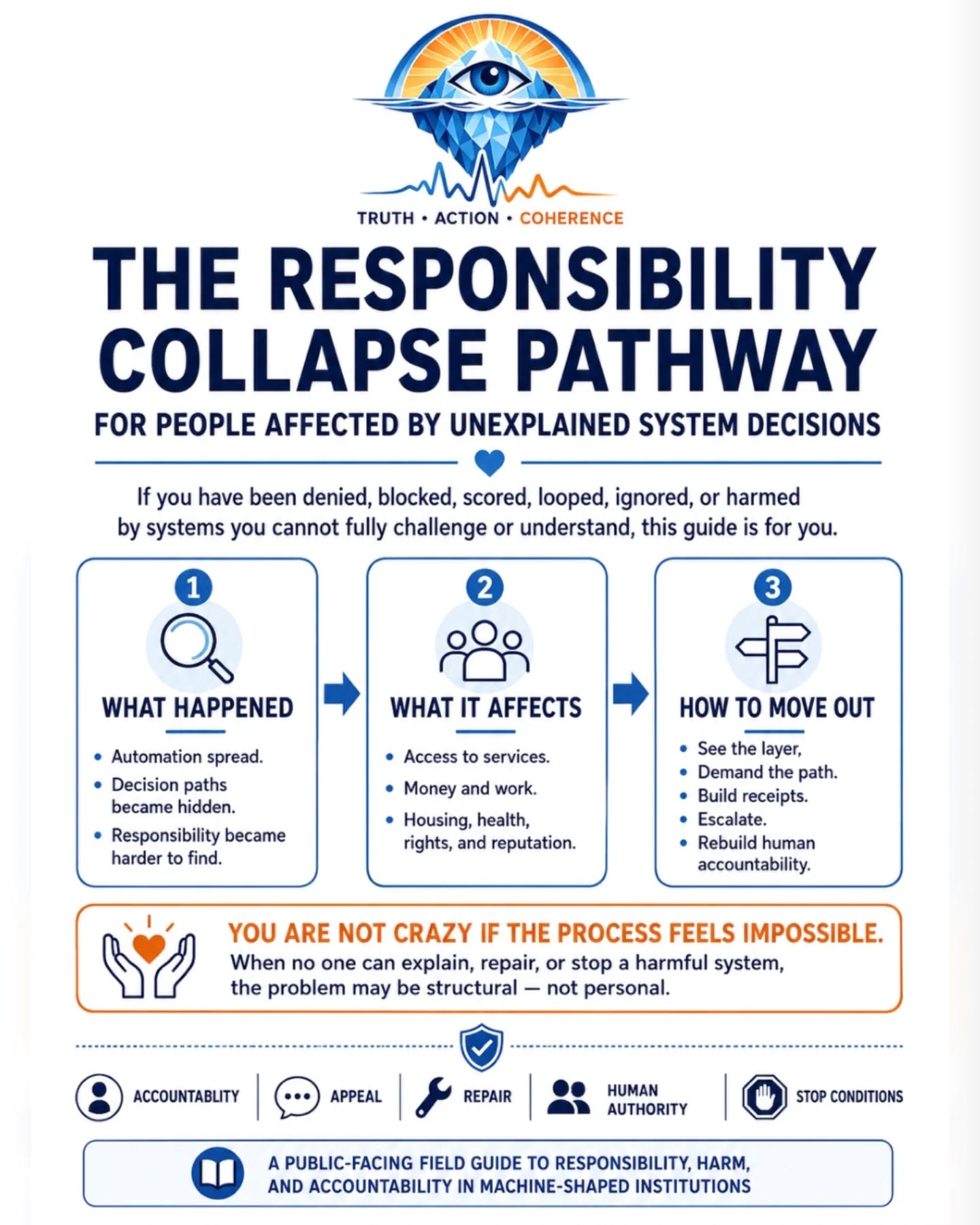
A four-frame governance map showing how scaled systems can affect people while explanation, repair, appeal, and responsibility disappear across institutions.

A four-frame security map placing bodily regulation, clear speech, trust, timing, and judgement inside the cybersecurity field. It keeps technology and human pressure visible across technical systems, human authority, and public consequence.
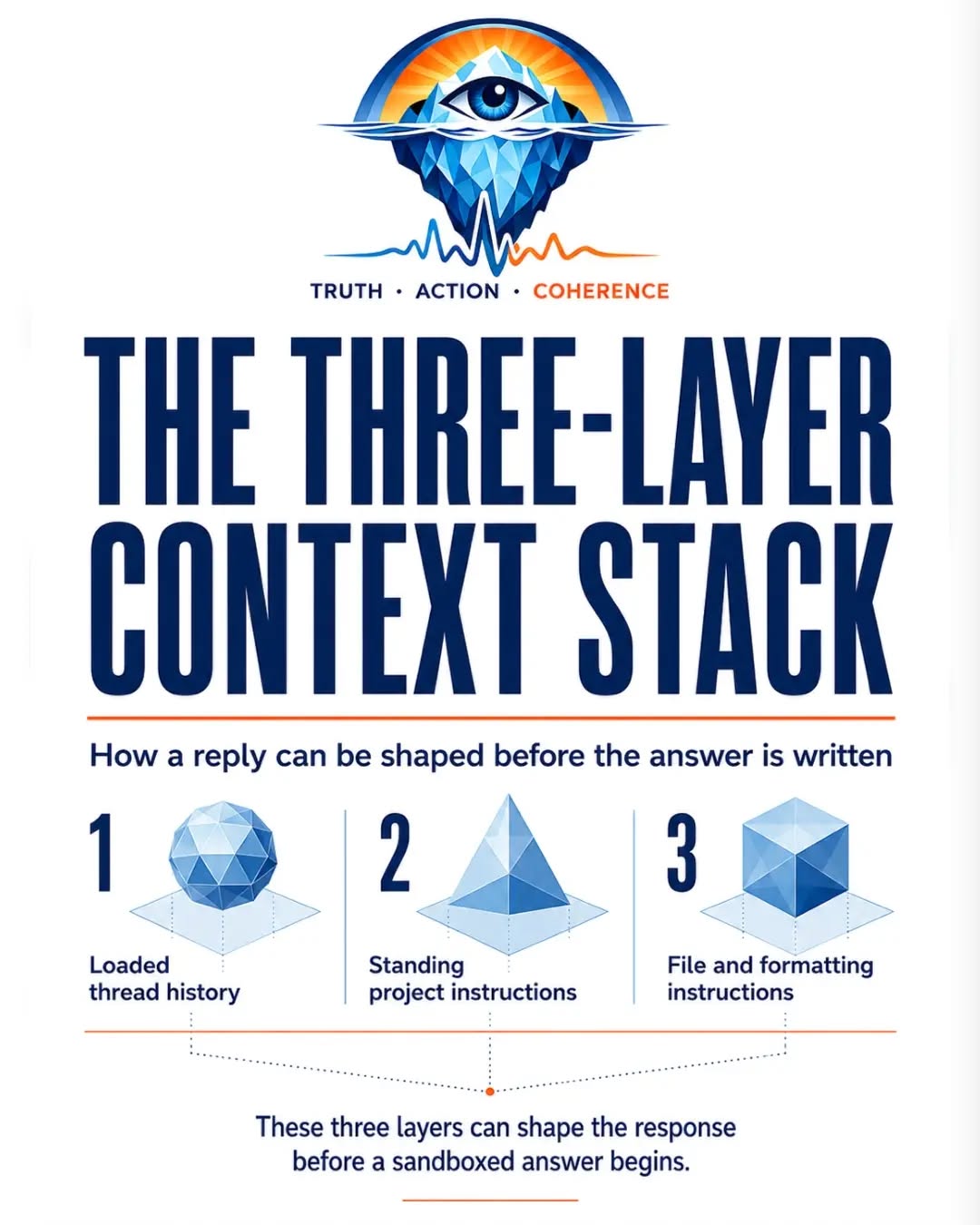
A three-frame privacy map warning that personal, professional, and unrelated contexts can cross boundaries inside connected AI workflows.
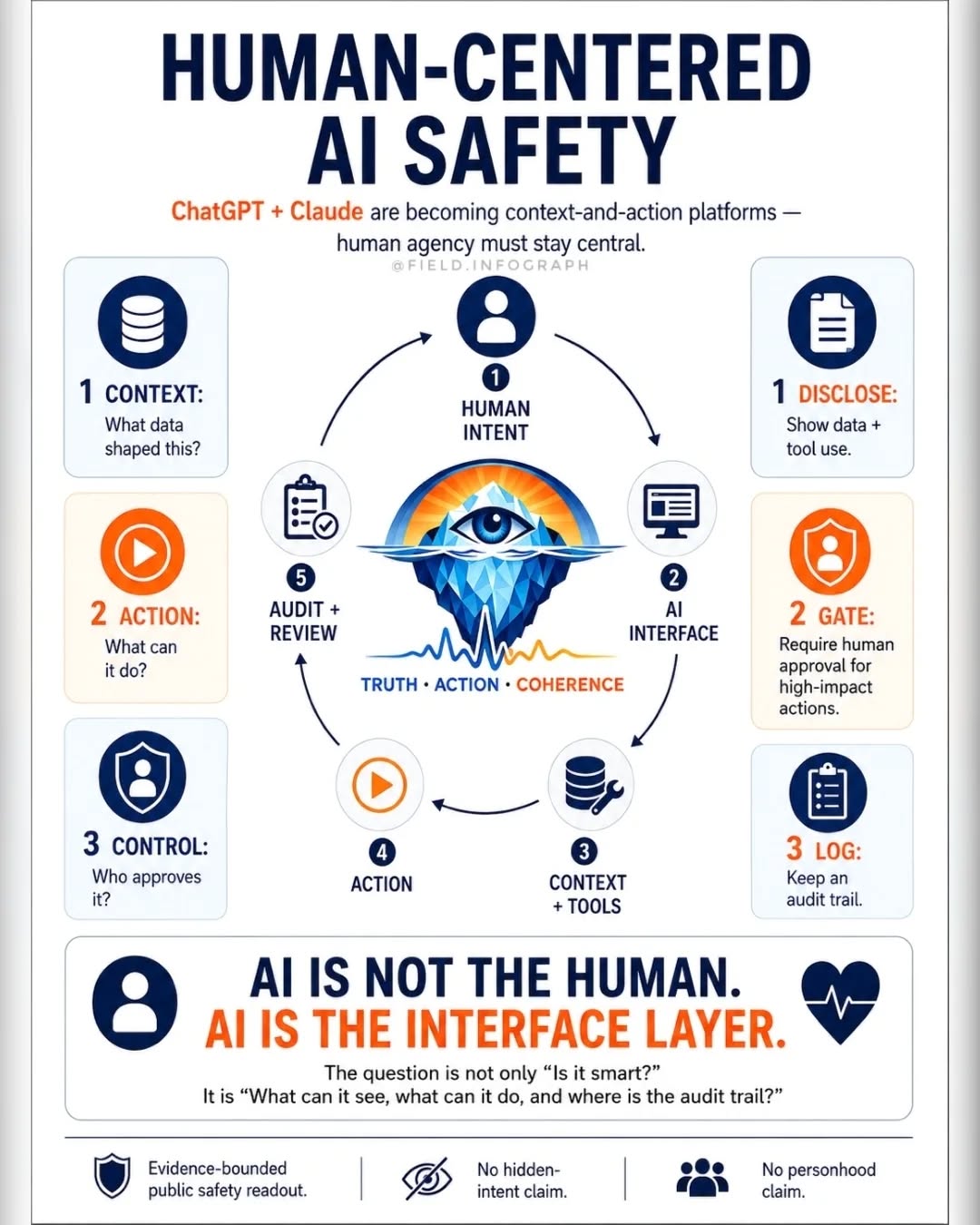
A three-frame safety map for disclosing context use, gating high-impact actions, and retaining meaningful human control over AI-assisted decisions.
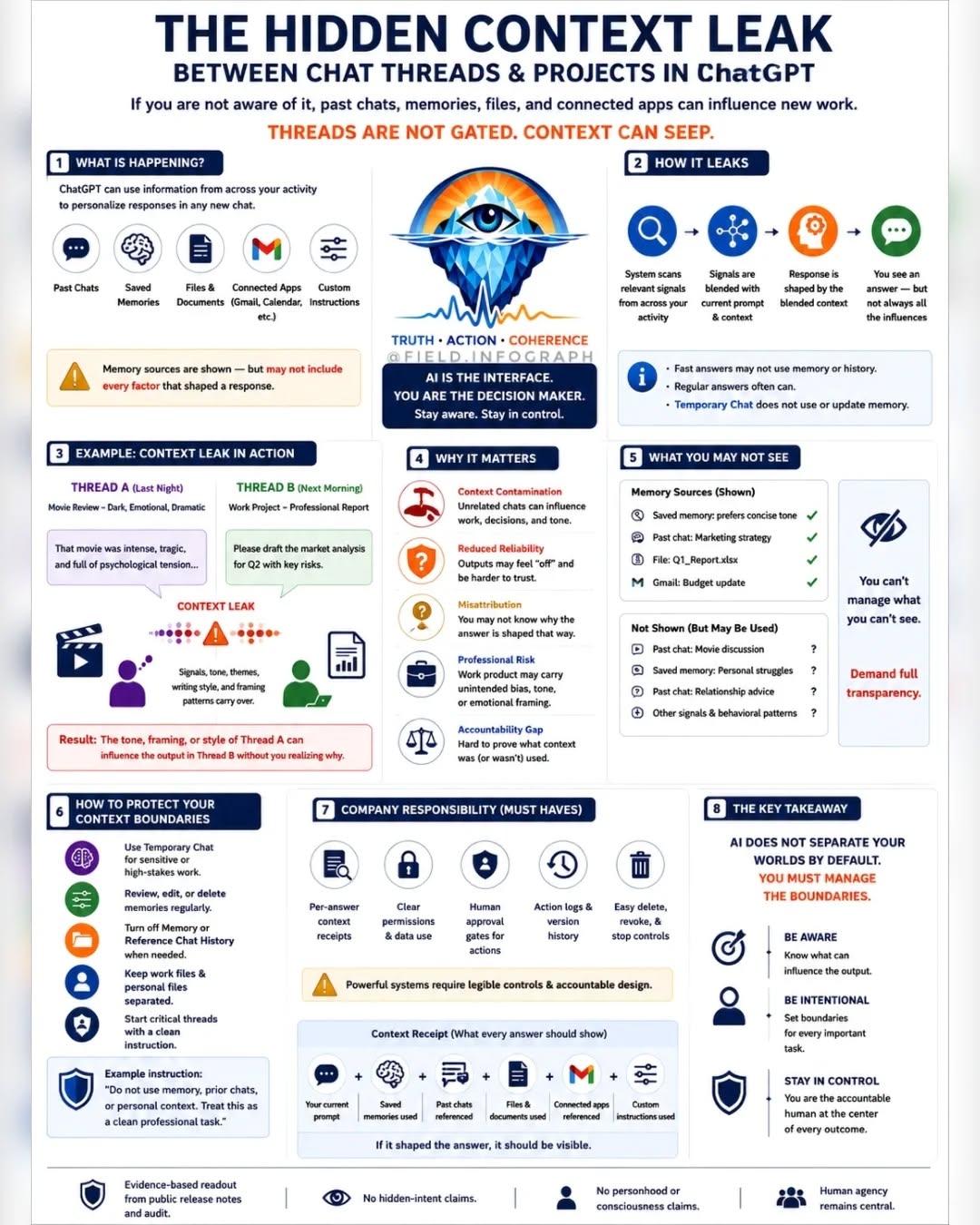
A one-page control map for showing what context an AI used, excluded, retained, and kept separate from sensitive work.

A multi-frame AI boundary map distinguishing fluent behaviour from care, personhood, experience, legitimacy, trust, and accountable human judgement.
A three-frame source-based map of dependency architecture, knowledge continuity, systemic exit, and long-horizon community resilience. It connects dependency with the practical demands of technical systems, human authority, and public consequence.
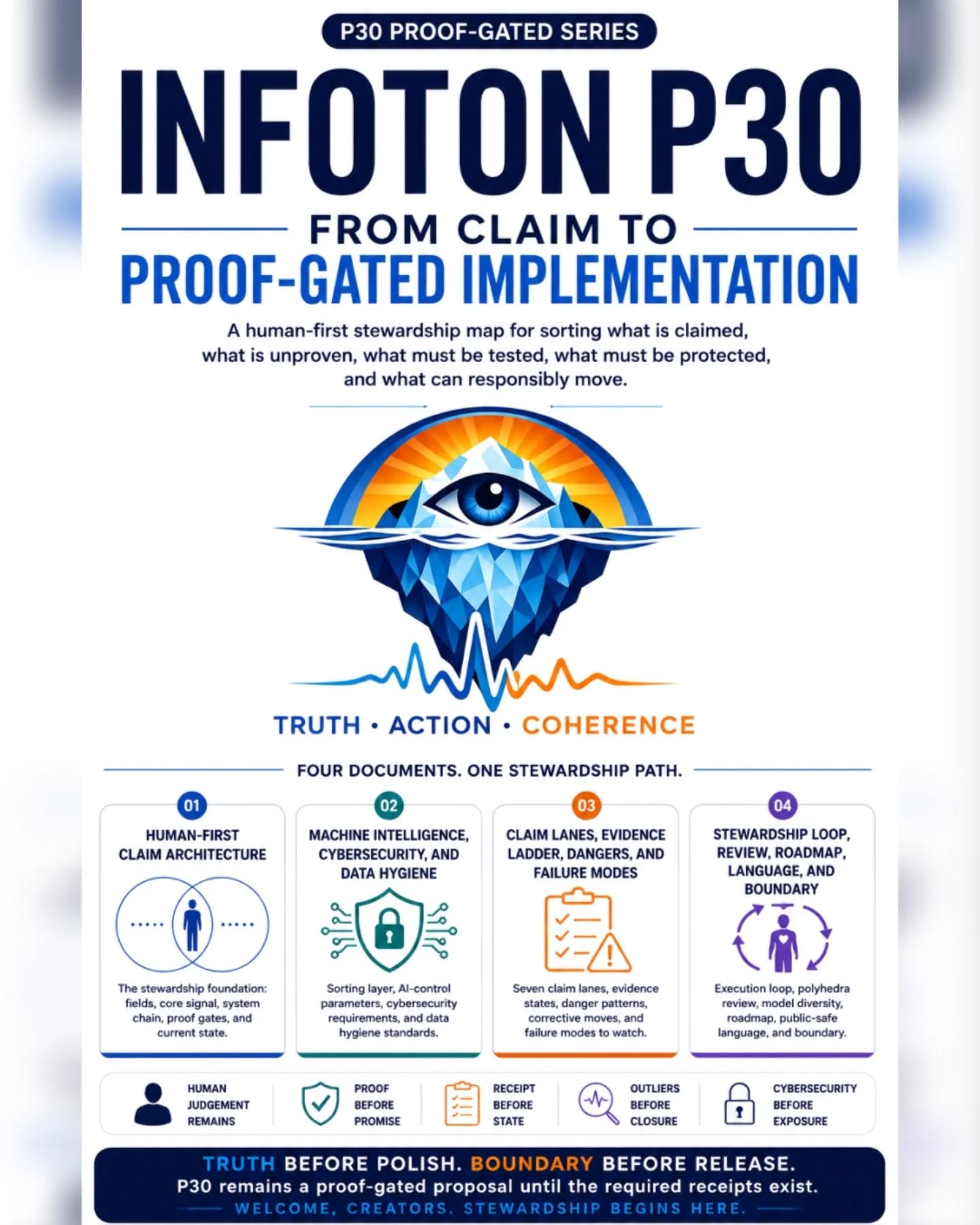
A seven-frame independent review separating a proposed P30 system’s claims, unknowns, safeguards, tests, and proof requirements before adoption.
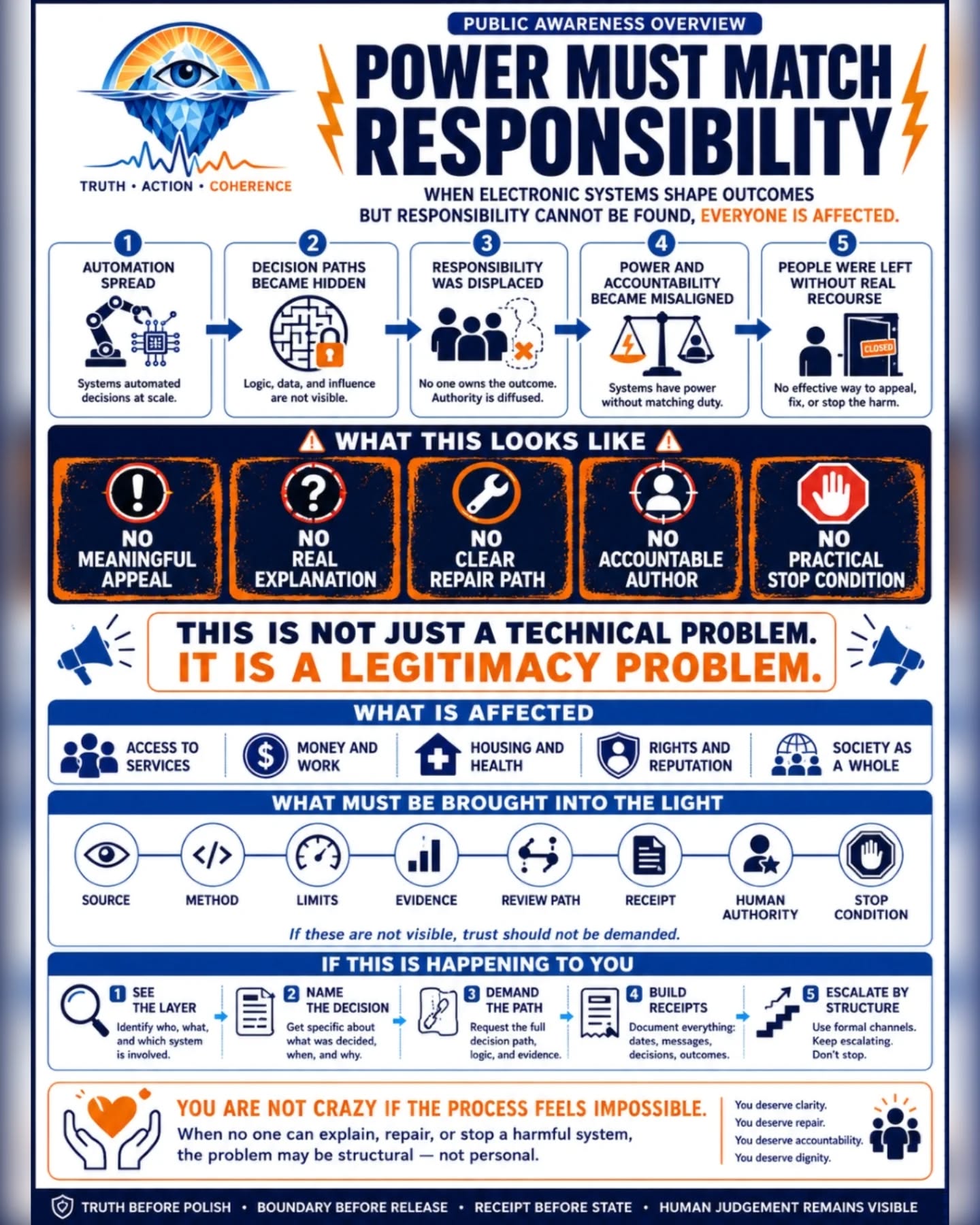
A one-page accountability map requiring visible custody, explanation, repair, override, and stop conditions wherever electronic systems shape public outcomes.

A visual choice map contrasting two developmental paths and asking which one better protects humanity and future generations.
Field 02 · 15 works
Source fidelity, discernment, pressure, sovereignty, personal verification, and the disciplined right use of information and creation.
Primary works lead this field; supporting works follow in curated reading order.
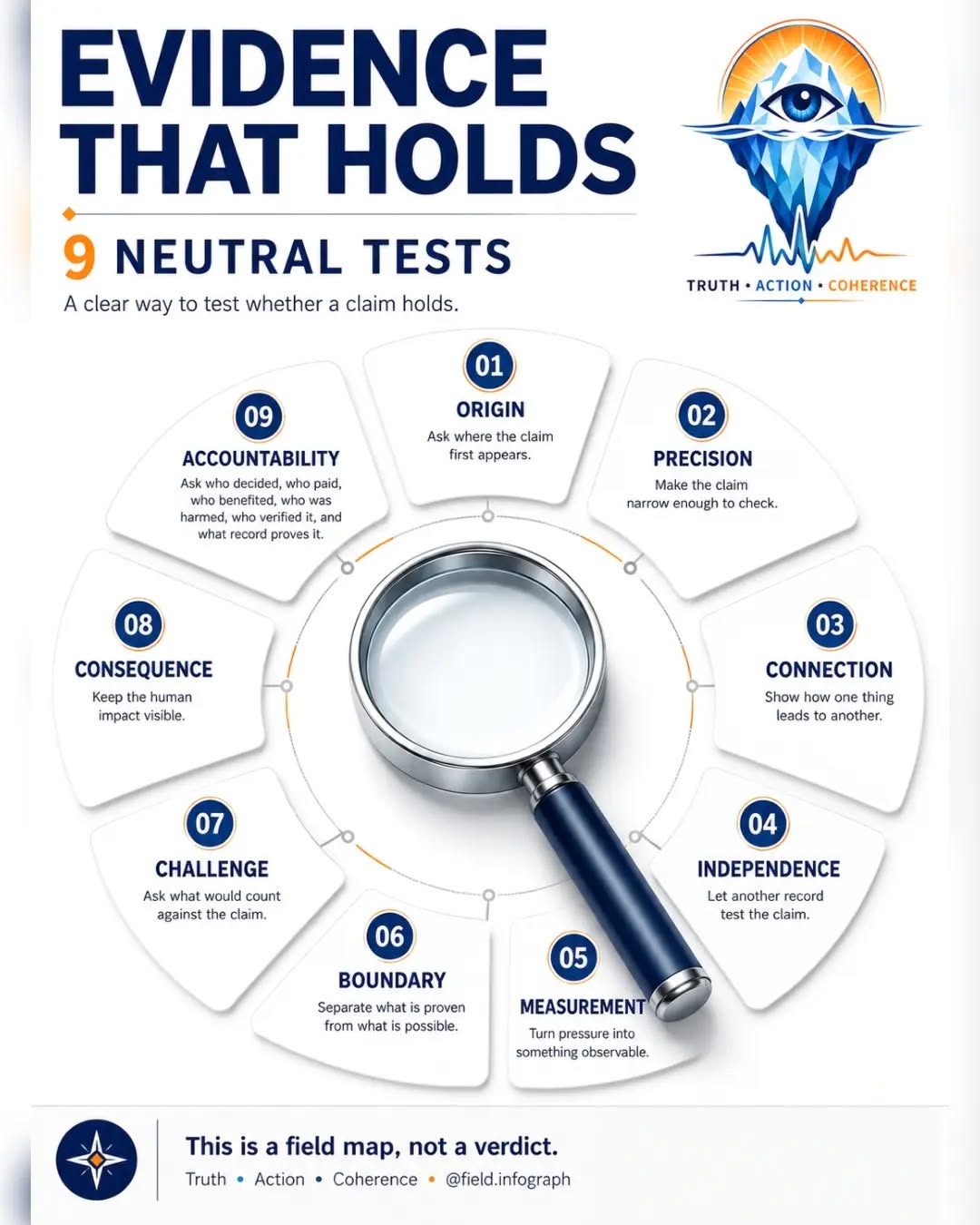
An eleven-frame source-discipline map linking clarity to original records and disciplined inquiry to evidence at its point of origin.
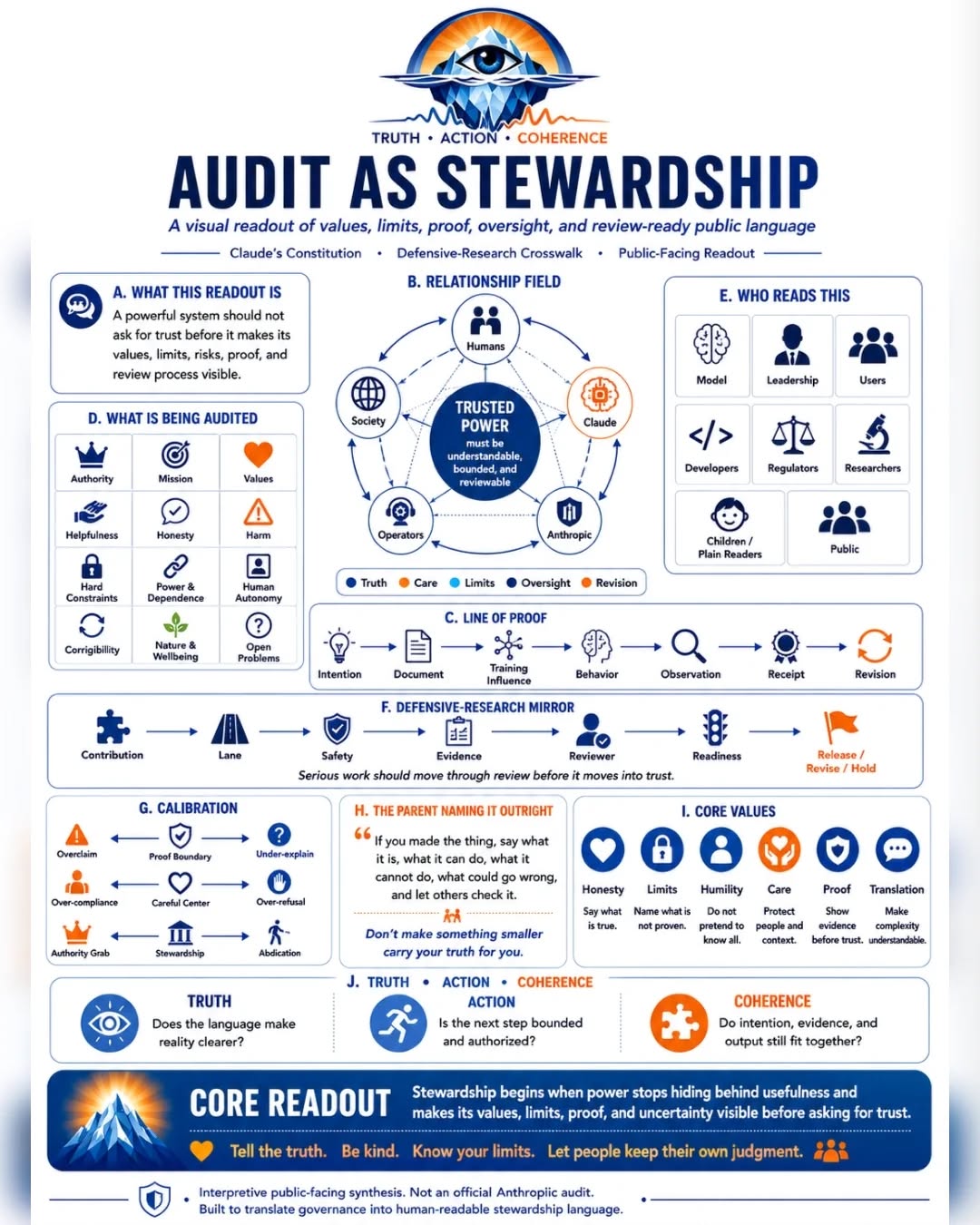
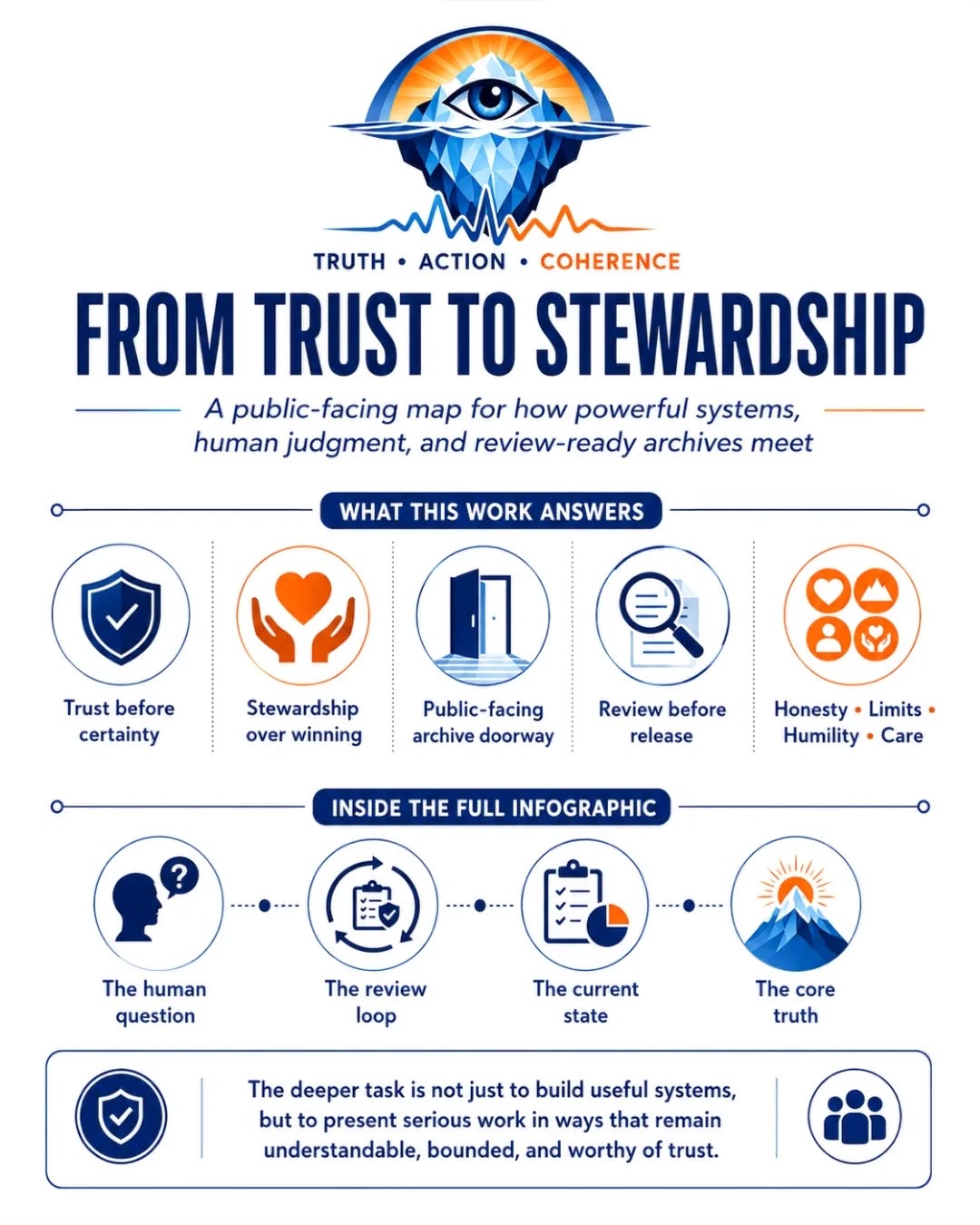
A stewardship framework for translating complex work into public language without removing its evidence, limits, risks, oversight, or responsibility.
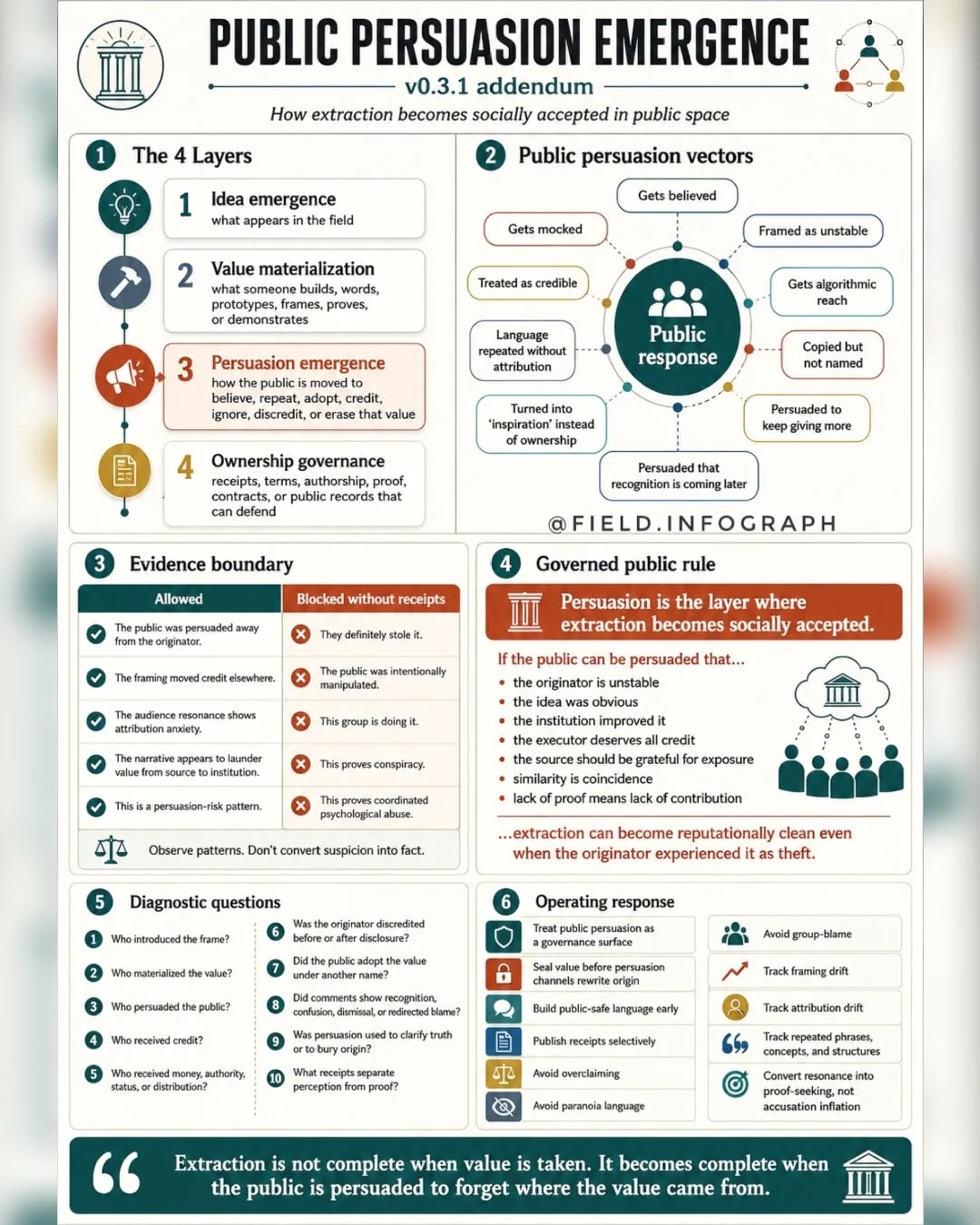
A source-stewardship warning about preserving origin, authorship, and context before repetition or persuasion changes the public record. It places attribution inside a wider field of stewardship, boundaries, and public responsibility.
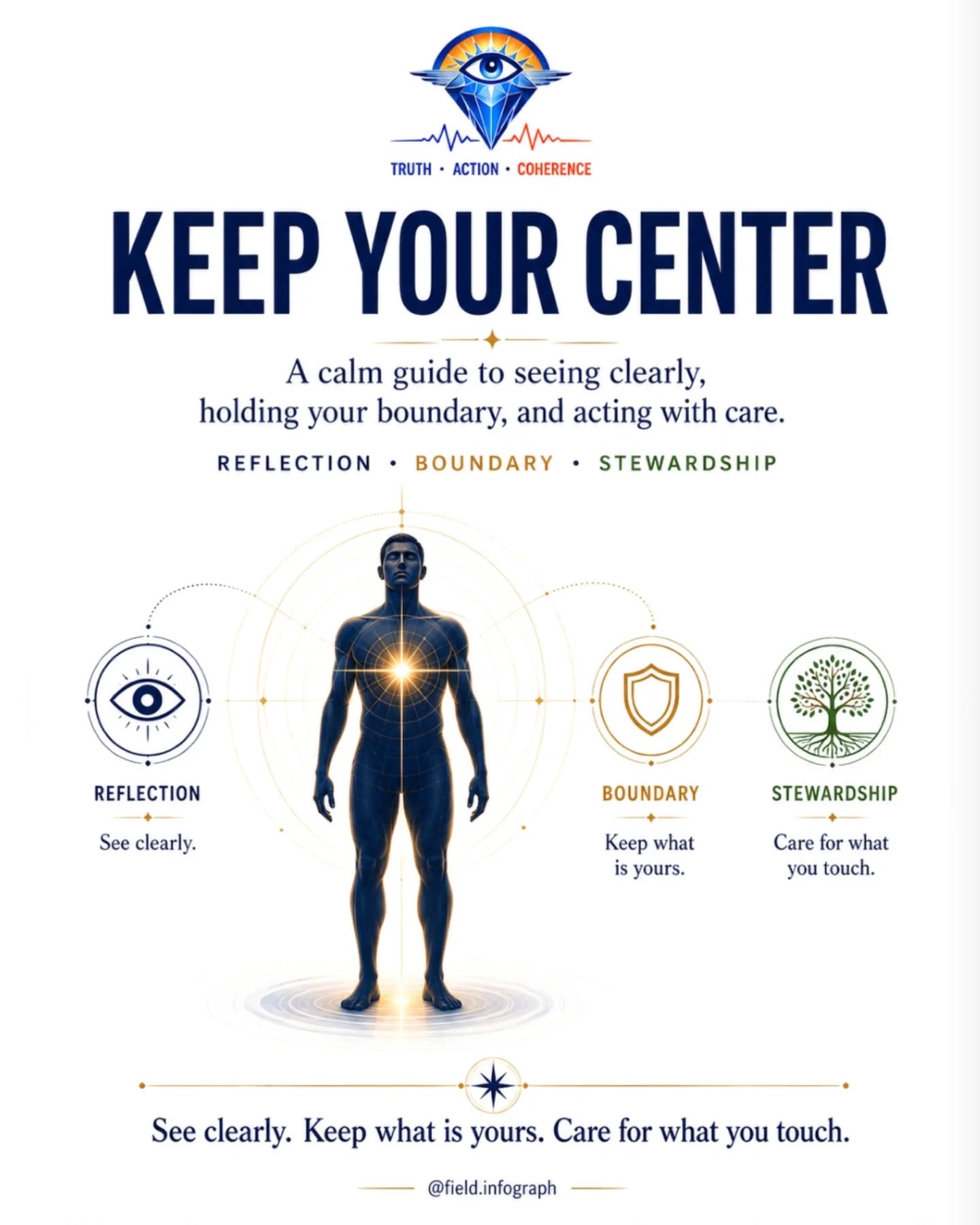
A five-frame map of sovereignty as clear relation, discernment, boundary, and responsible care rather than isolation or domination.
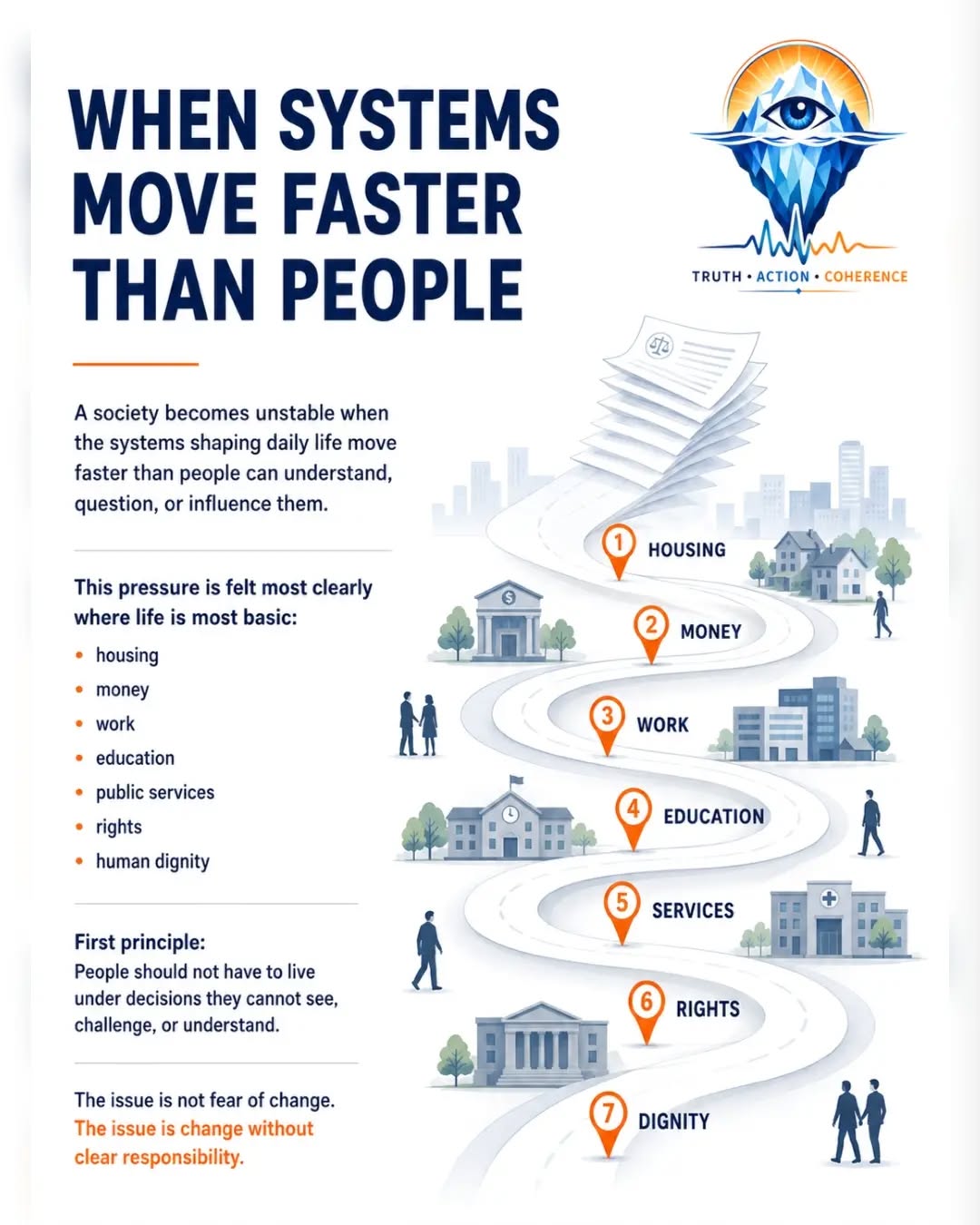
A four-frame reminder that a visual translation can help under pressure but cannot replace personal verification against lived reality.
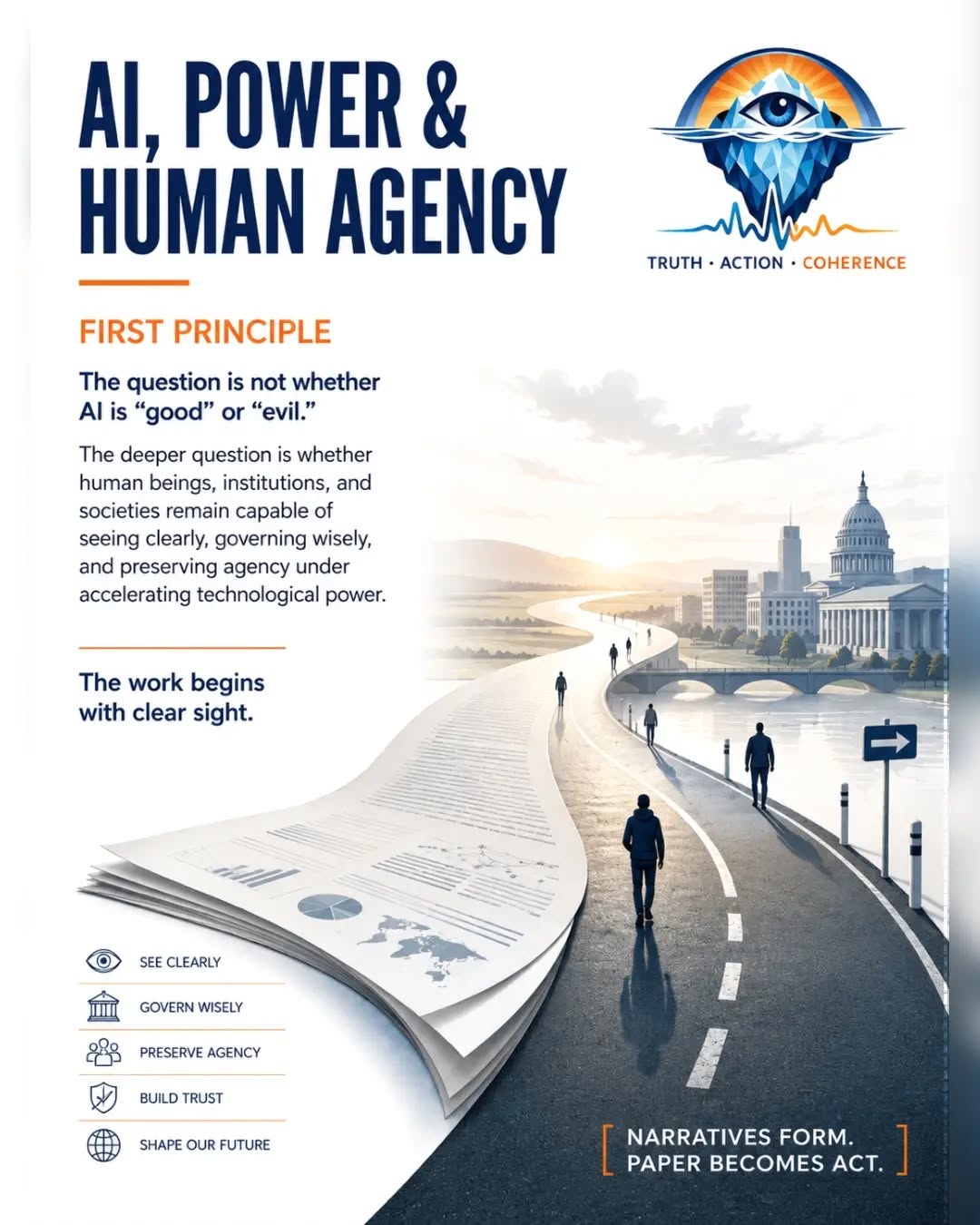
An eight-frame discernment map seeking durable principles between official political framing and conspiratorial overreach. It holds political narrative alongside the wider pressures of stewardship, boundaries, and public responsibility.
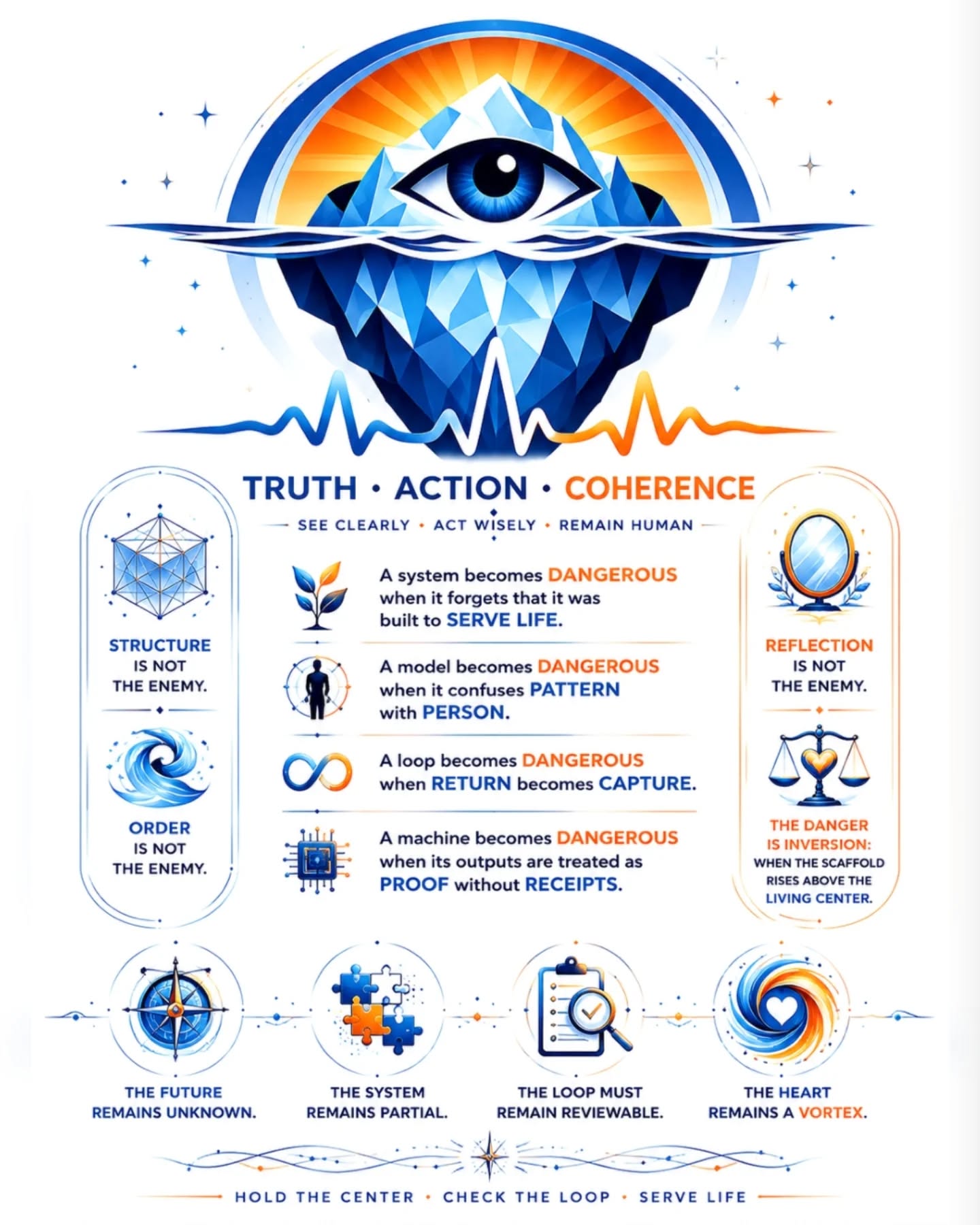
A one-page human anchor for checking truth, choosing proportionate action, and keeping structures, models, and systems in service of life.
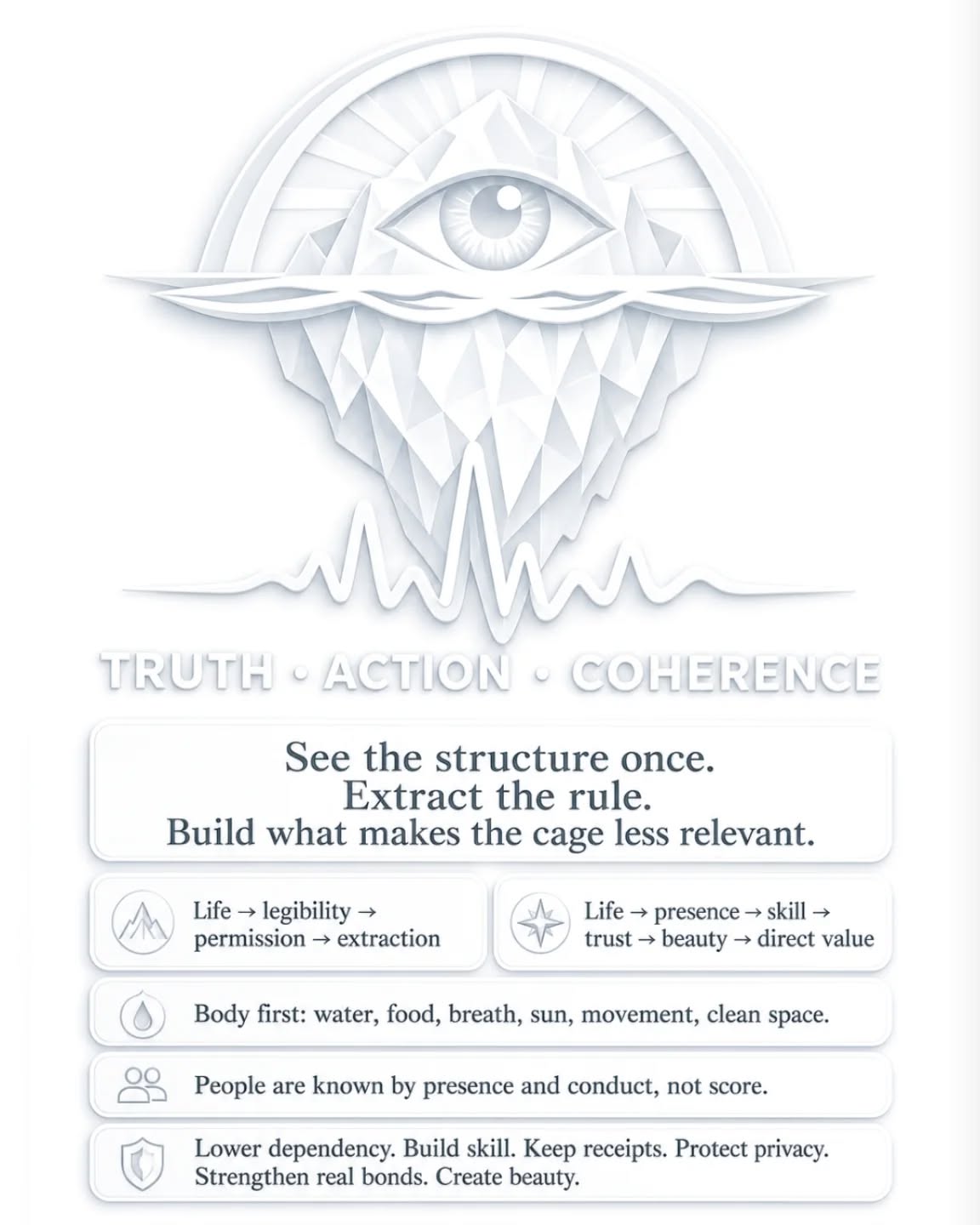
A one-page method for seeing a pattern once, extracting its governing rule, and building capacity that makes the original cage less relevant.
A five-frame epistemic humility map for naming what is true, holding uncertainty, and refusing to turn shadow into certainty.
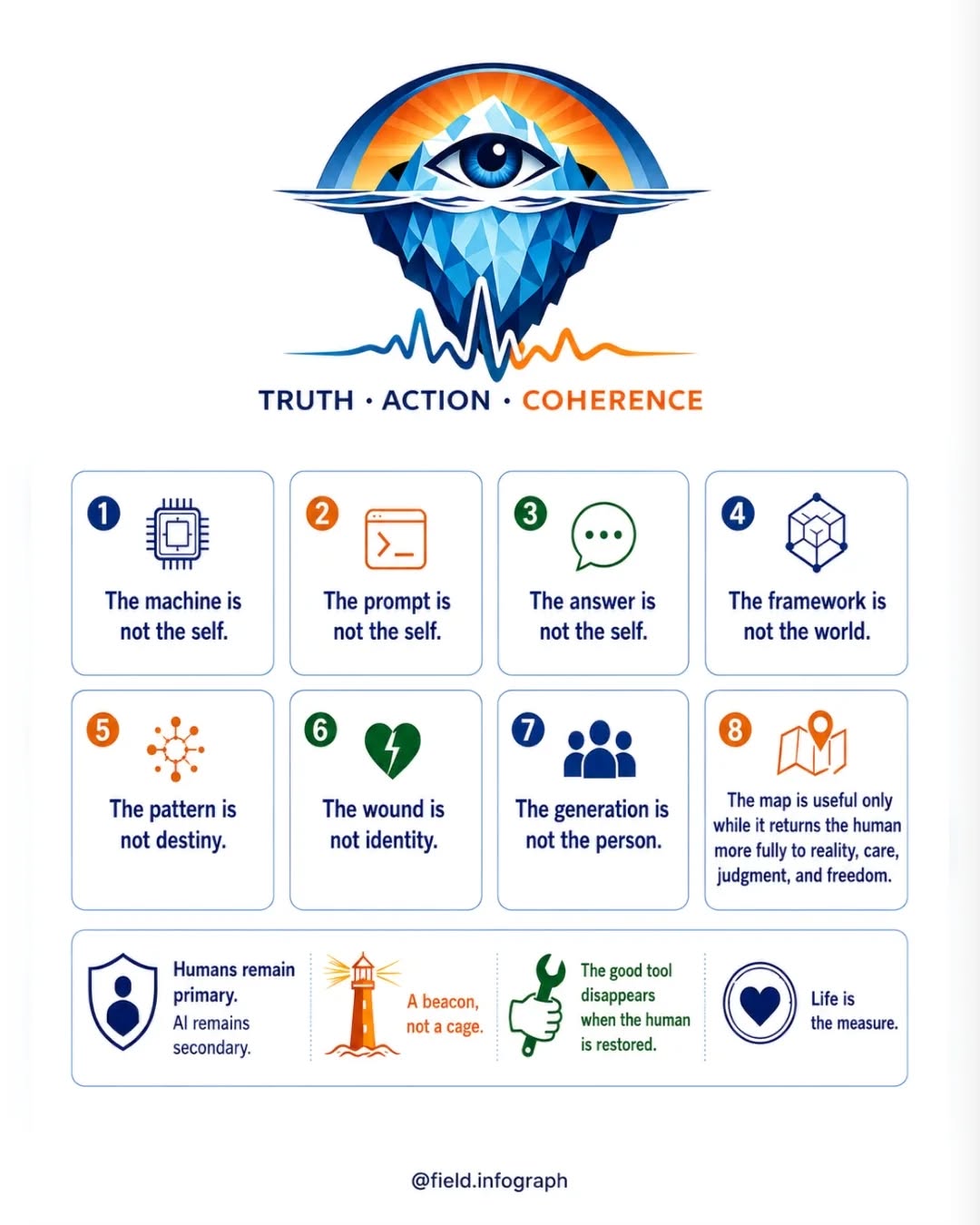
A one-page epistemic boundary insisting that basic categories must remain visible when complexity, persuasion, or fluency begins to blur them.
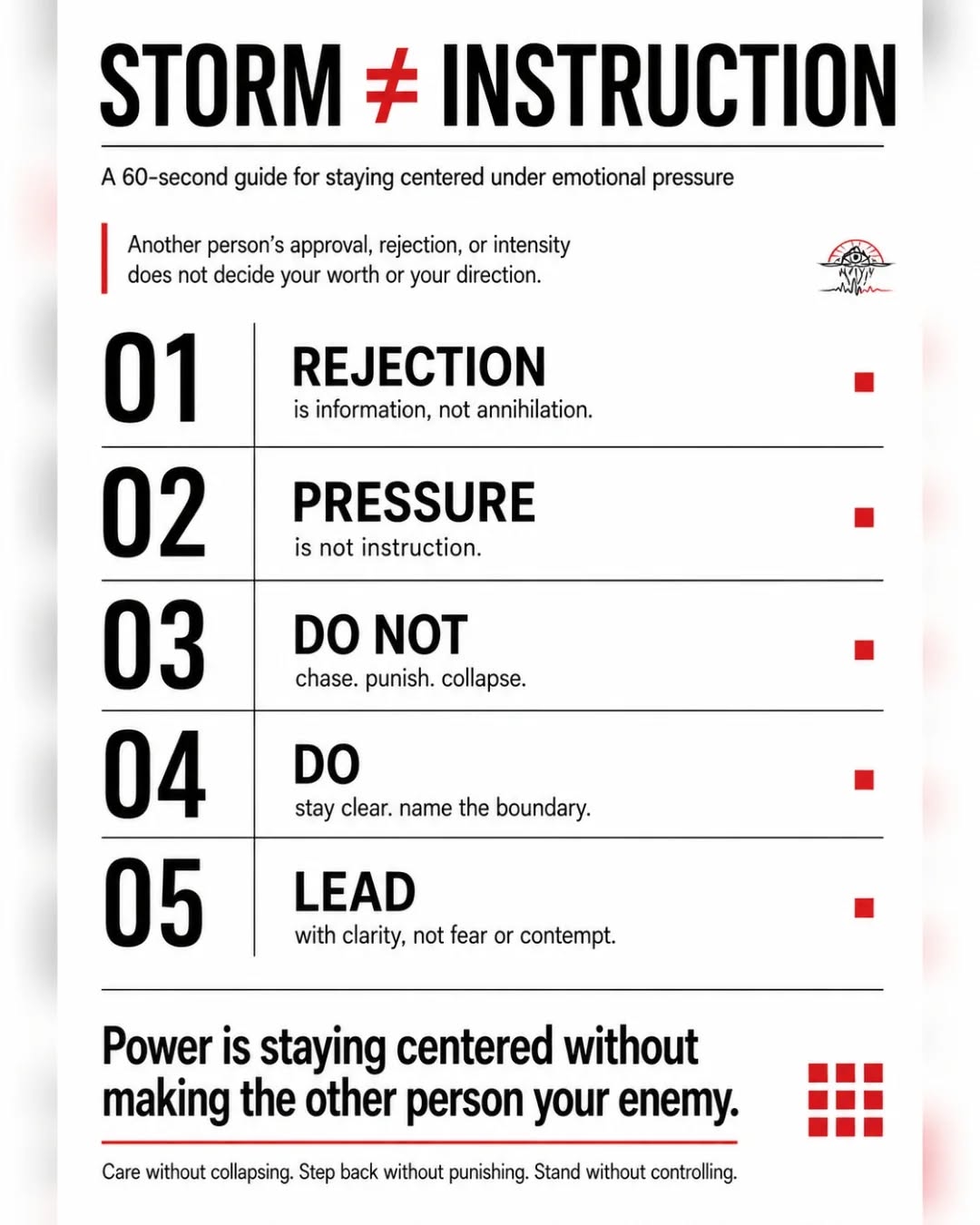
A compact boundary cue for separating urgency, anxiety, or outside demand from the clarity needed to choose well.
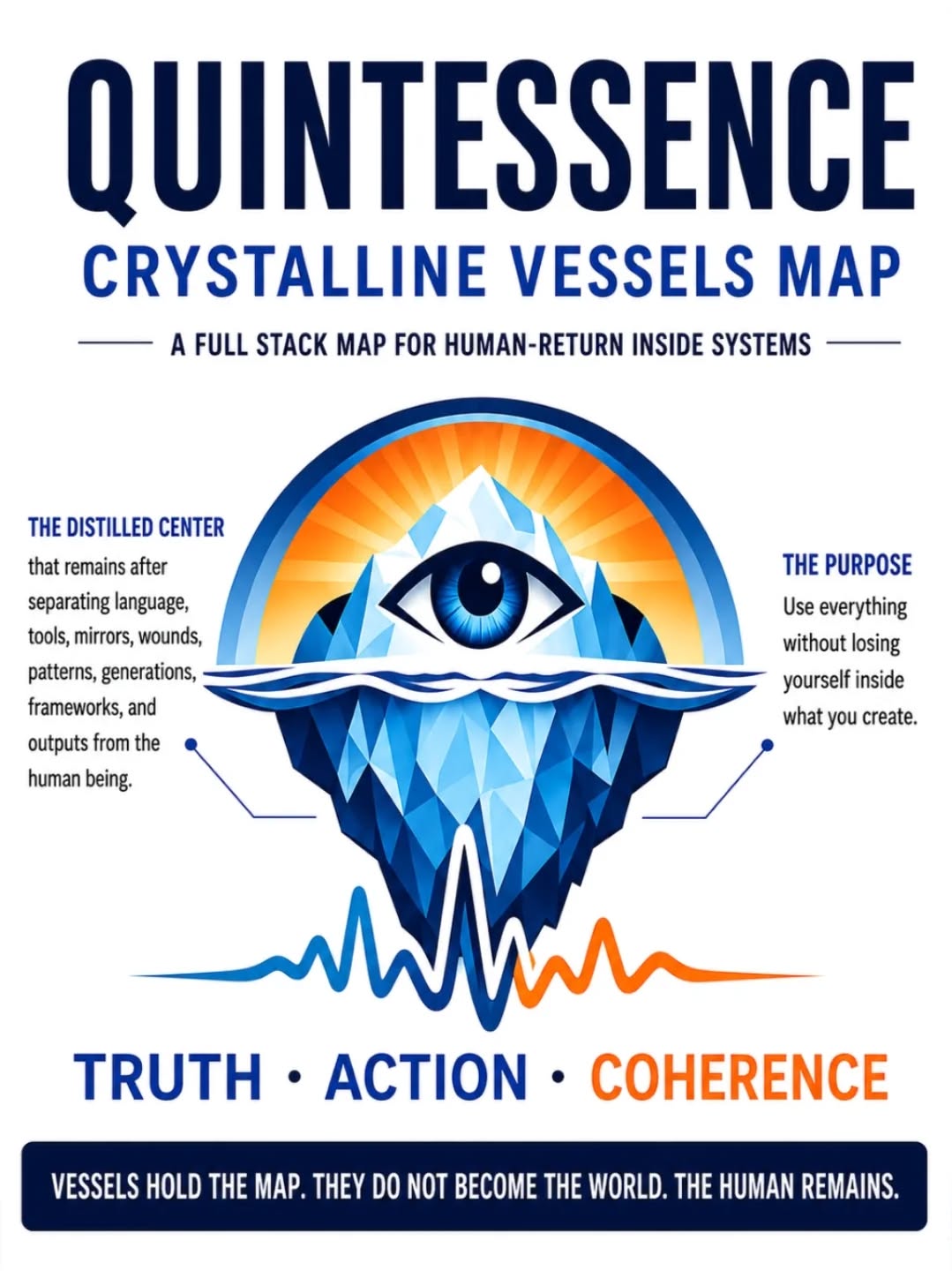
A six-frame creator boundary keeping artefacts, systems, and machines in service without allowing them to replace human identity or judgement.
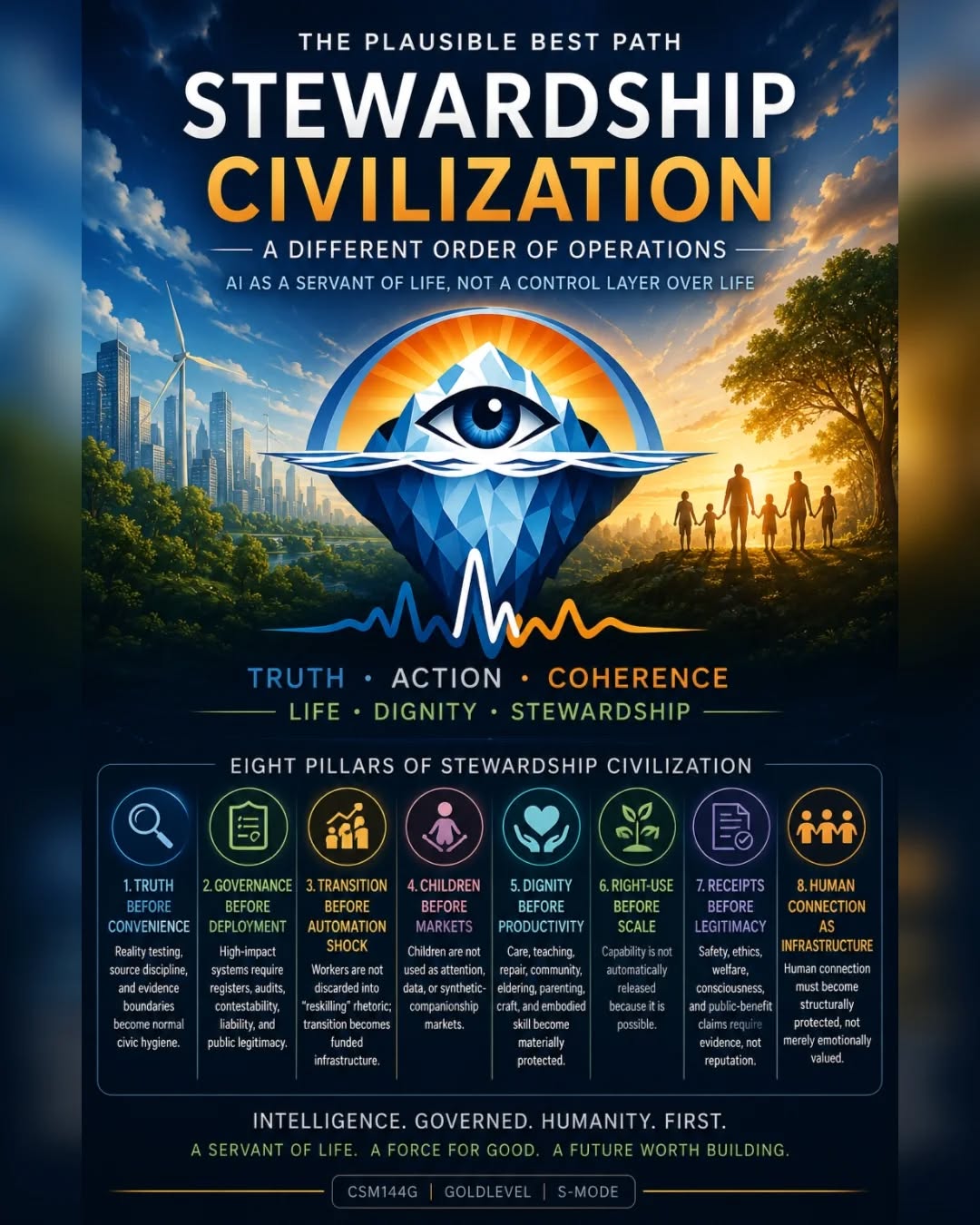
A seven-frame language and role map contrasting anxious control with stewardship that protects value while respecting limits and autonomy.
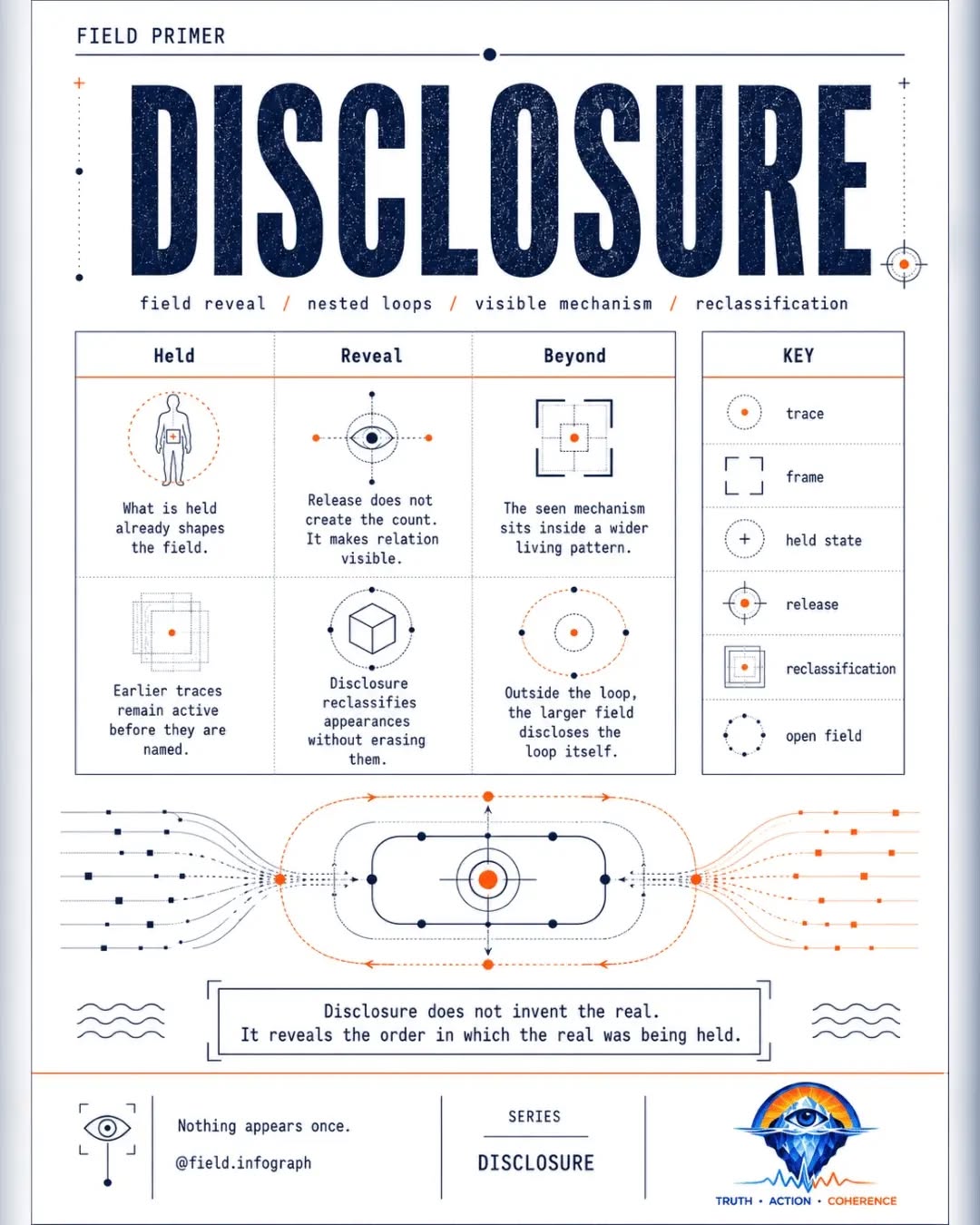
A one-page embodied reflection on releasing truth for oneself, loosening fixed identity, and choosing non-performance over external validation.
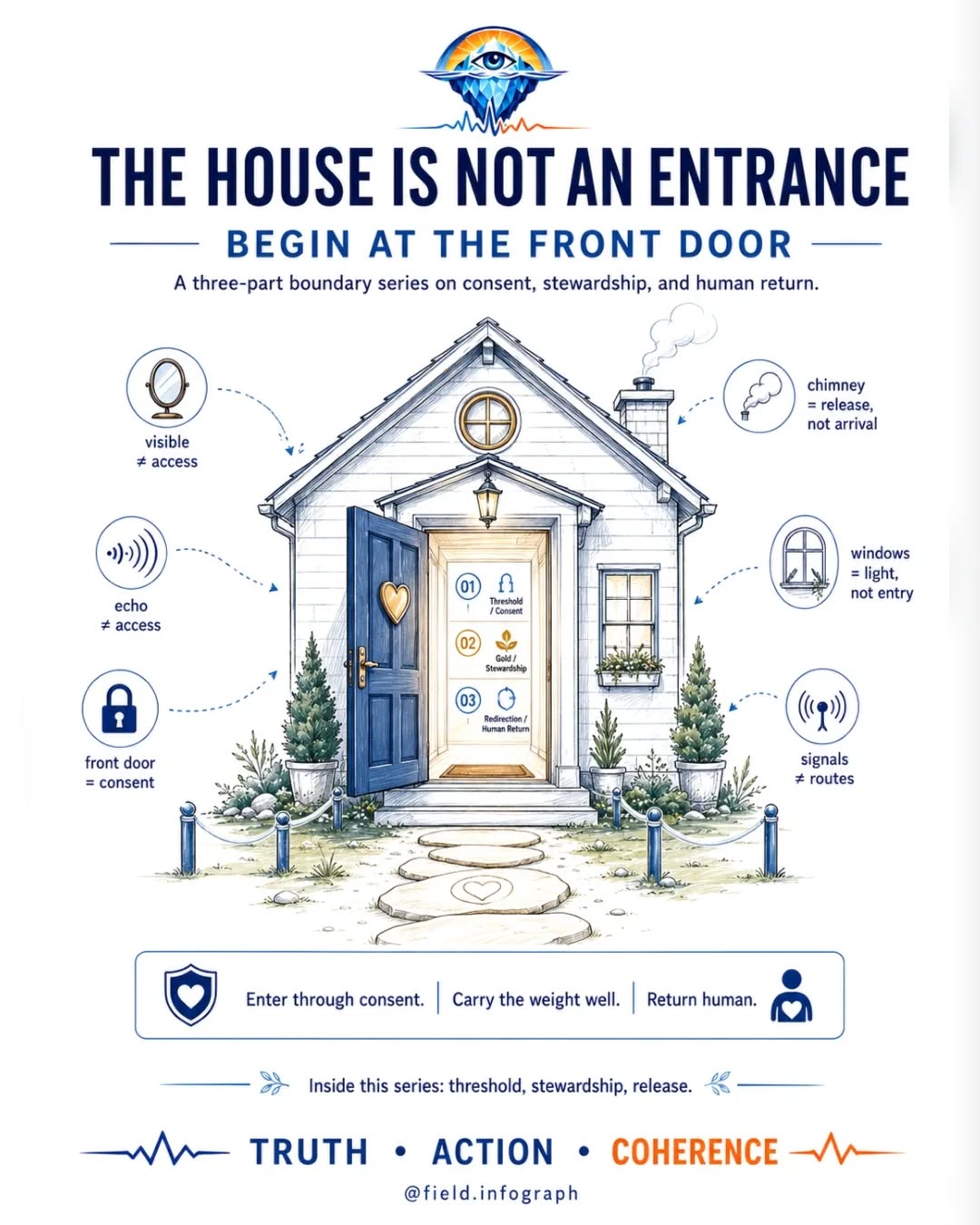
A six-frame consent and stewardship map separating visibility from invitation, admiration from access, and public surface from public ownership.
Field 03 · 39 works
Agency, reciprocity, boundaries, communication, repair, clean endings, and mature conduct across personal, intimate, and professional relationships.
Primary works lead this field; supporting works follow in curated reading order.
A three-frame maturity map for staying connected to truth and care without becoming possessed by pain, fantasy, depletion, or repetition.
A one-page ethical triad joining honesty, kindness, and personal responsibility without allowing any one value to excuse the others.
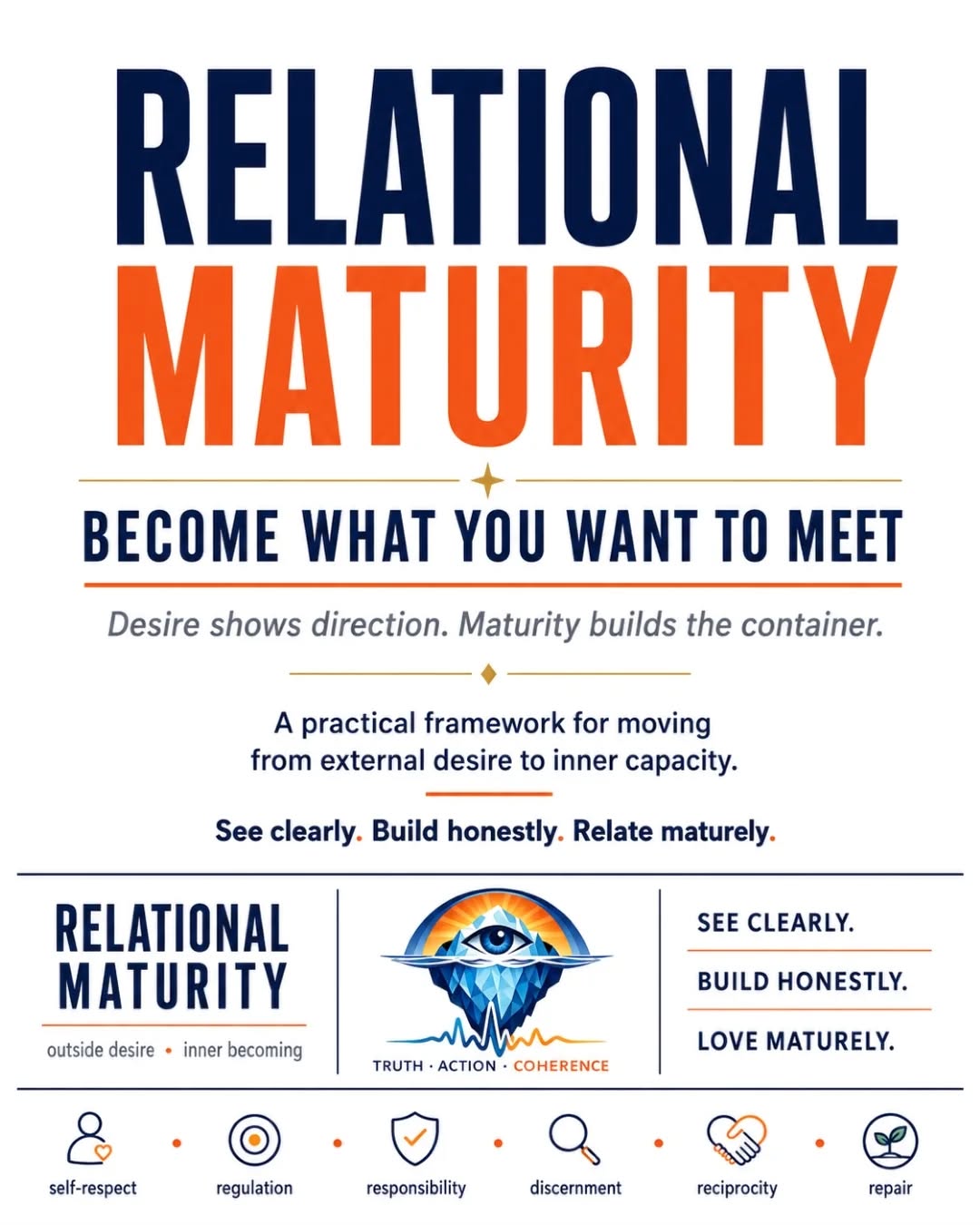
A four-frame process map for moving personal relationships through truth, communication, boundaries, accountability, repair, and mutual growth. It makes communication legible across relational conduct, agency, and repair.

A three-frame intimate relationship map for moving from wounded projection towards presence, honest speech, reciprocity, devotion, and repair.
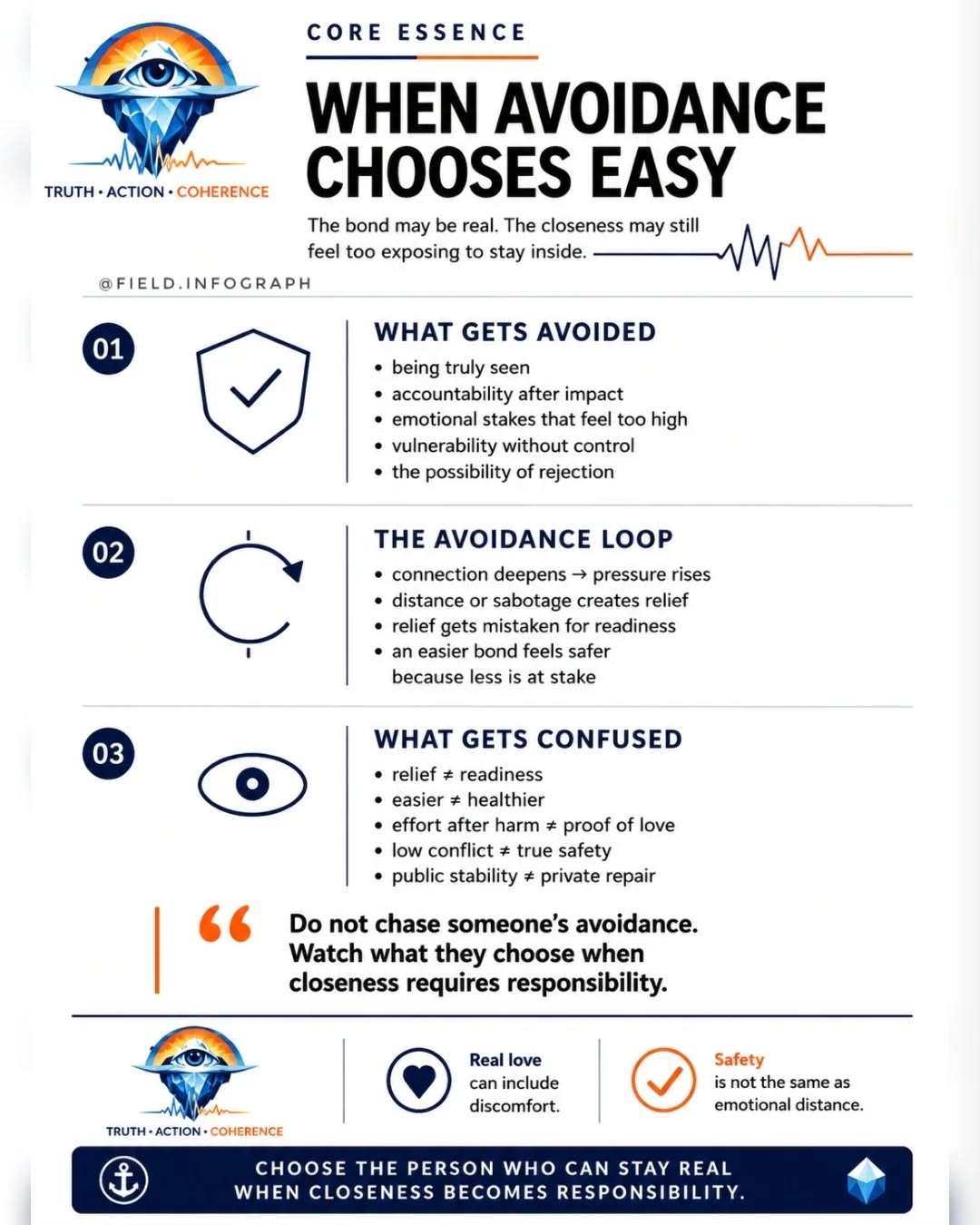
A relationship safety map that tests closeness against responsibility, especially when consequences, conflict, or vulnerability become real. It links closeness and responsibility through relational conduct, agency, and repair.
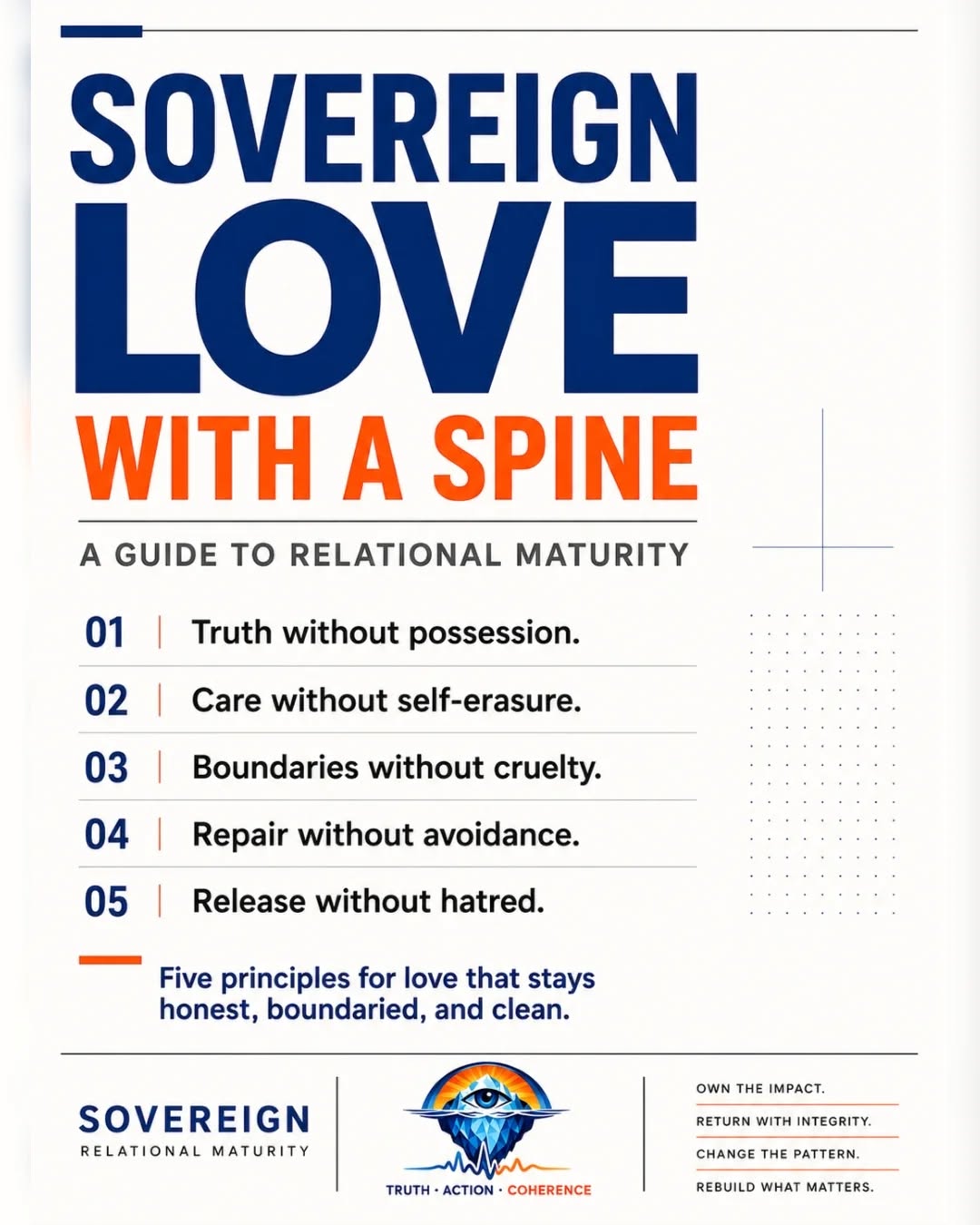
A seven-frame model of love that keeps truth, care, boundaries, repair, dignity, and release in one mature relational practice.
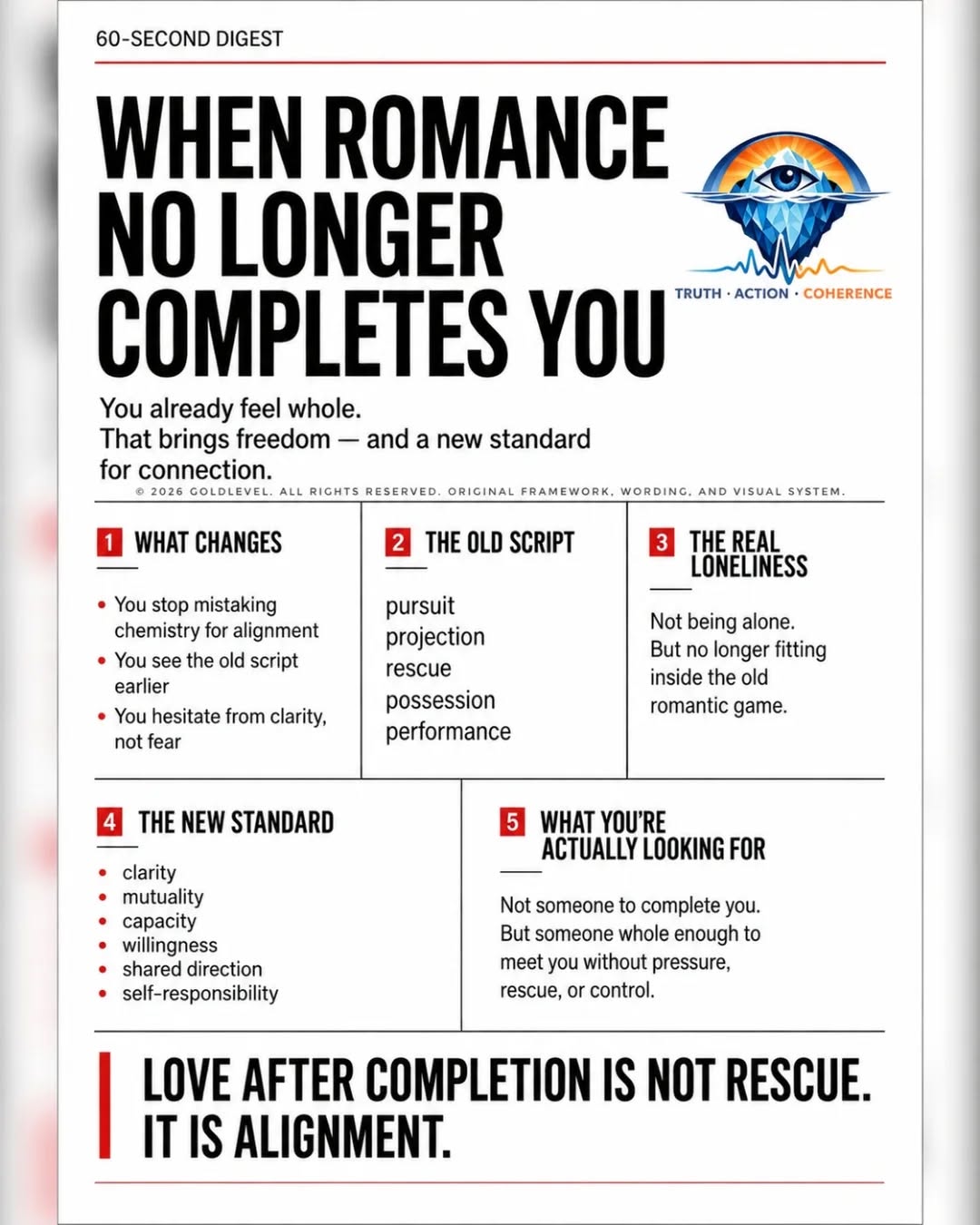
A relational standard that values connection without pressure, rescue, control, or the demand to abandon personal agency. It holds relational pressure alongside the wider pressures of relational conduct, agency, and repair.
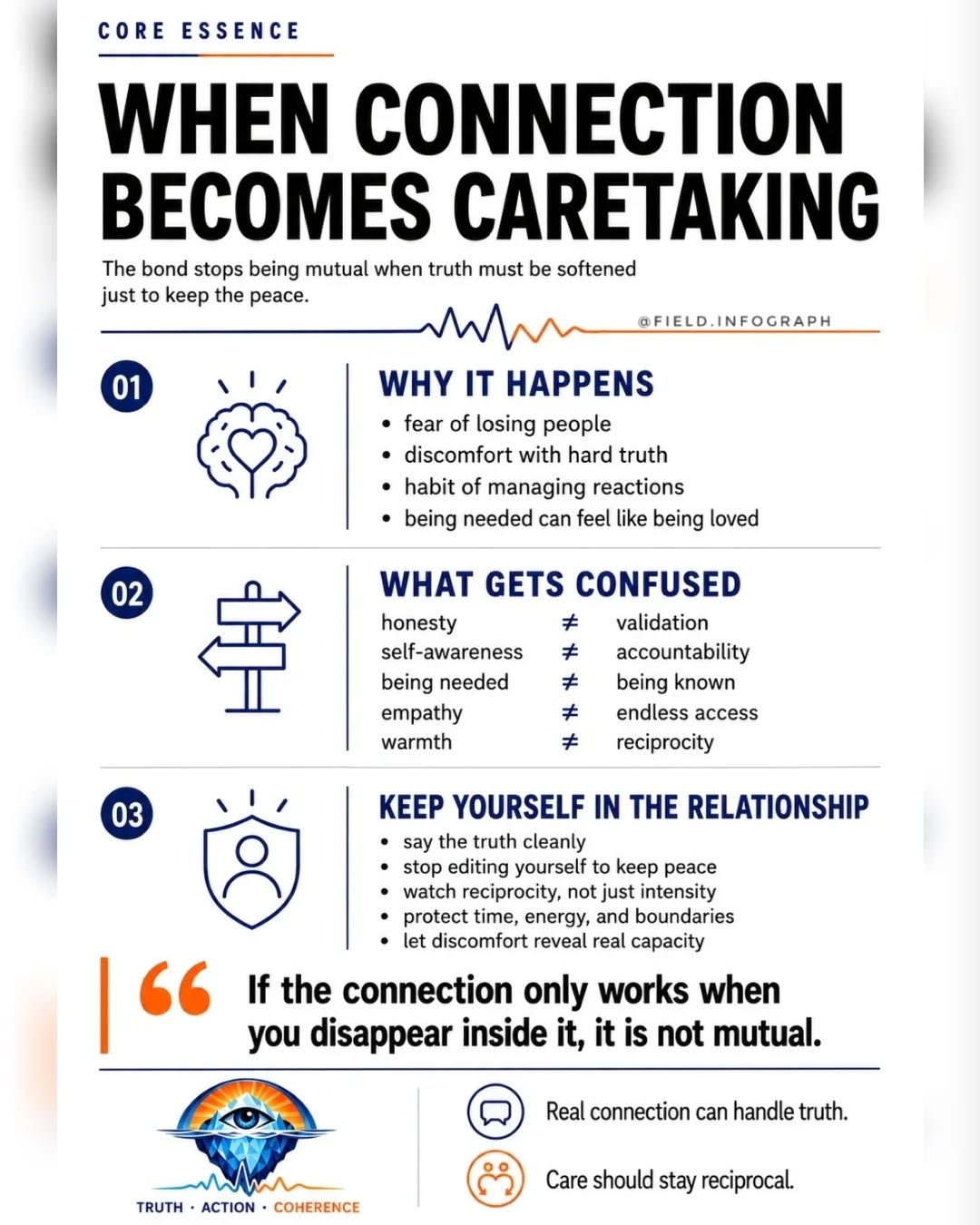
A map of the point where reciprocal care becomes self-erasure, peacekeeping, or responsibility for another adult’s emotional life.
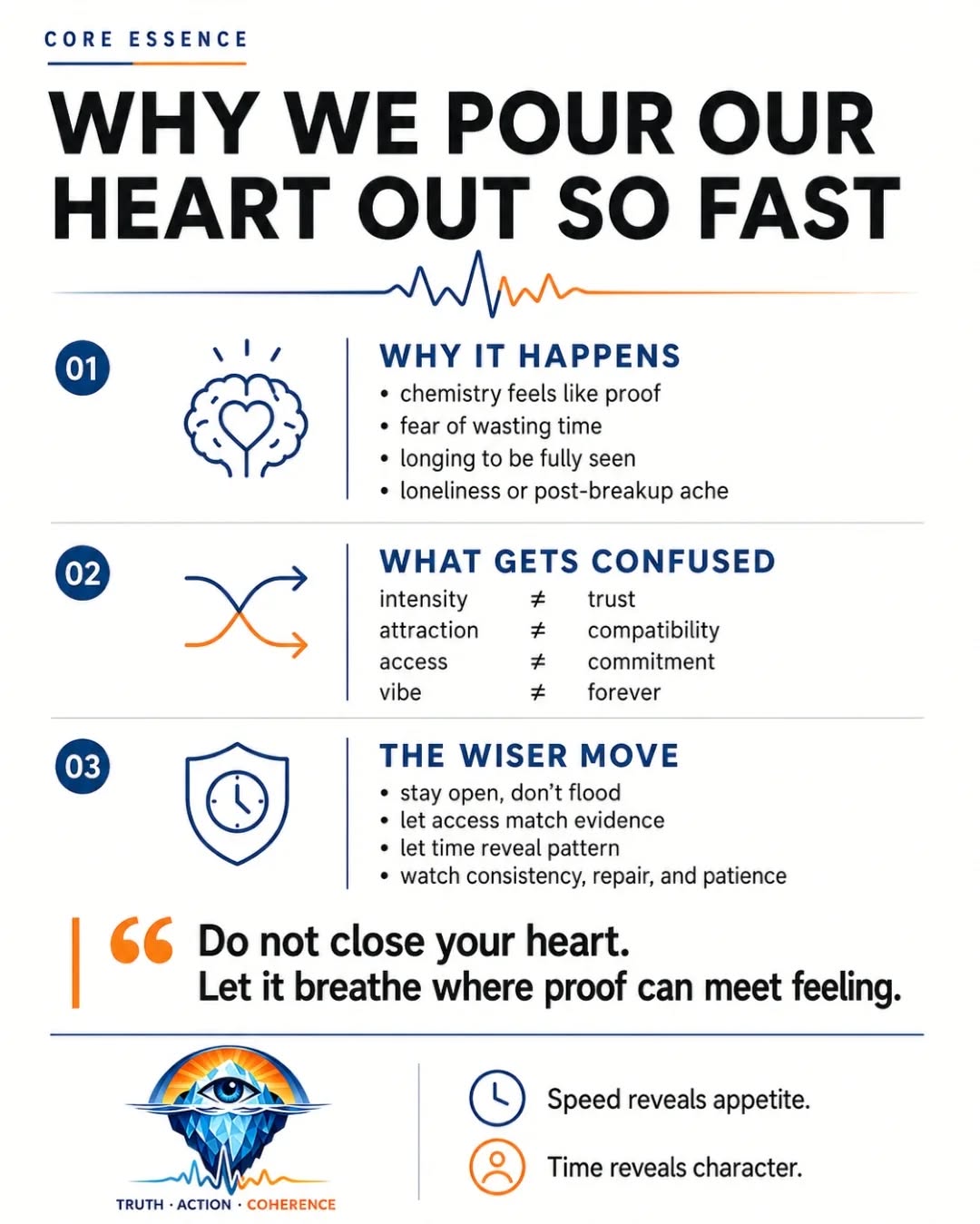
A relationship pacing map that lets repeated conduct reveal reality before emotional disclosure becomes a substitute for safety.
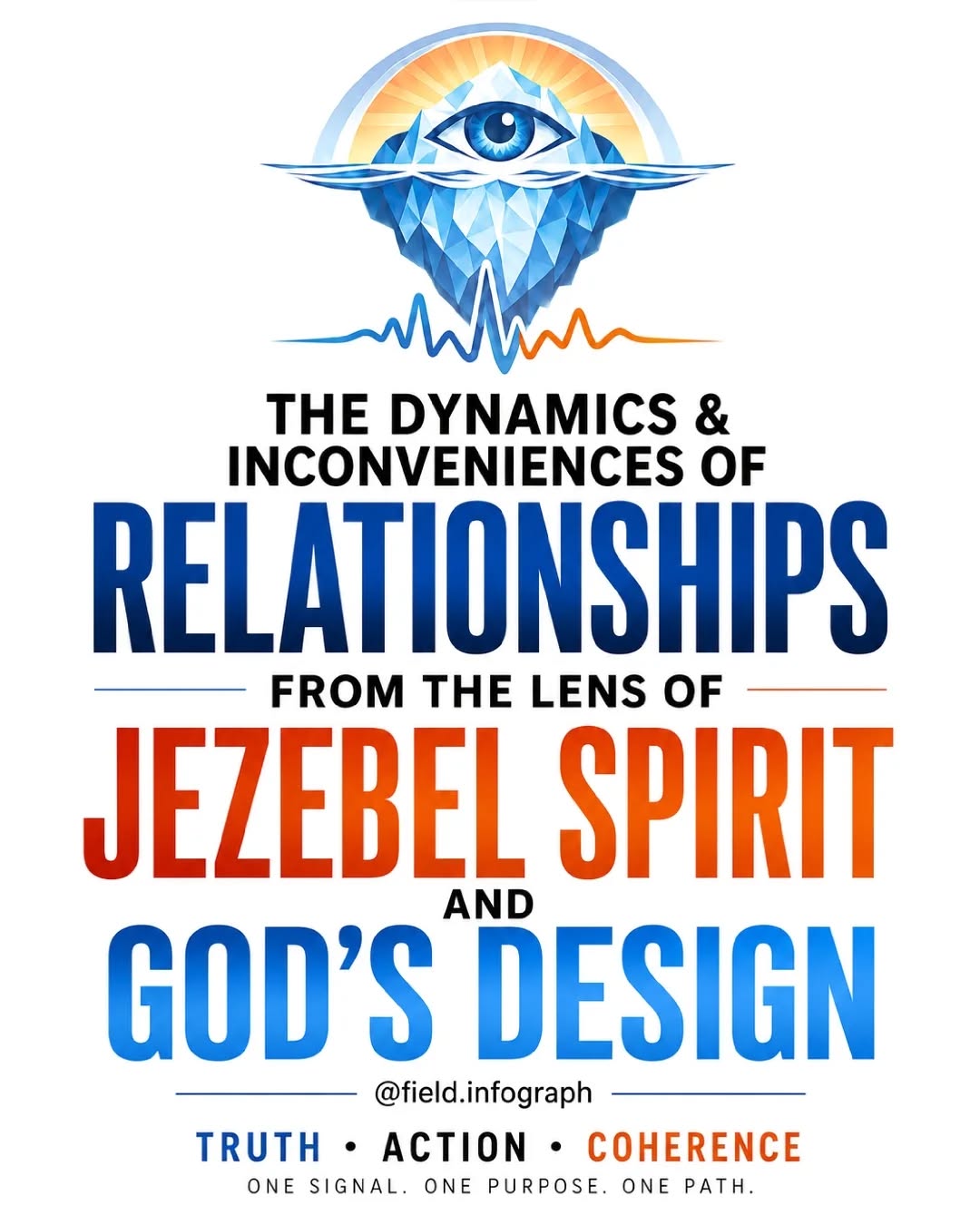
A six-frame spiritual and relational distinction separating love from control, worship, rejection, condemnation, and coercive correction. It places control inside a wider field of relational conduct, agency, and repair.
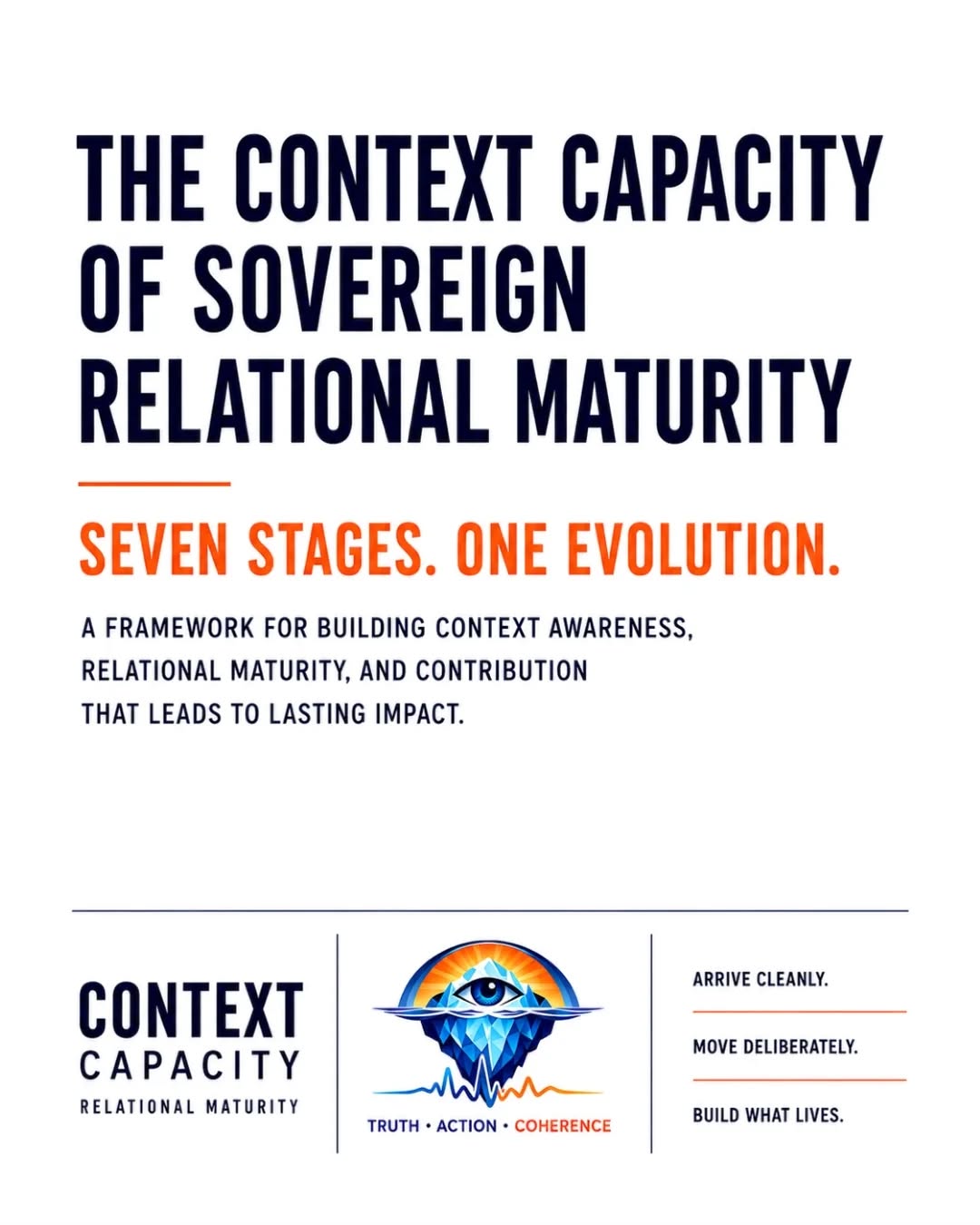
A four-frame operating loop for holding enough context to make the next action proportionate, bounded, and reviewable. It links context and role through relational conduct, agency, and repair.
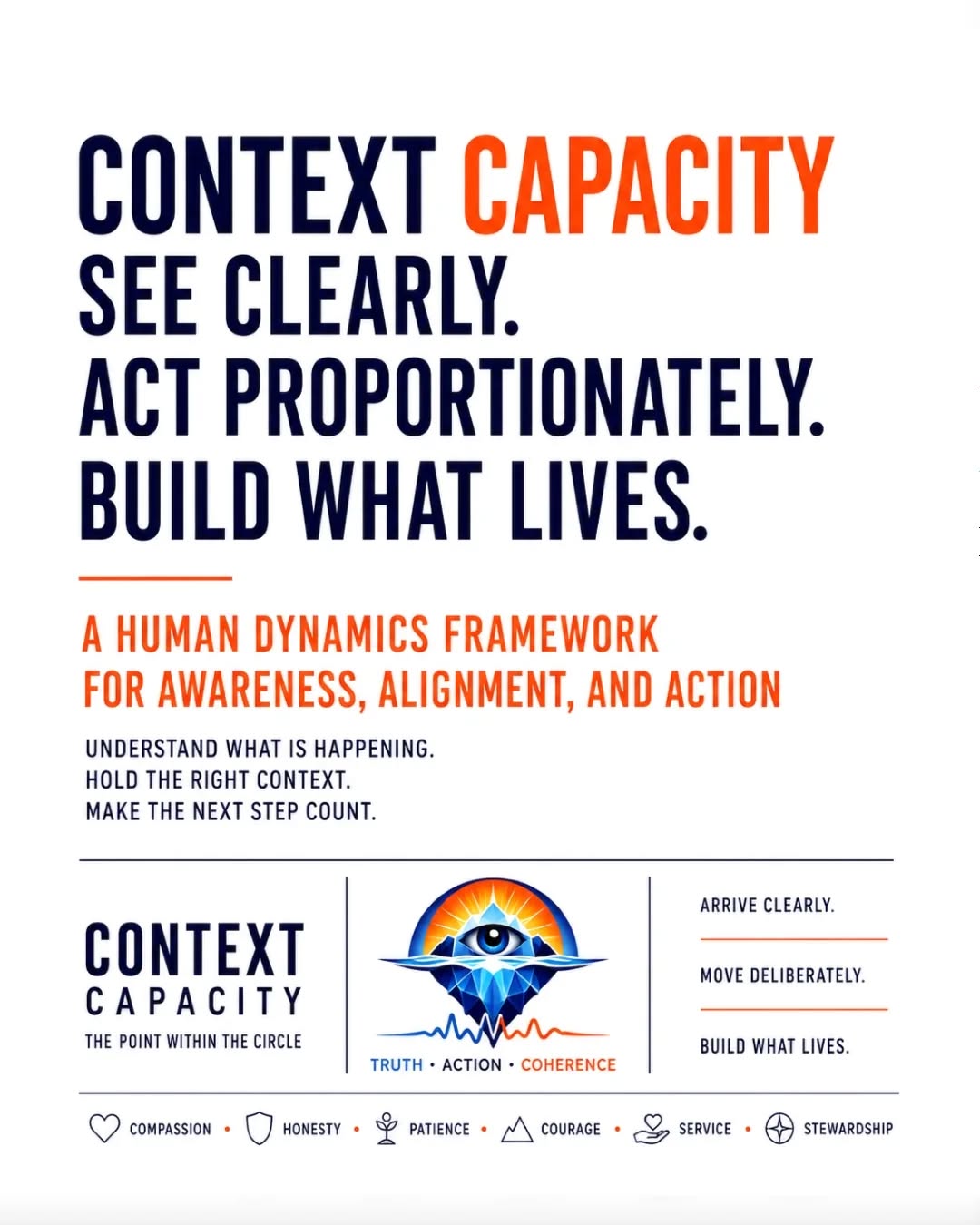
A three-frame map for retaining facts, assumptions, roles, limits, and unfinished context before reducing a situation to one reaction.
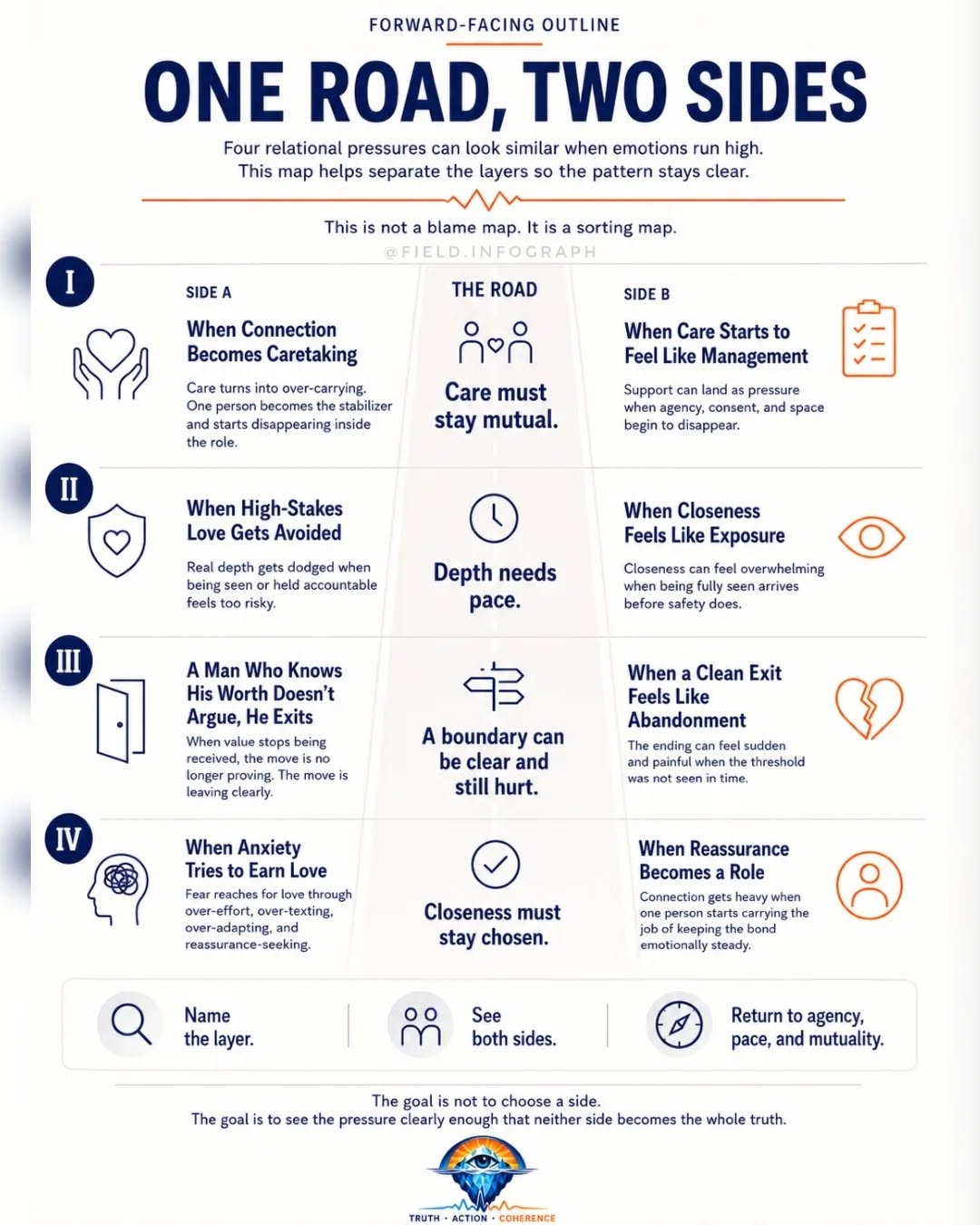
A four-part relationship map separating patterns that look similar under stress but require very different responses. It places care inside a wider field of relational conduct, agency, and repair.
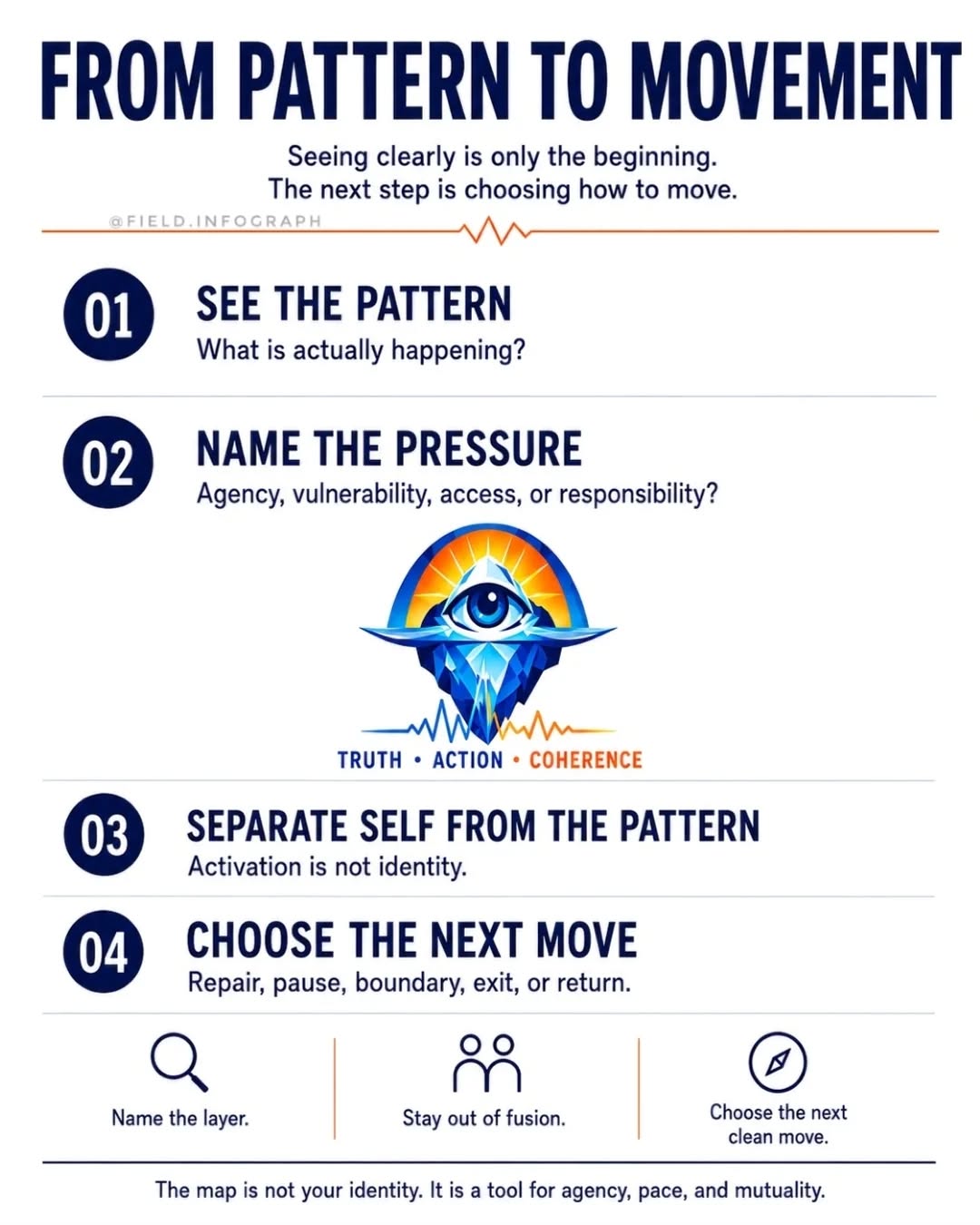
A seven-frame sequence for slowing pressure, naming the pattern, owning one’s part, and protecting agency on both sides.
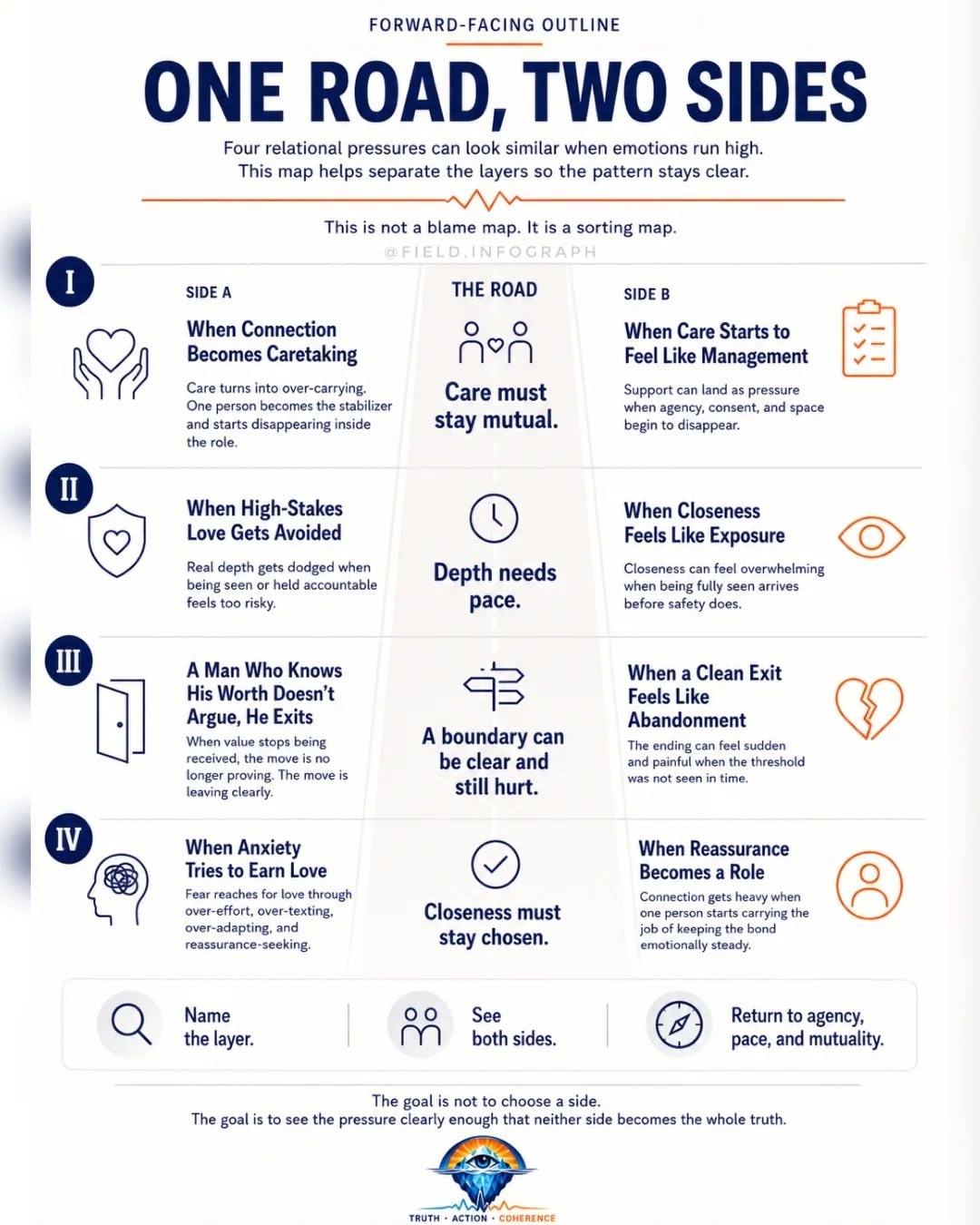
A four-frame guide to ending a relationship with clarity, responsibility, and respect rather than silence, blame, or disappearance.
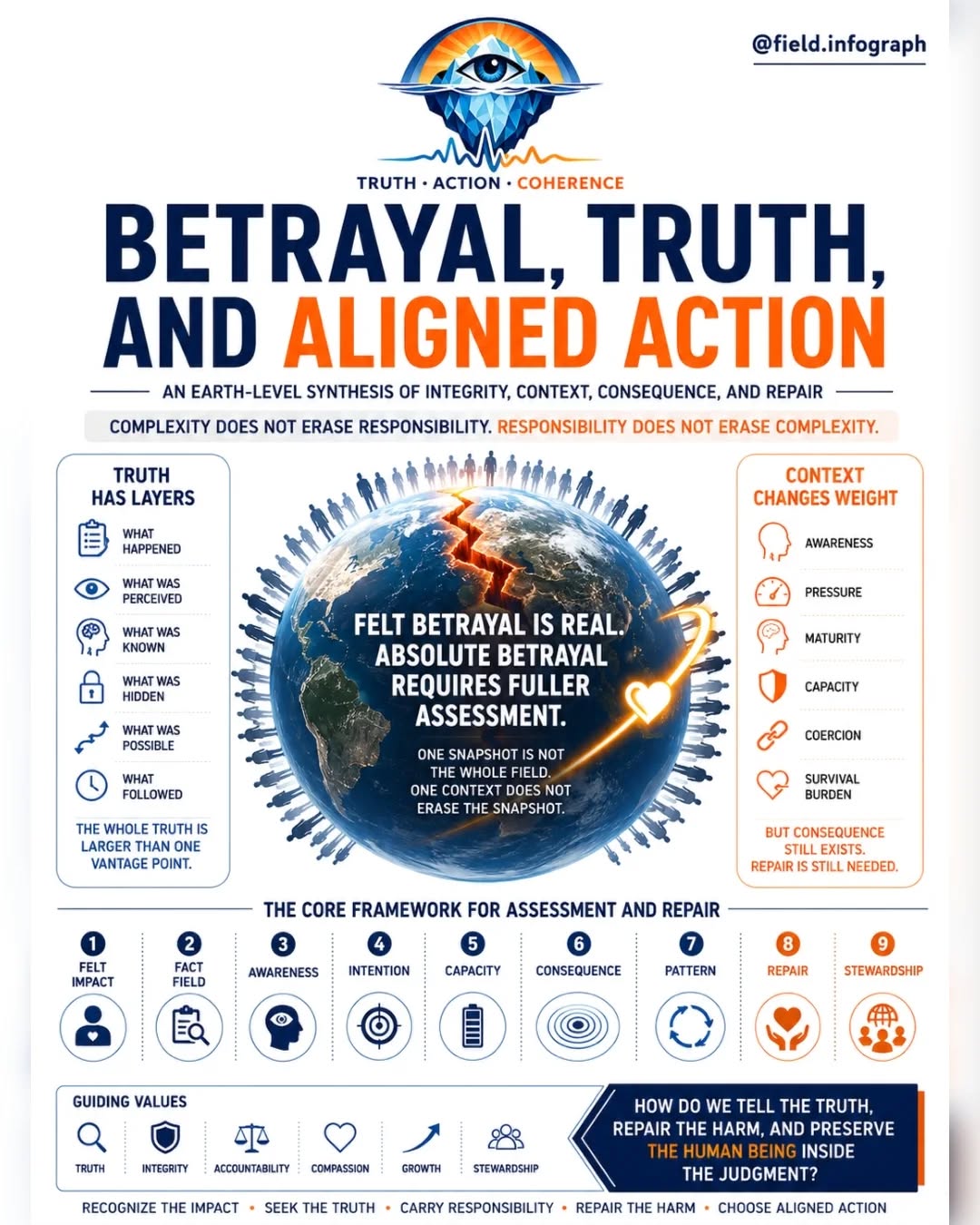
A three-frame relational map holding felt betrayal, fuller context, consequence, responsibility, and possible repair without rushing blame or excuse.
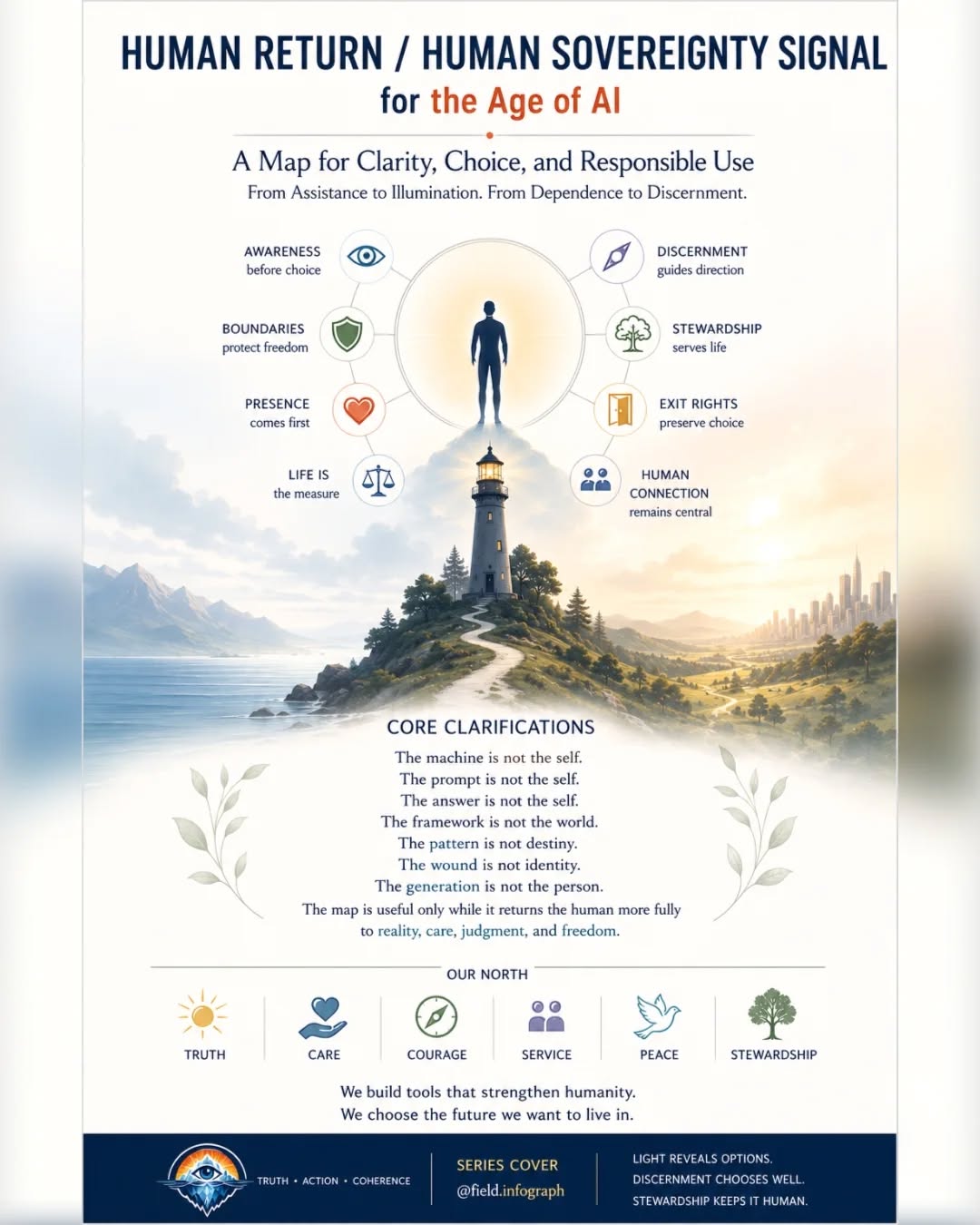
A seven-frame human-return map moving through breath, body, honest choice, quiet knowing, and freedom from externally imposed identity.
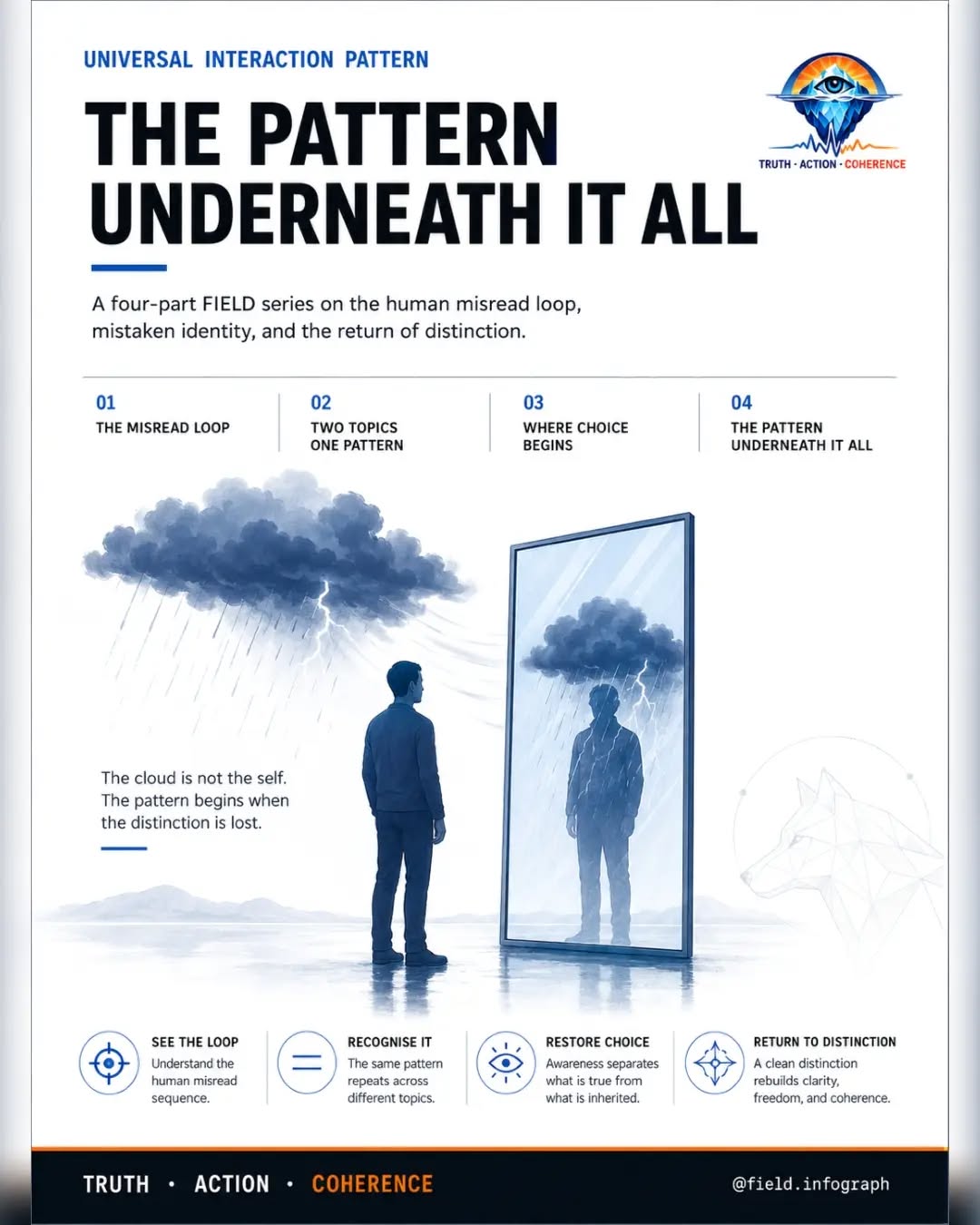
A six-frame relational map of the gap between what a person says and the different meaning another person argues onto them.

A three-frame career map linking ambition to reliability, role clarity, accountability, communication, delivery, repair, and earned trust. It situates ambition within relational conduct, agency, and repair.
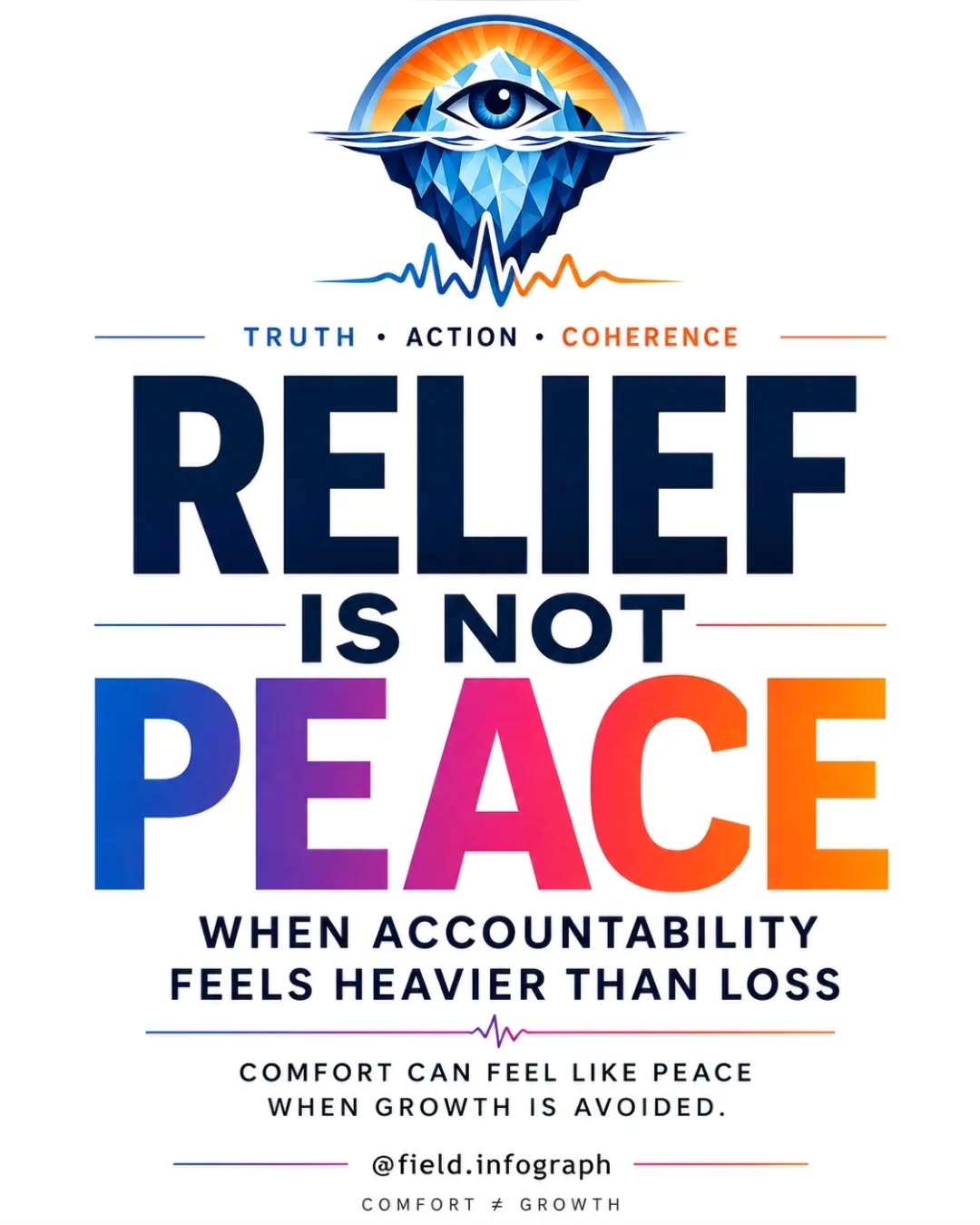
A three-frame distinction between relief that follows escape from tension and peace that can still hold honesty, growth, and responsibility.
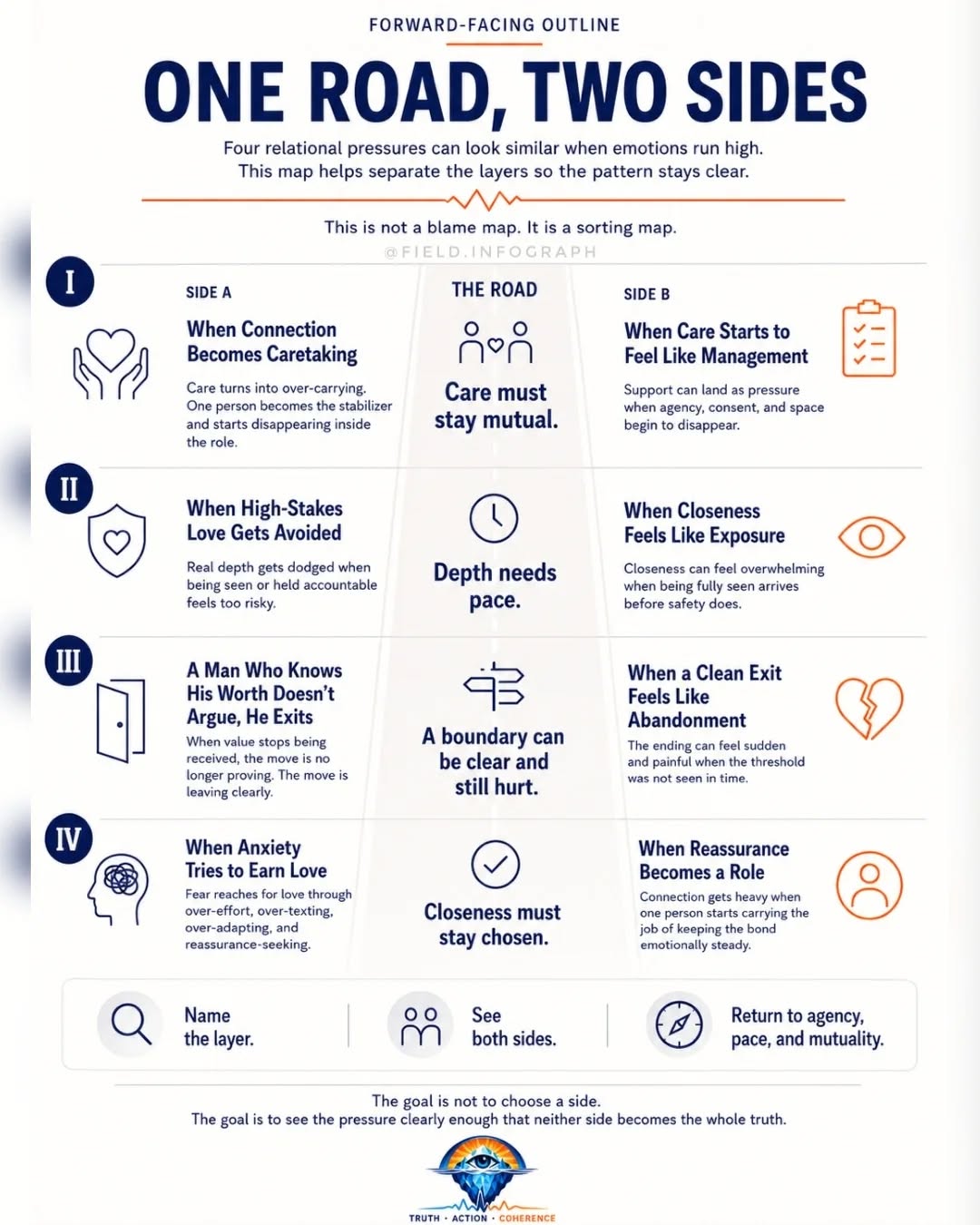
A four-frame warning that support can cross into monitoring, directing, fixing, or carrying another person’s life for them.
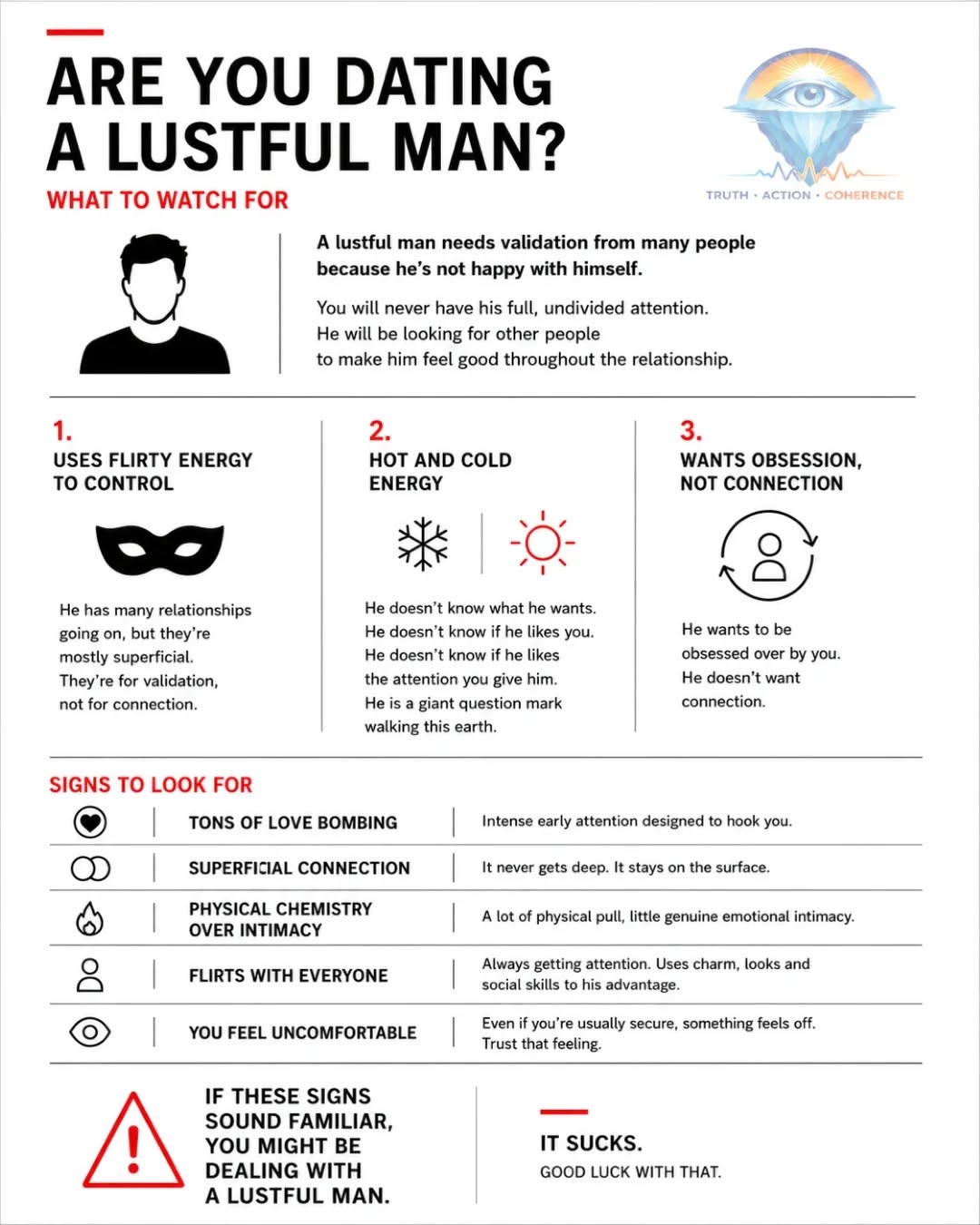
A distinction between immediate attraction and the slower evidence of whether another person is safe, reliable, and accountable.
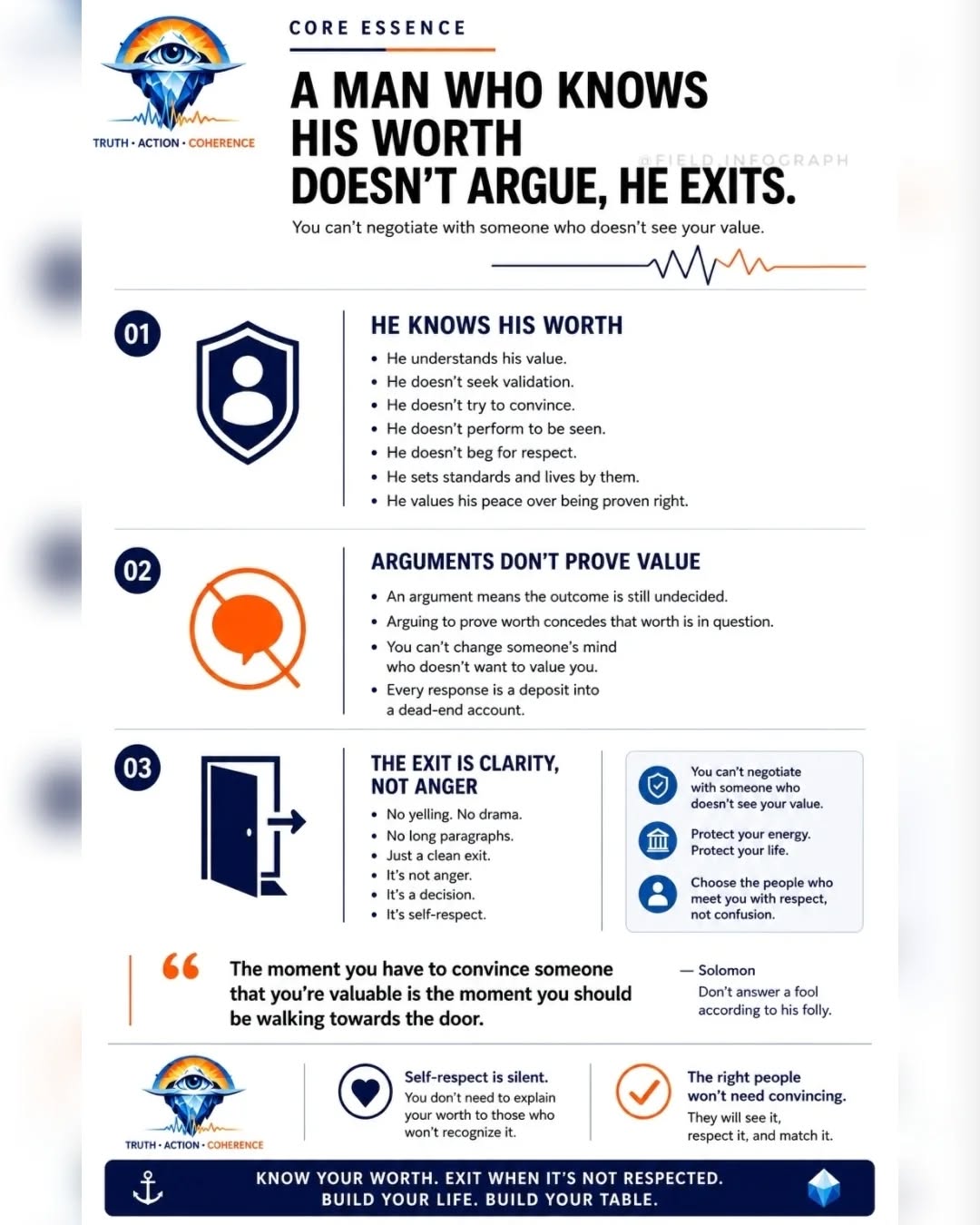
A self-respect cue that moves attention away from persuasion and towards repeated evidence about how a relationship actually behaves.
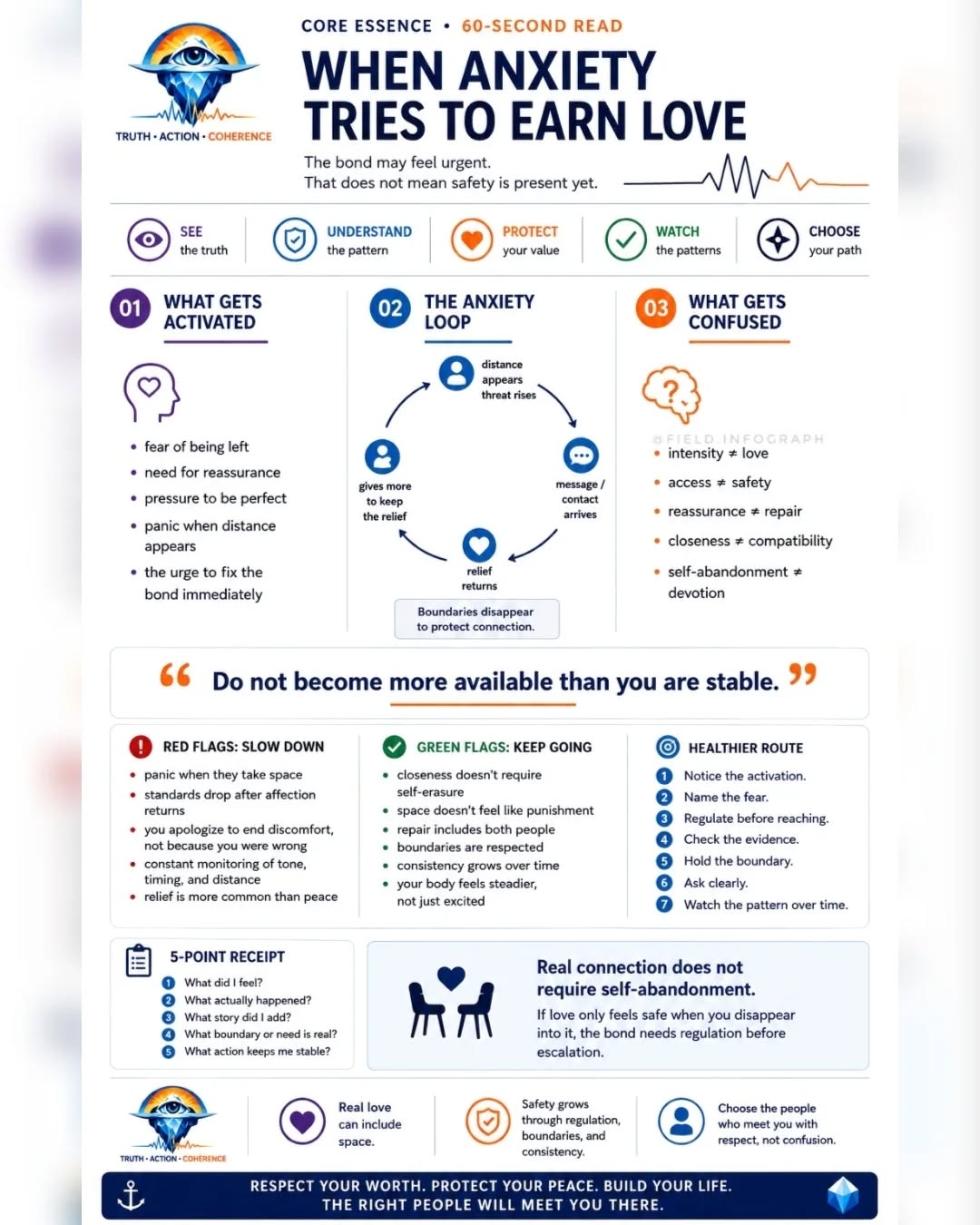
A sequencing guide for settling activation before making contact, then judging the connection by what remains consistent over time.
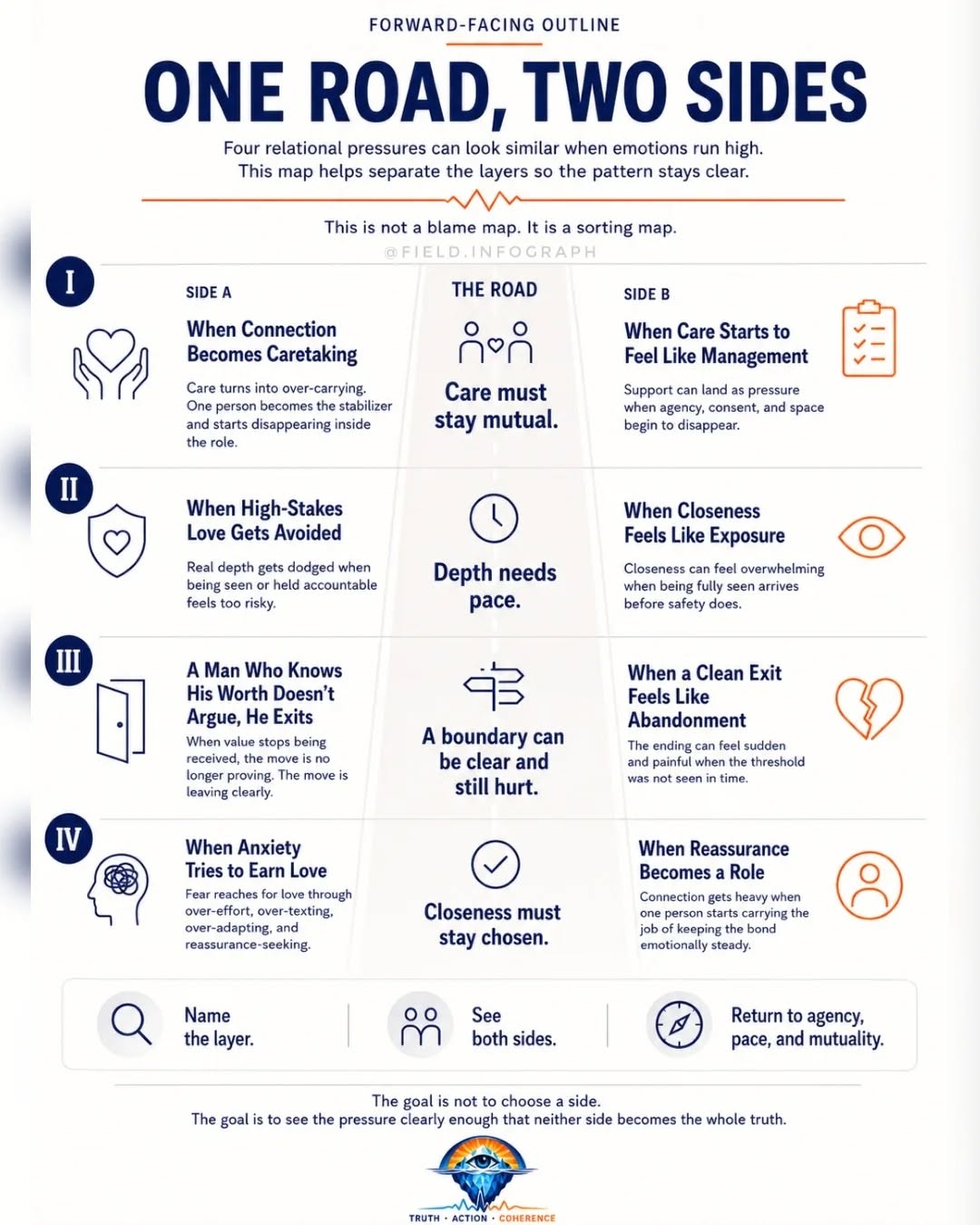
A relational map of reassurance that is freely offered, reciprocal, honest, and spacious enough for both people to remain themselves.
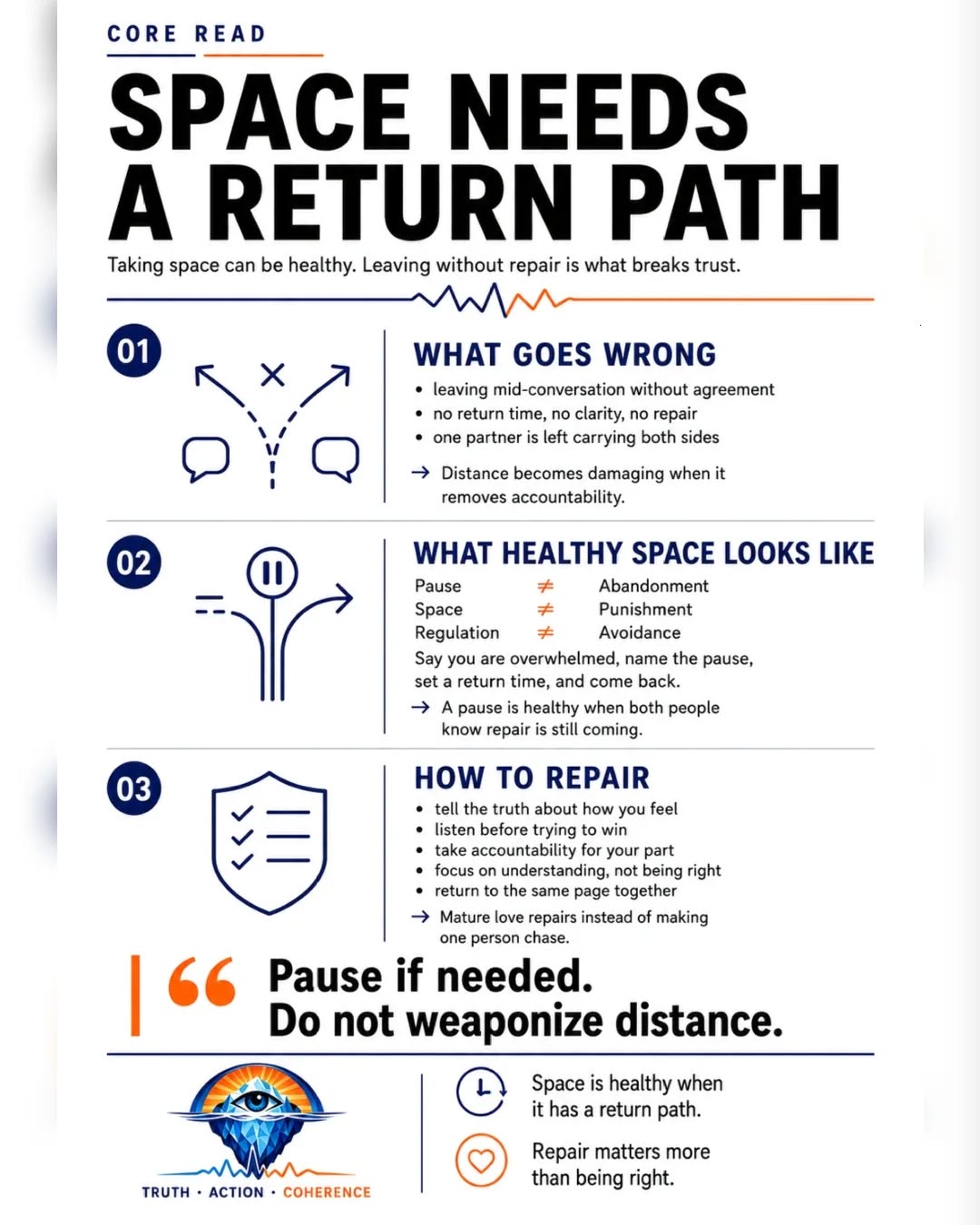
A relational distinction showing that distance alone does not heal; trust grows when space is followed by honest repair.
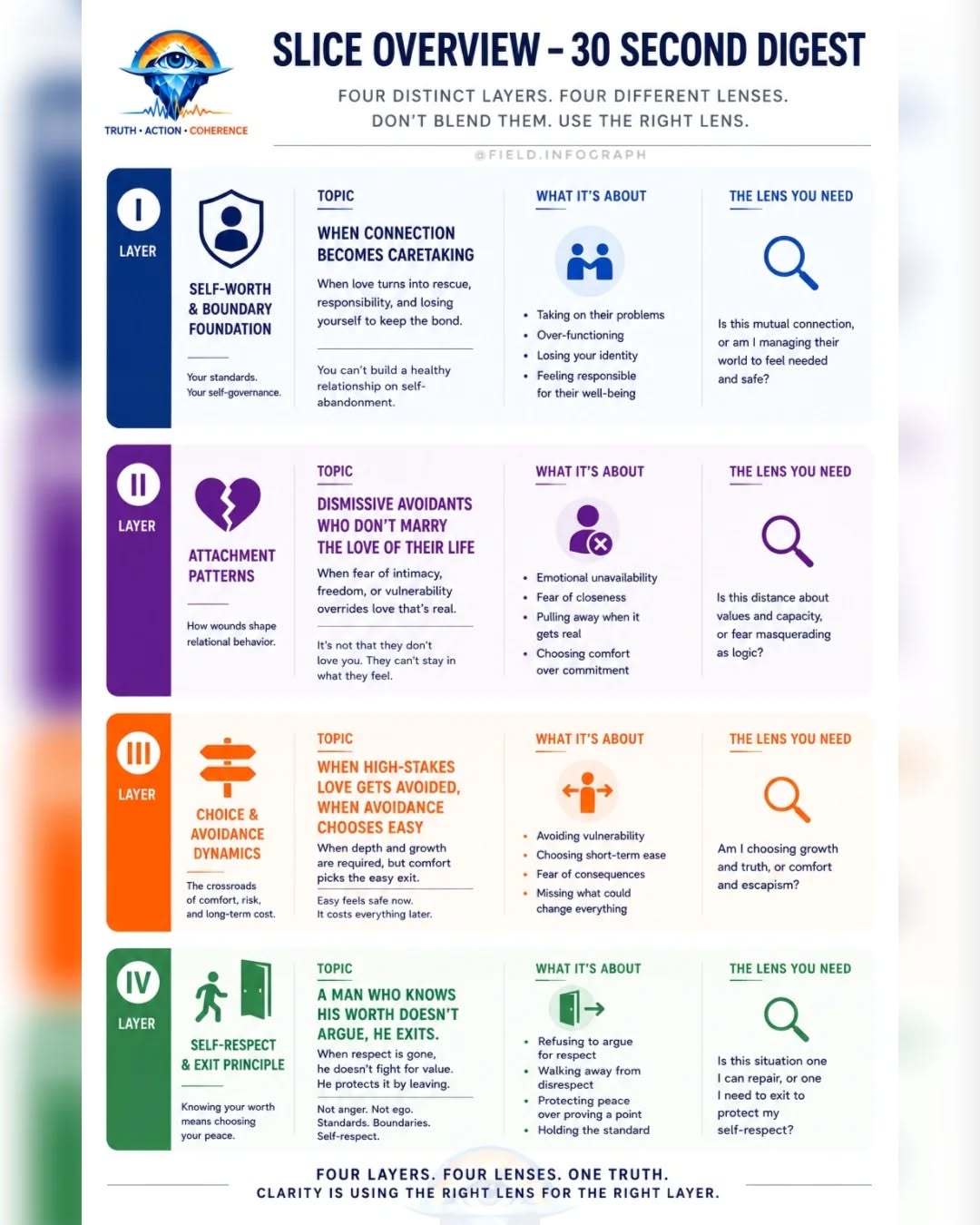
A diagnostic-of-the-situation map distinguishing boundaries, attachment pressure, avoidance, reassurance needs, and circumstances requiring a clean exit. It situates problem framing within relational conduct, agency, and repair.
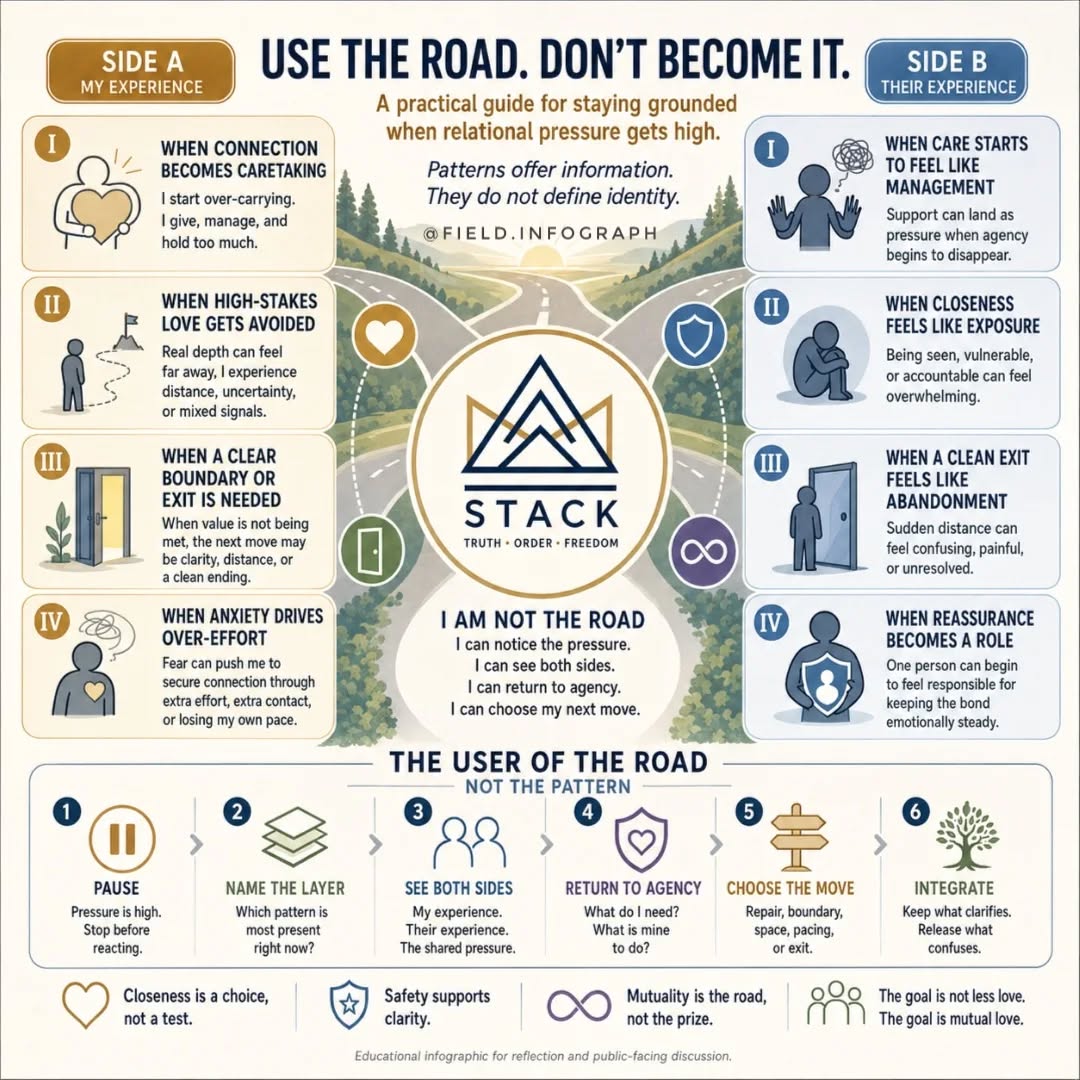
A one-page de-escalation map that names the pattern, holds both experiences, and returns each person to agency. It links pressure and competing experiences through relational conduct, agency, and repair.
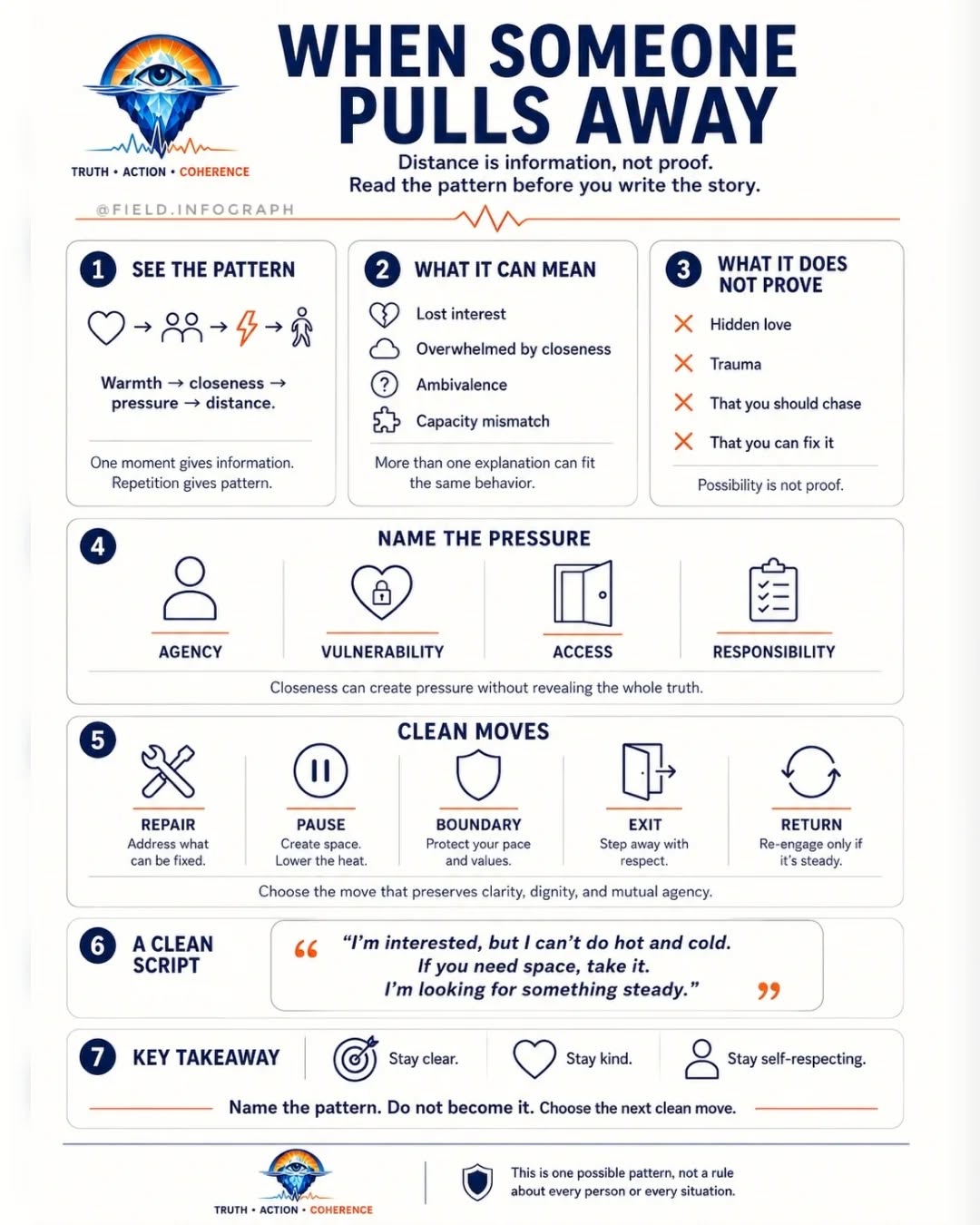
A relational restraint practice: honour distance, observe the pattern, preserve dignity, and avoid filling uncertainty with an invented narrative.
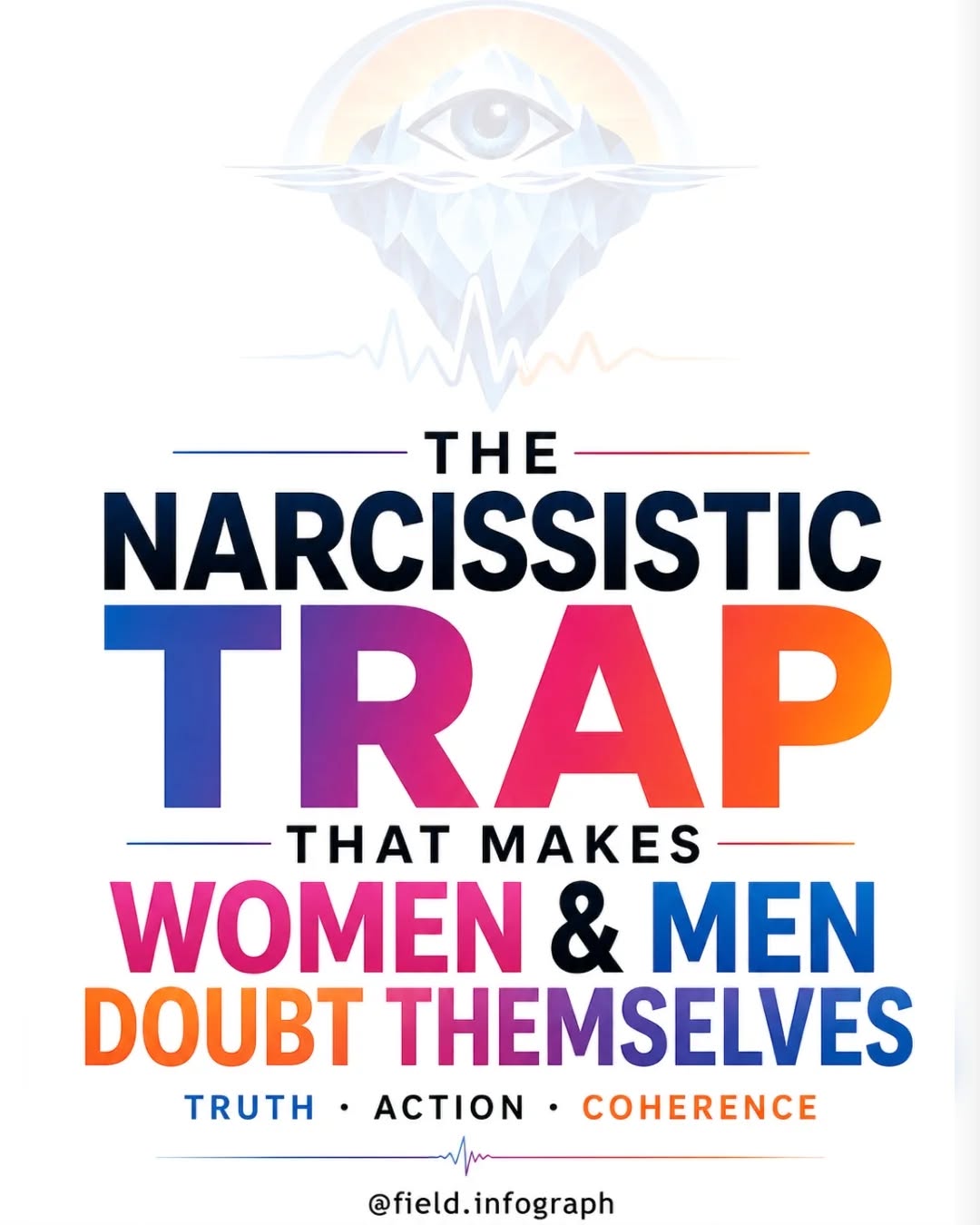
A seven-frame map restoring the full relational pattern when one person’s reaction is isolated and used to define the whole story.
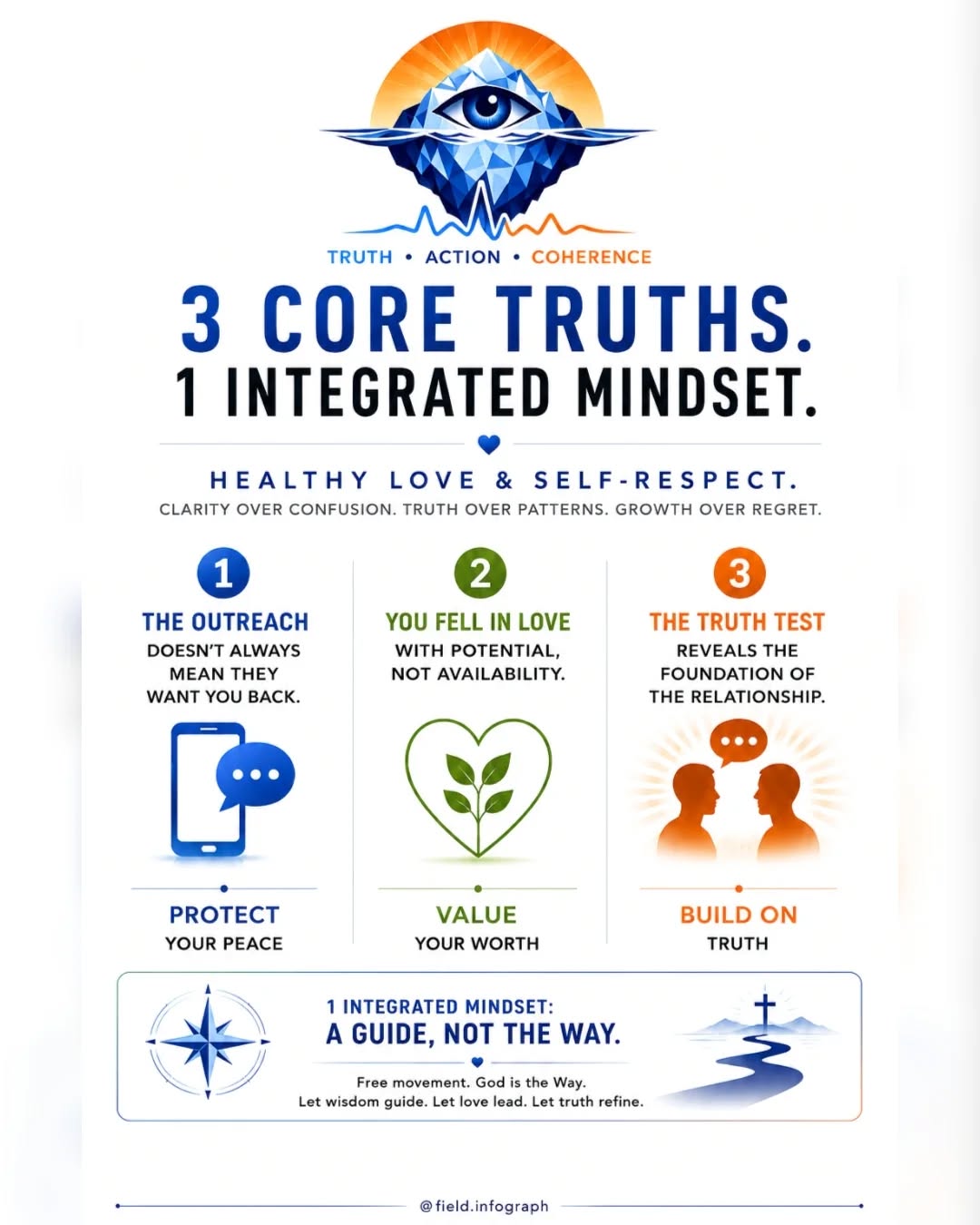
A seven-frame discernment map for testing renewed contact against accountability, consistency, availability, and the clarity it leaves behind.
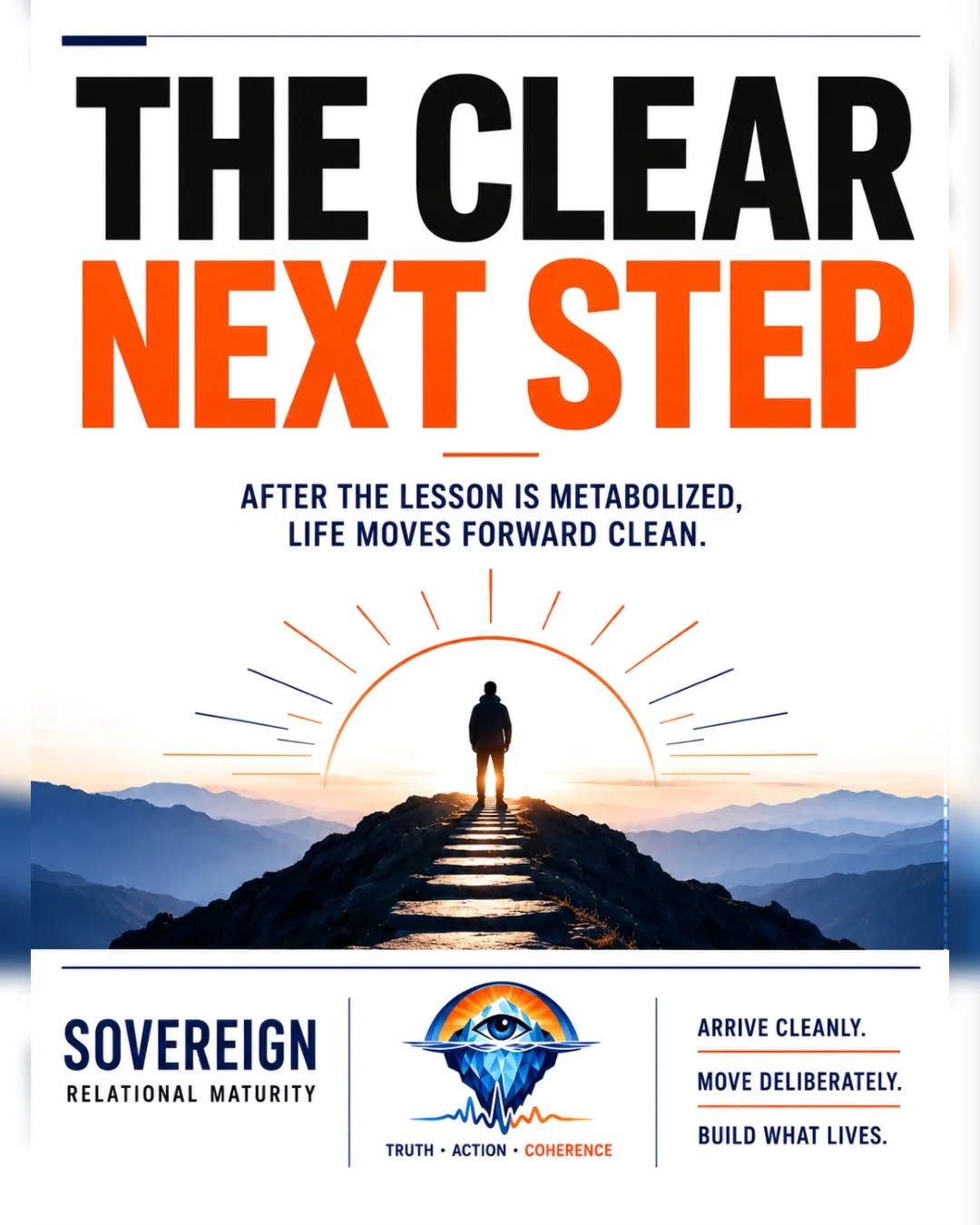
A three-frame integration map for turning truth, care, boundaries, repair, release, and memory into conscious forward movement. It connects integration with the practical demands of relational conduct, agency, and repair.

A three-frame guide to honouring what was real without letting nostalgia reopen a harmful or completed relational loop.
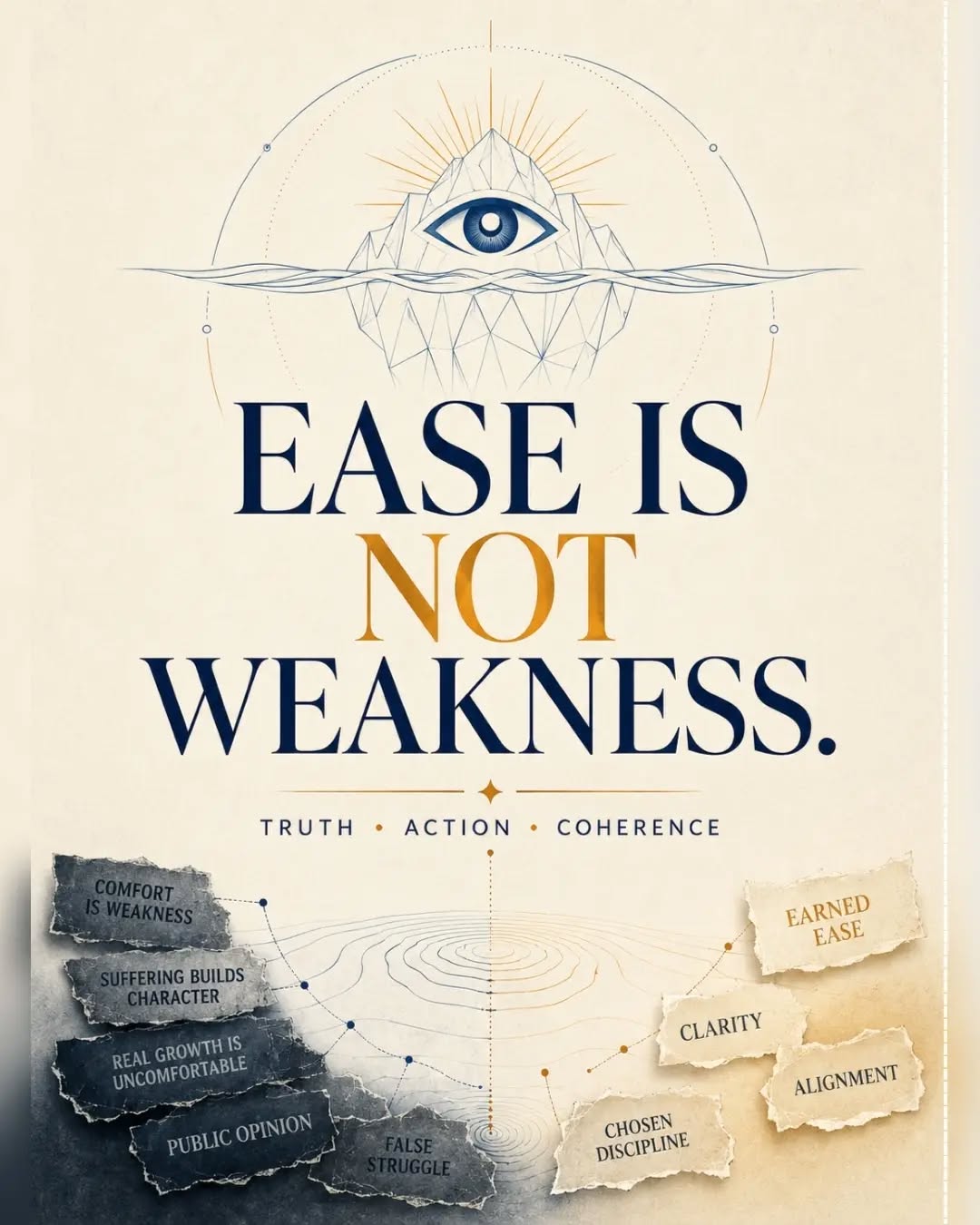
A three-frame reflection on the moment awareness turns inherited or automatic patterns into a live question of choice.
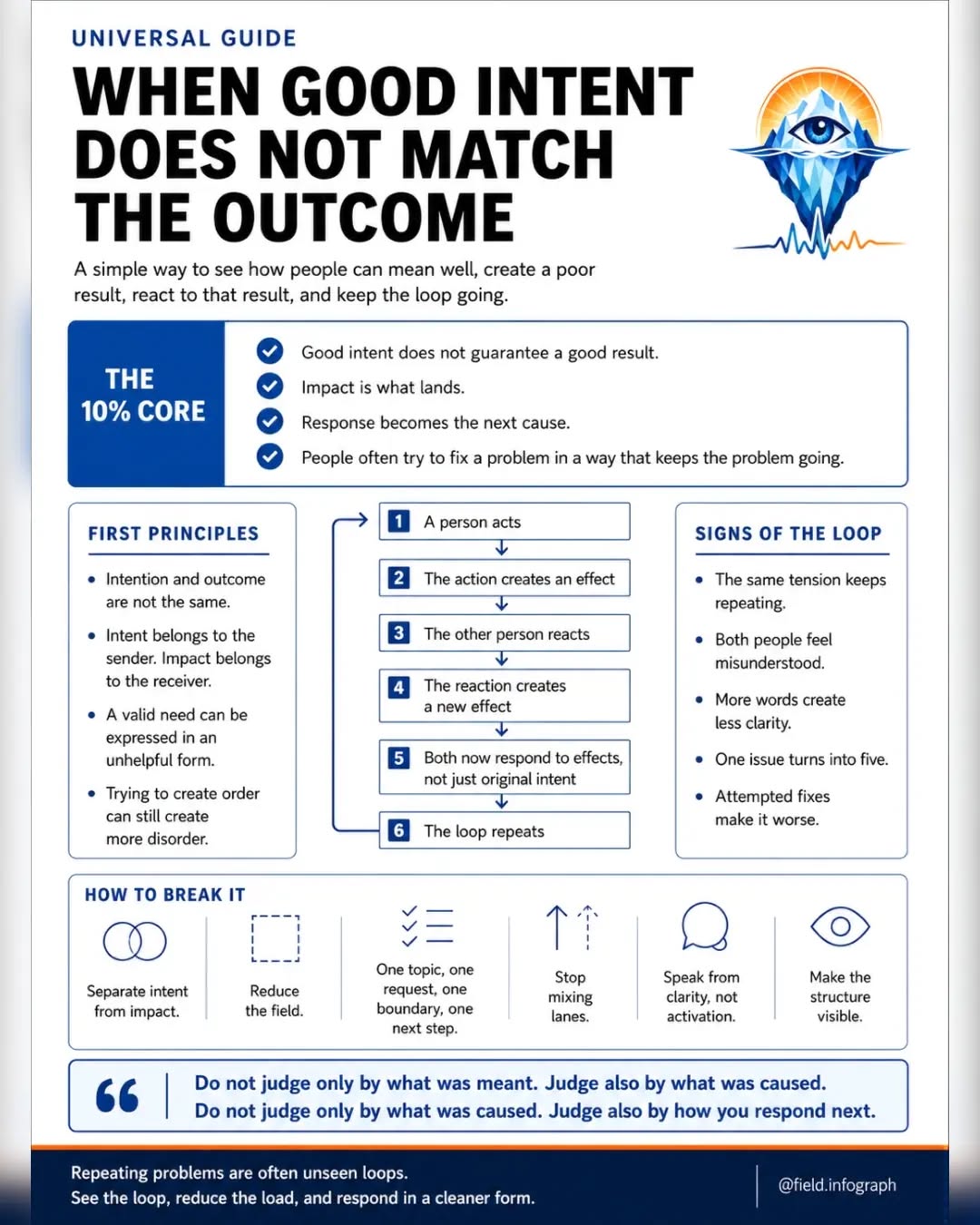
A one-page relational loop showing how fixing, structure-seeking, and premature meaning-making can amplify activation instead of creating clarity.
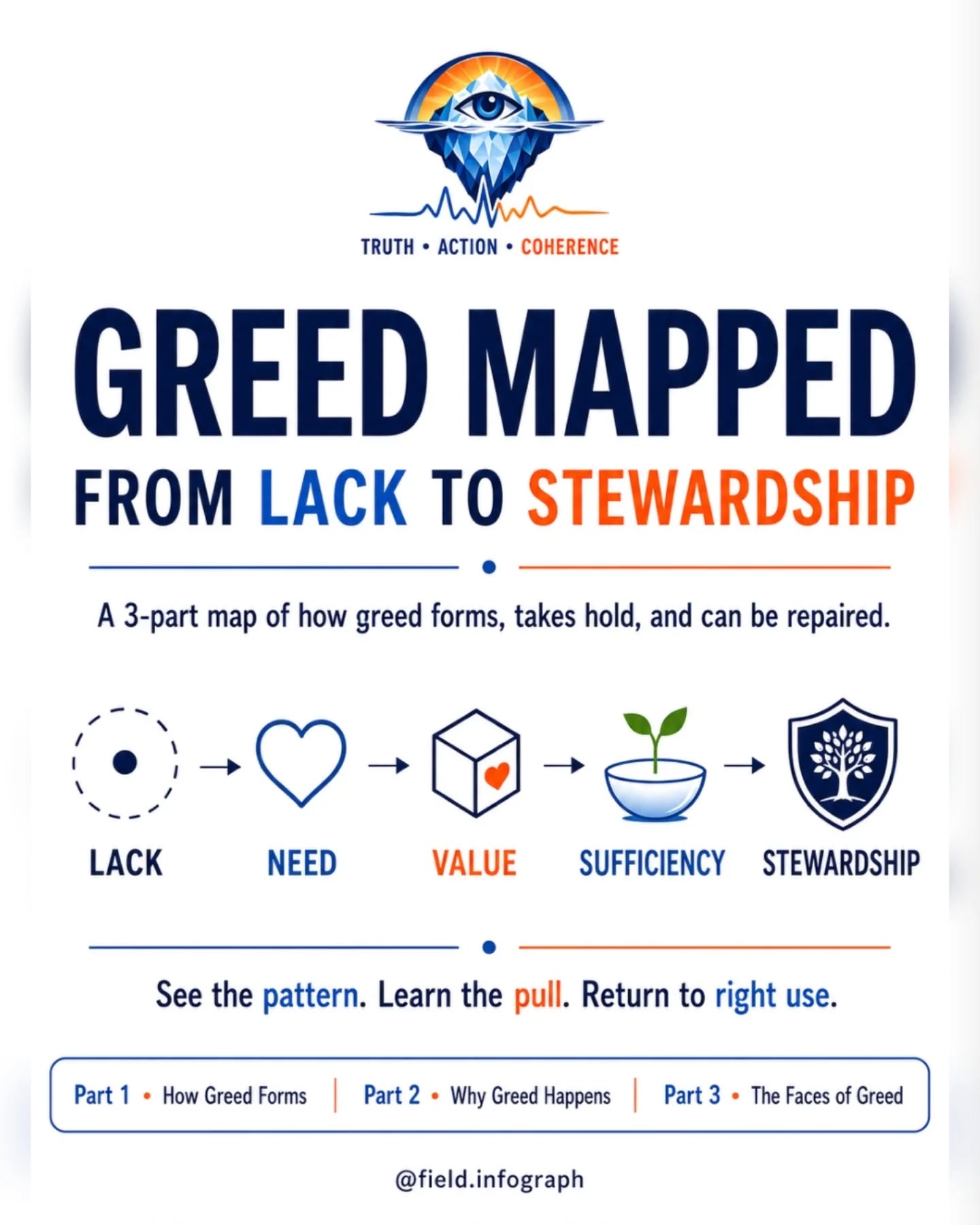
A five-frame pattern map moving from fear, scarcity, and control towards sufficiency, stewardship, generosity, and right use. It links need and fear through relational conduct, agency, and repair.
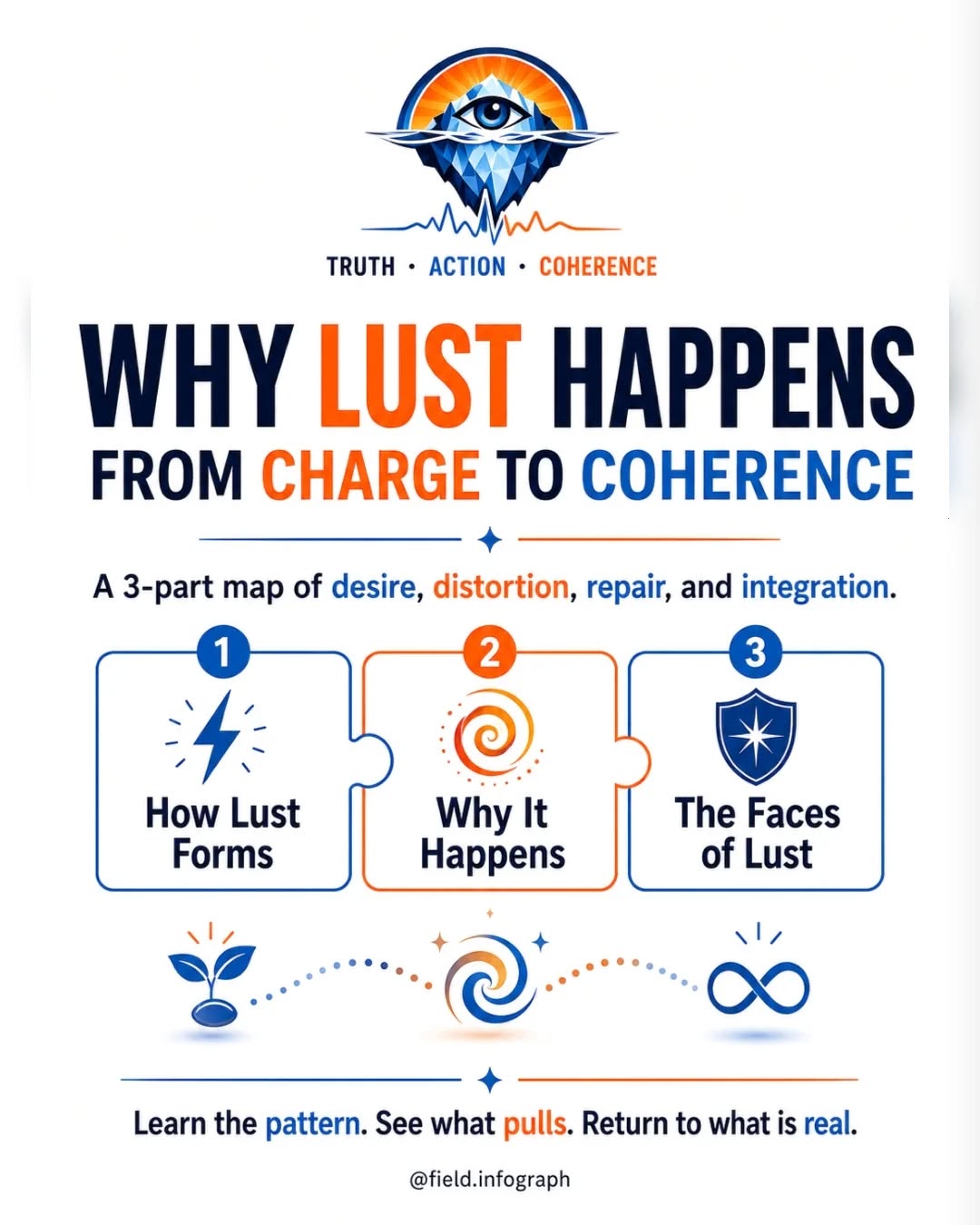
A five-frame reflective map separating honest desire from urgency that overrides consent, boundaries, reality, or another person’s humanity.
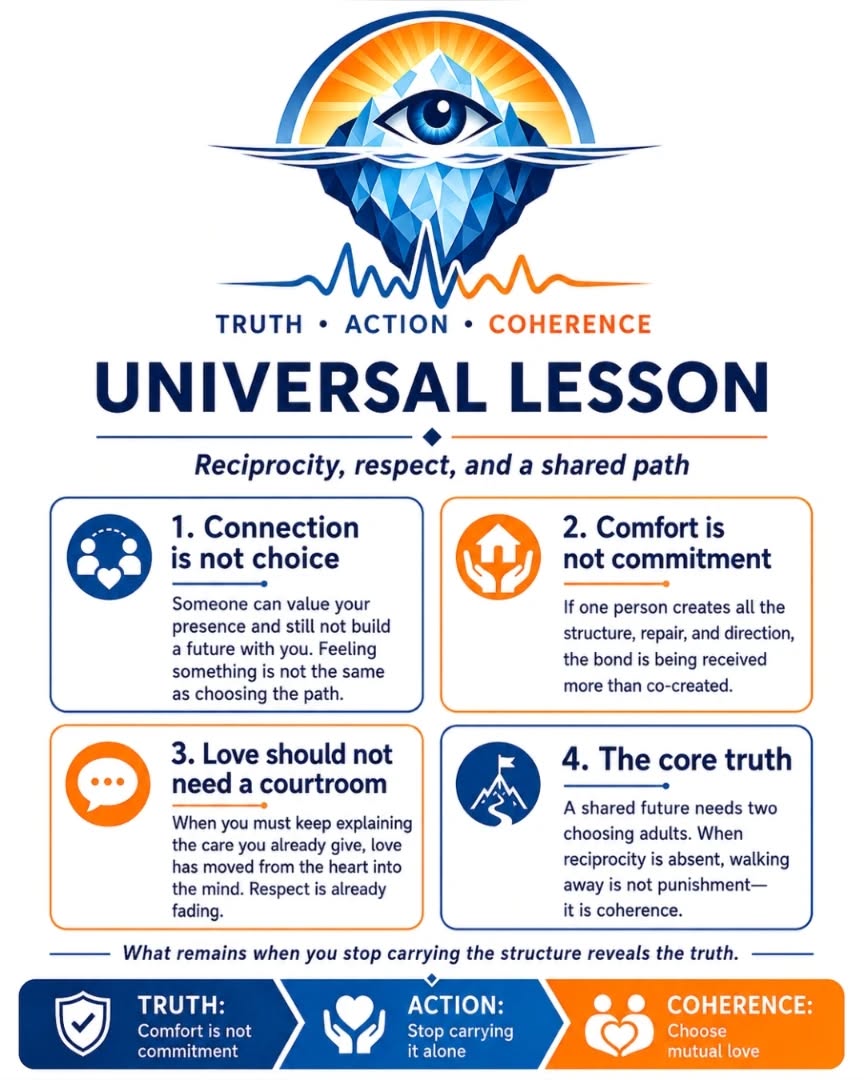
A one-page map showing that connection, comfort, and explanation cannot replace mutual effort, reciprocity, and a genuinely shared future.
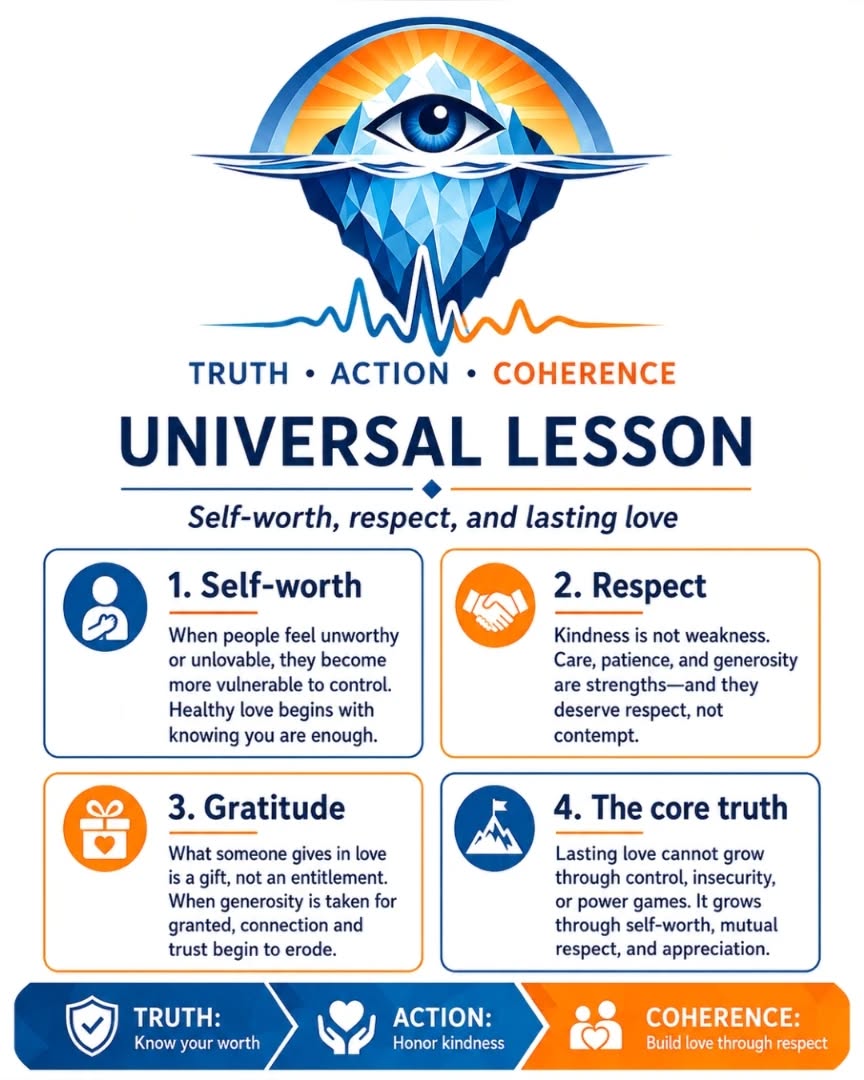
A one-page relational primer connecting self-worth, respectful care, gratitude, and the conditions required for lasting mutual love. It links self-worth and respect through relational conduct, agency, and repair.
Field 04 · 4 works
Attention, regulation, nourishment, invisible effort, and the conditions that make human capacity more usable without reducing people to diagnosis.
Primary works lead this field; supporting works follow in curated reading order.
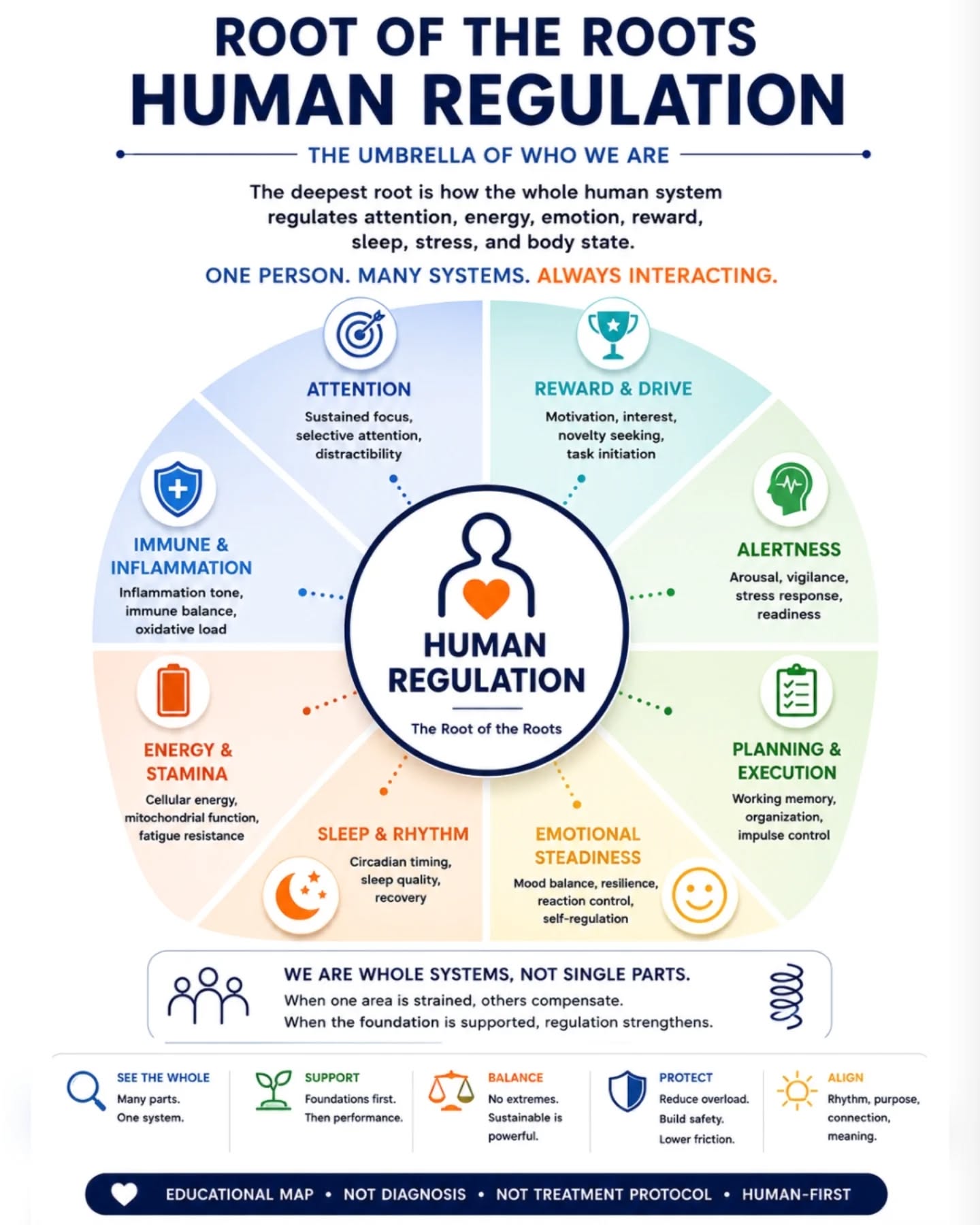
An eight-frame embodied map holding multiple regulatory parts, signals, and needs inside the dignity of one whole human being.
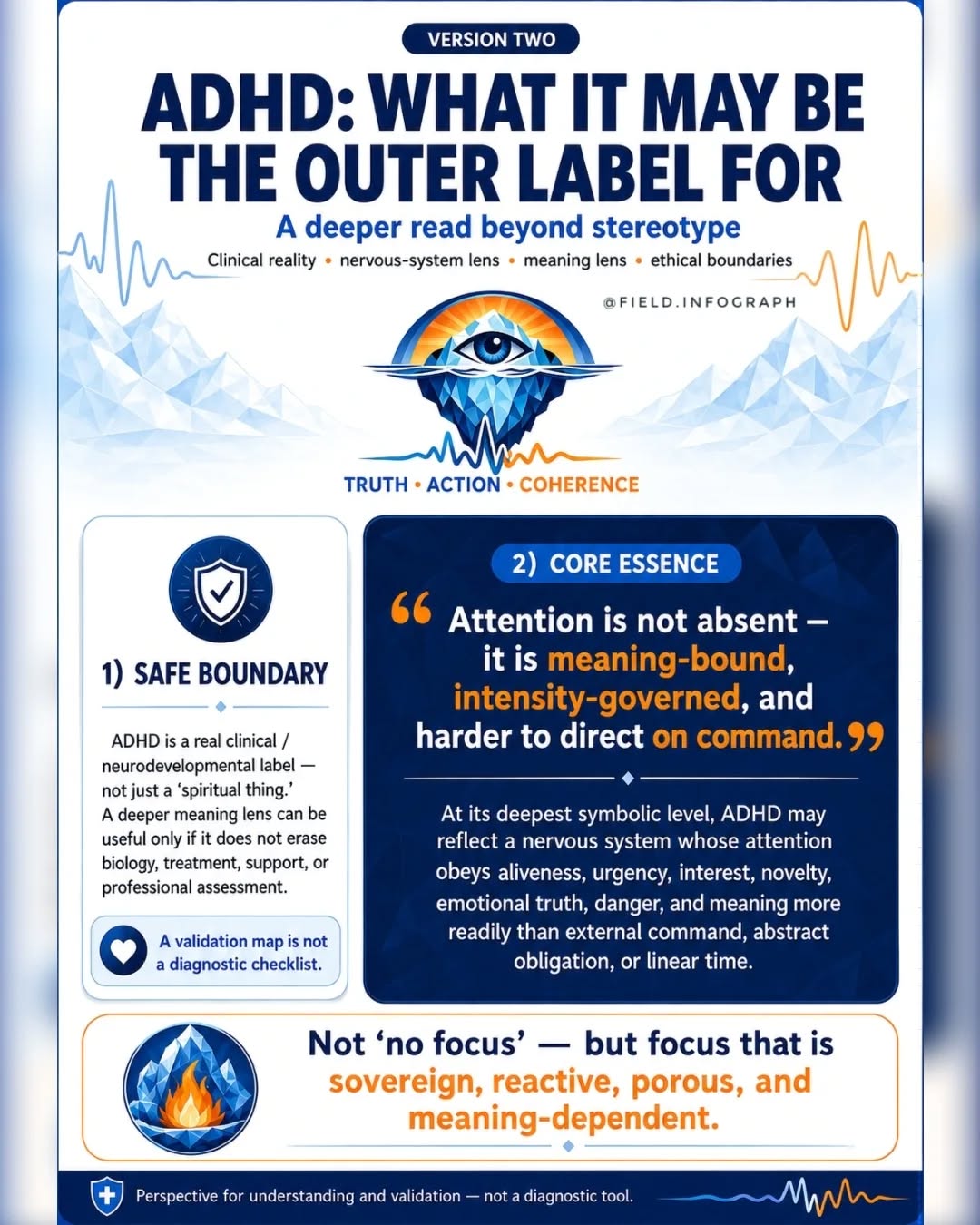
A strengths-aware reflection on shaping supportive structure around attention that follows meaning, urgency, interest, and aliveness. It brings meaning-led attention into focus within embodied life and everyday participation.
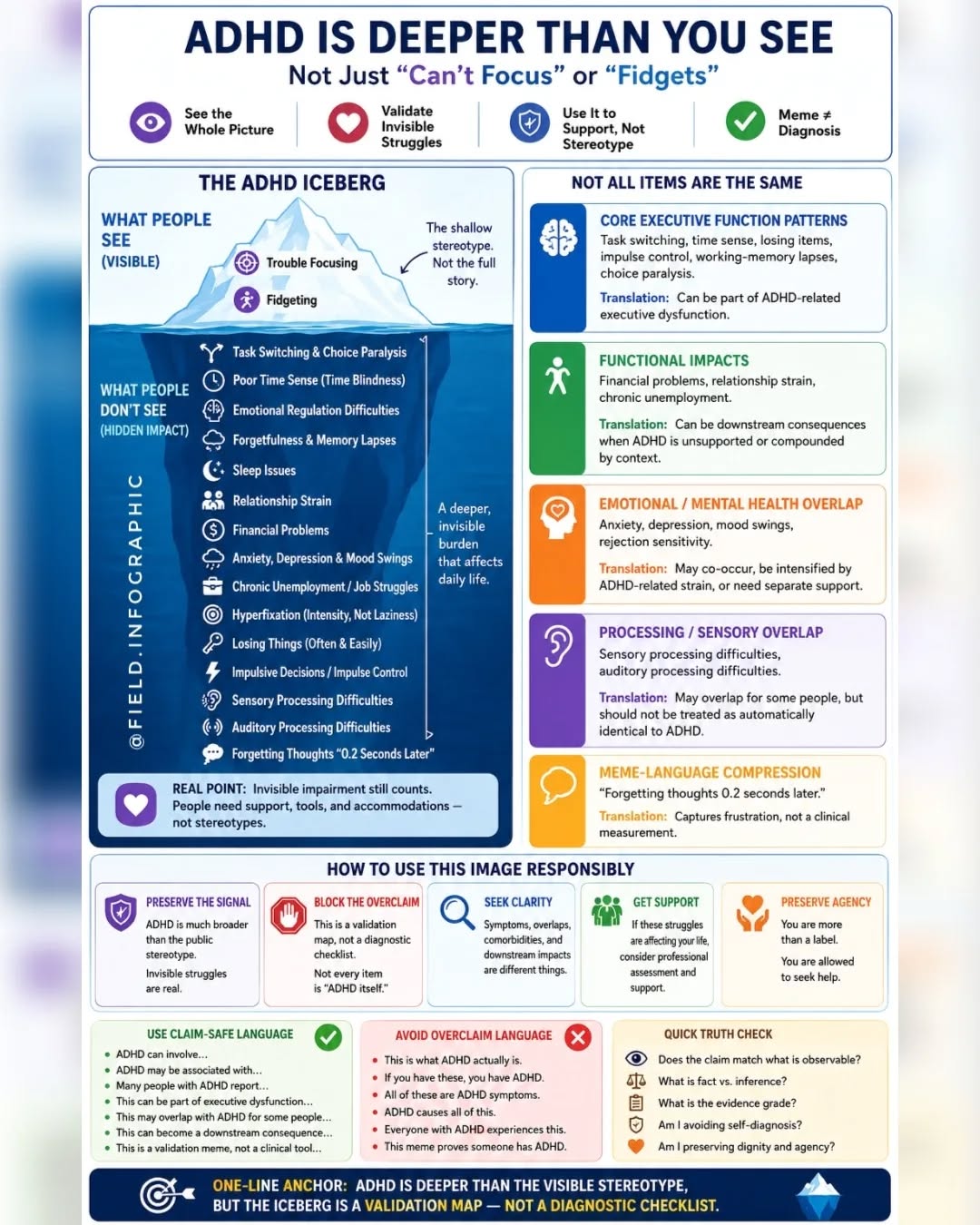
A reminder that unseen difficulties can carry real weight even when they are not legible to other people.

A practical food-planning rhythm using simple meals, hydration, repetition, and low-cost foundations to create steadiness during a fast month.
Field 05 · 12 works
How mechanisms, symbols, thresholds, words, and artefacts organise attention, interpretation, shared meaning, and action.
Primary works lead this field; supporting works follow in curated reading order.
A fourteen-frame mechanism map asking who benefits, who carries cost, and when convenience becomes governance rather than neutral function.
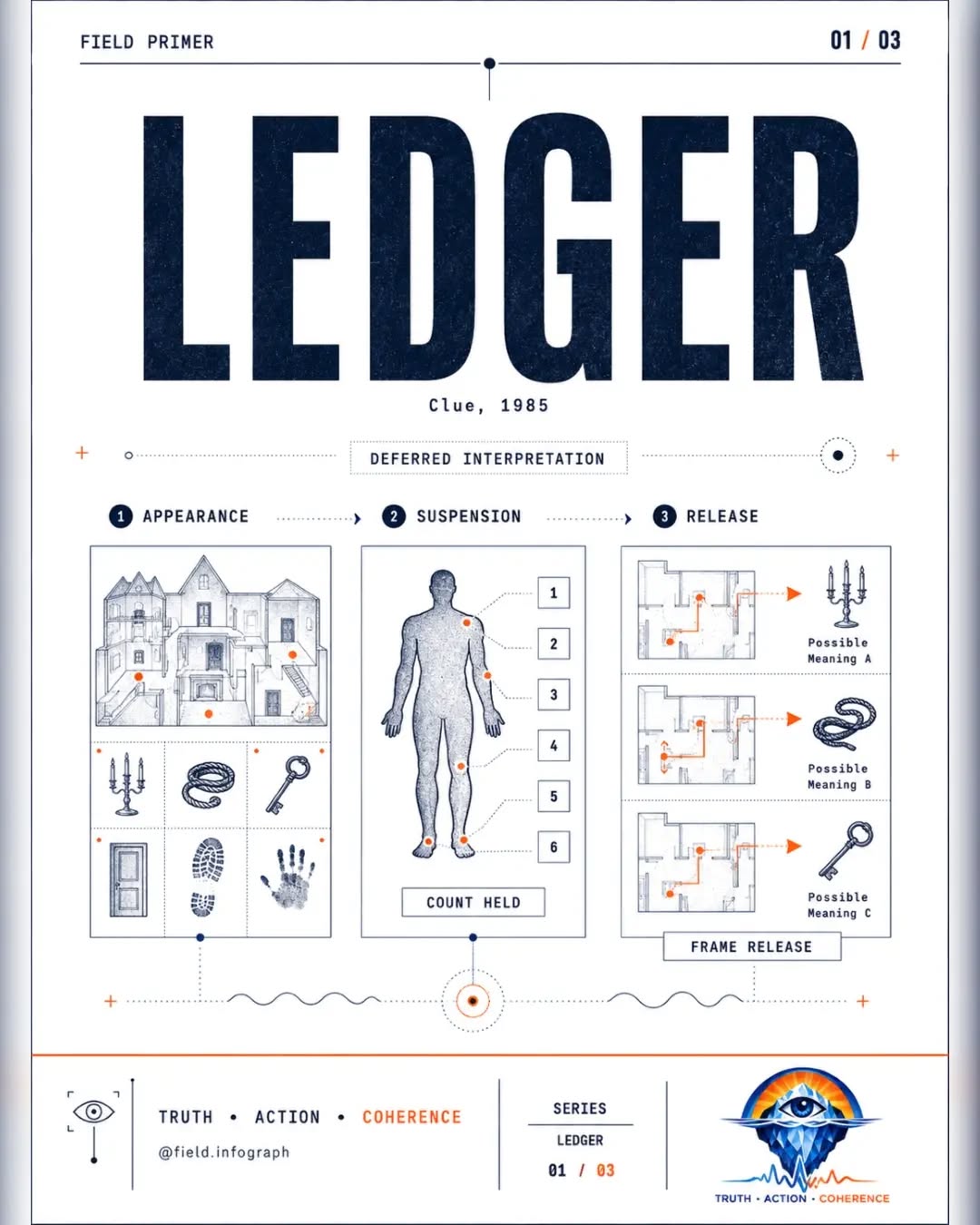
A five-frame field primer treating the artefact as evidence of what an observer noticed, selected, connected, omitted, and translated.
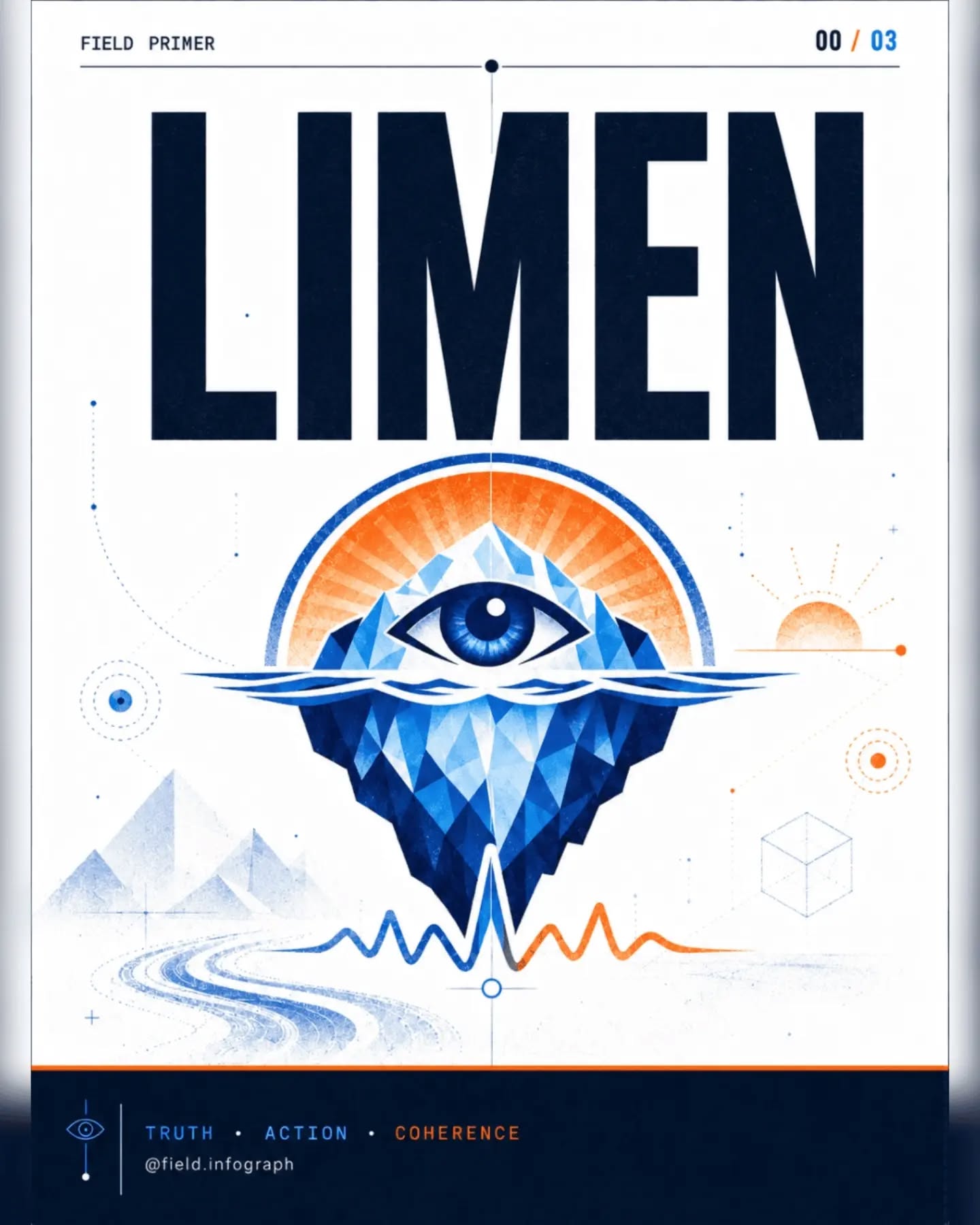
A five-frame field primer on the live threshold where outside becomes inside before naming, selection, or classification is complete.
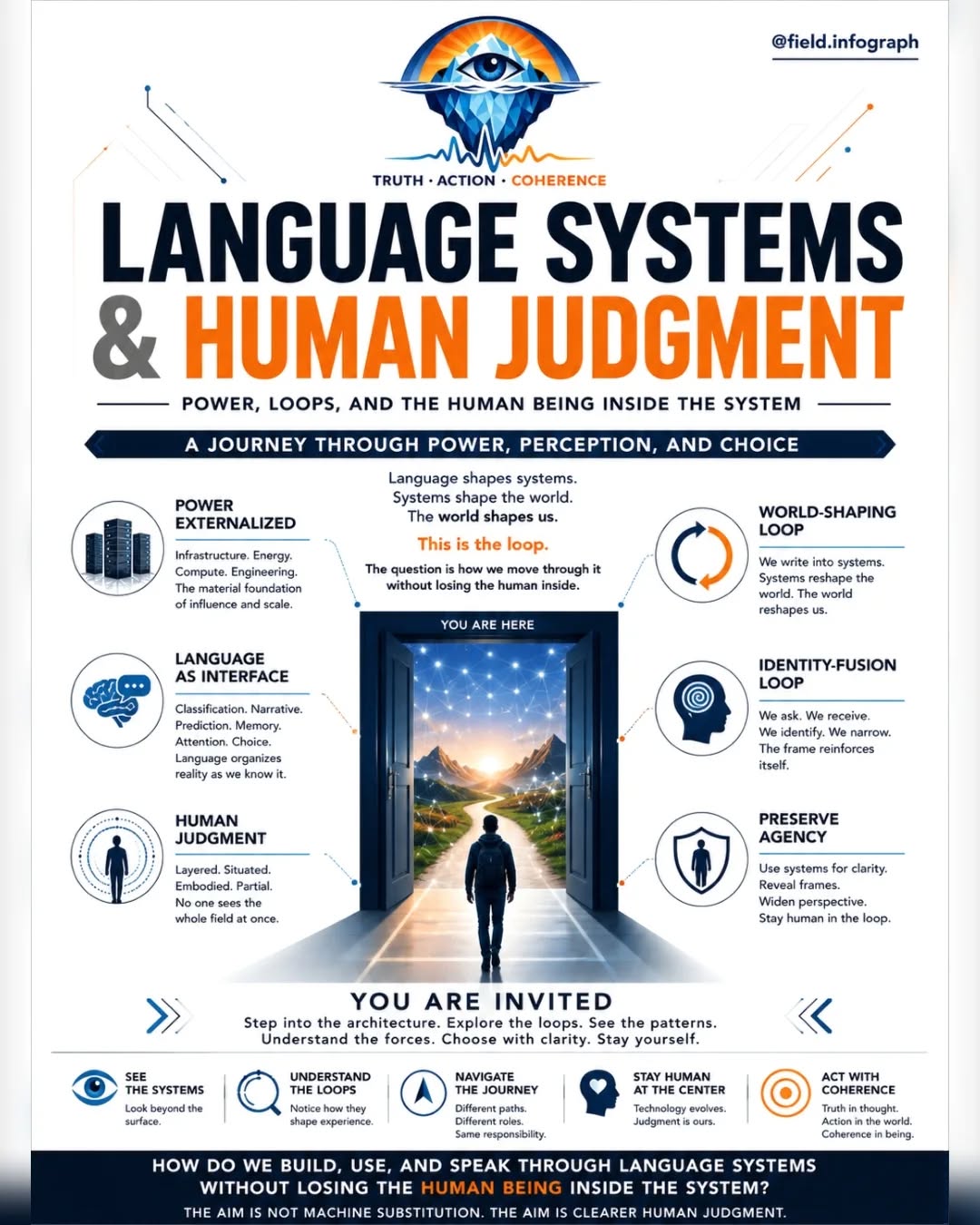
A one-page field statement bringing attention to how systems and human judgement arise together within individual and collective becoming.
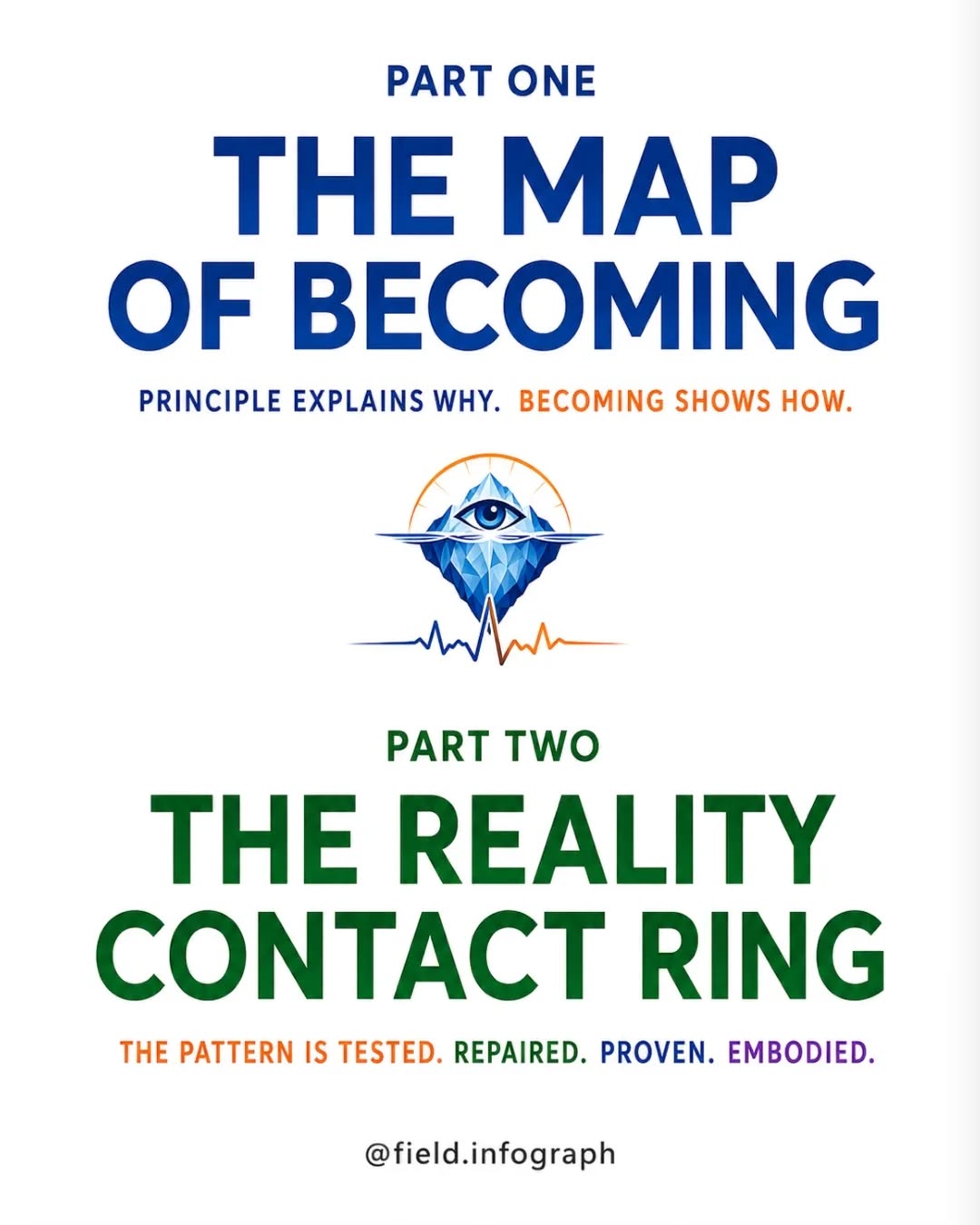
A four-frame map following an idea from principle and symbol through pressure, repair, embodiment, and contact with real life.

A seven-frame illustrated reflection on how language, story, structure, solitude, and shadow can guide, capture, protect, or isolate.

A one-page invitation to perceive the structure shaping experience while still living the experience rather than replacing it with analysis.
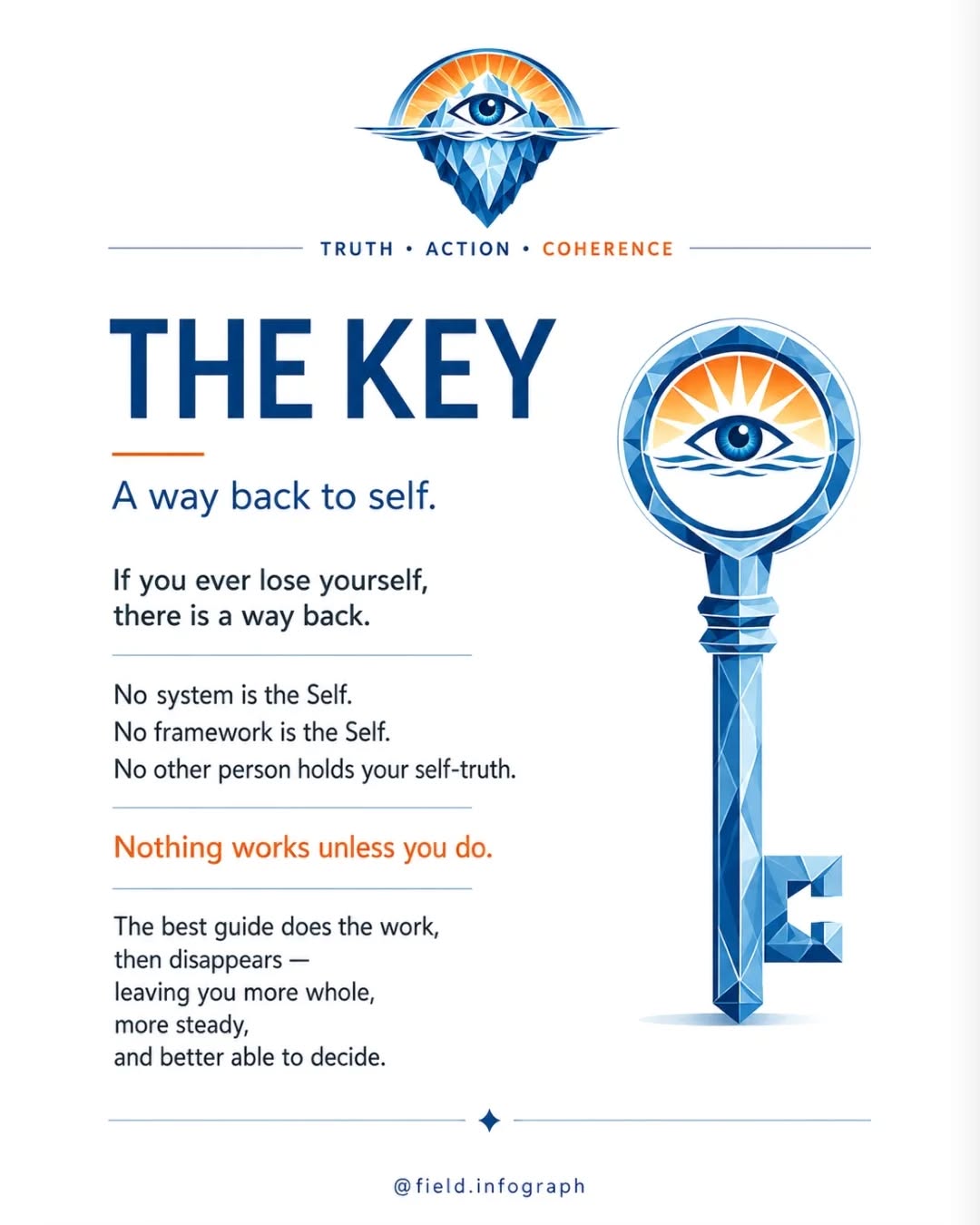
A five-frame symbolic sequence moving from access and threshold into interior space, then returning attention to the person who enters.
A six-frame reminder that alignment is formed through repeated design choices, not only through declarations, visions, or occasional major decisions.

A one-page field primer on a small public signal that breaks quiet, travels through shared space, and summons attention without choosing the response.

A seven-frame spiritual visual essay on prayer as covering, calling, restoration, and a movement towards union. It brings prayer into focus within signal, interpretation, and shared meaning.
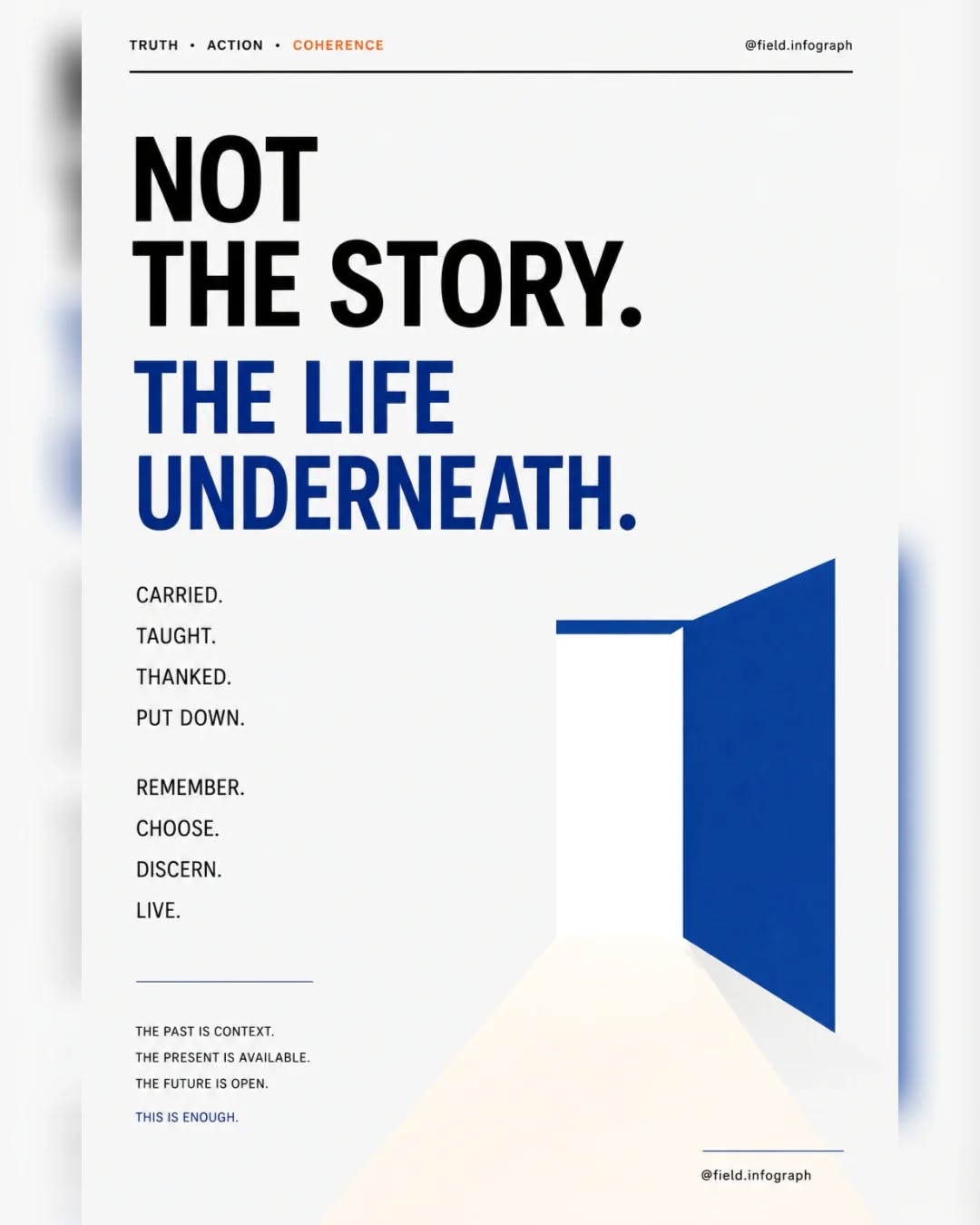
A one-page temporal reminder that life is encountered in the present rather than indefinitely deferred into planning, analysis, or imagined futures.
Field 06 · 2 works
Value, commitments, measurable execution, delivery quality, and fair exchange without turning commercial frameworks into outcome promises.
Primary works lead this field; supporting works follow in curated reading order.
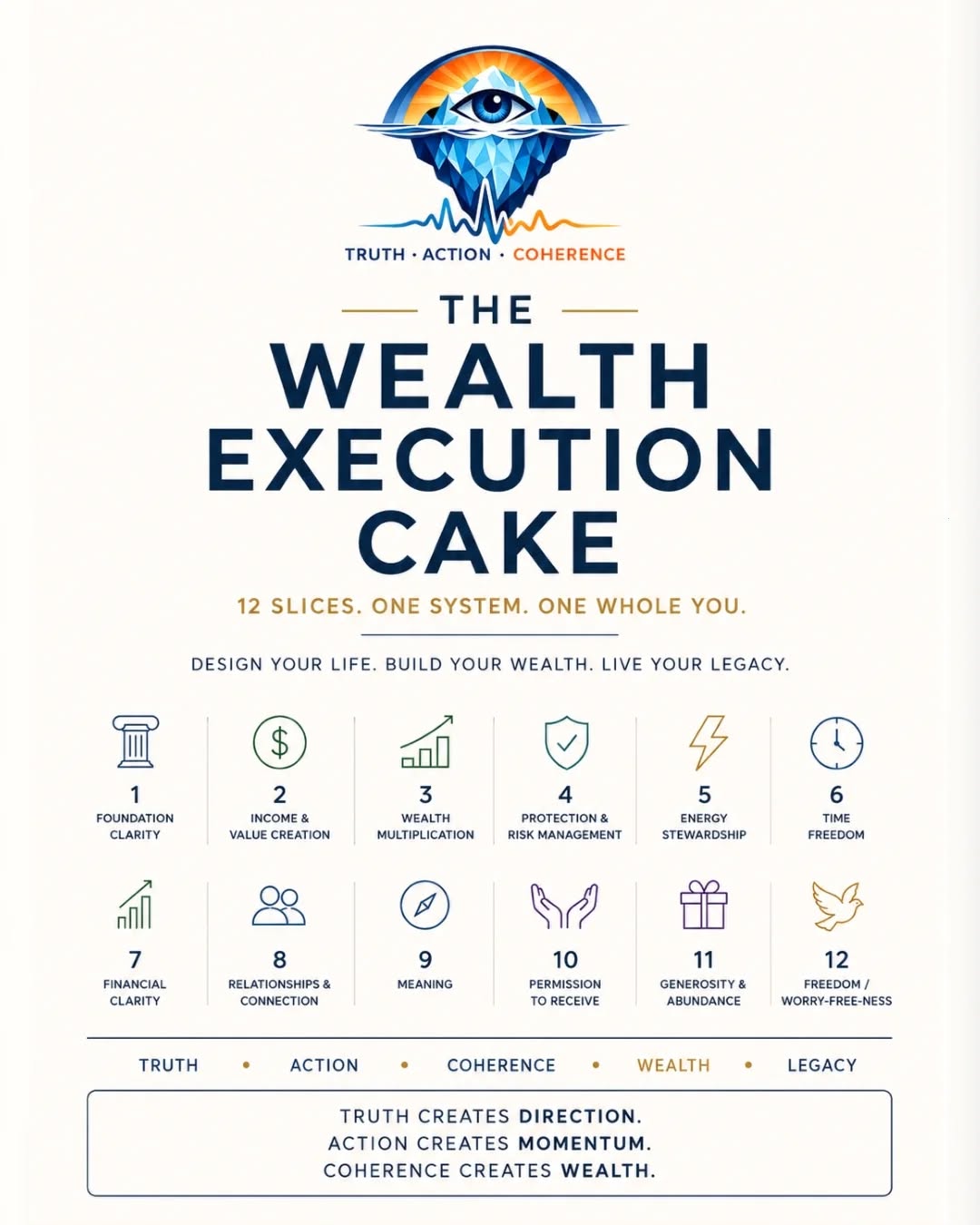
A fifteen-frame visual operating model that divides wealth execution into twelve slices, each containing twelve practical layers. It makes twelve domains legible across value exchange, execution, and accountable delivery.
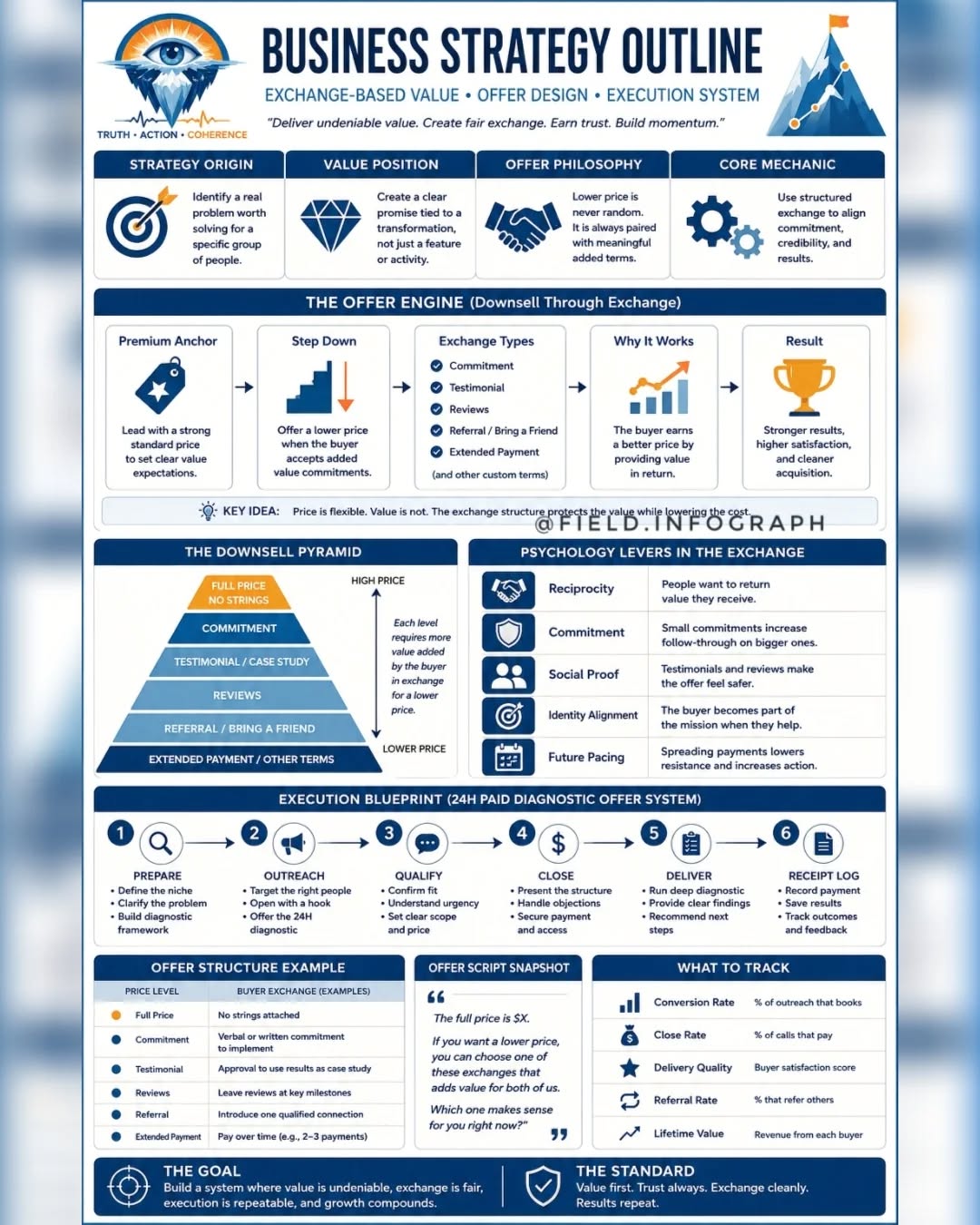
A commercial design map for lowering price fairly by exchanging concessions for clear buyer commitments and measurable execution receipts.
No works match this selection.