Stewardship, Boundaries & Source Integrity
PUBLIC-LANGUAGE FIDELITY AND THE STEWARDSHIP MAP
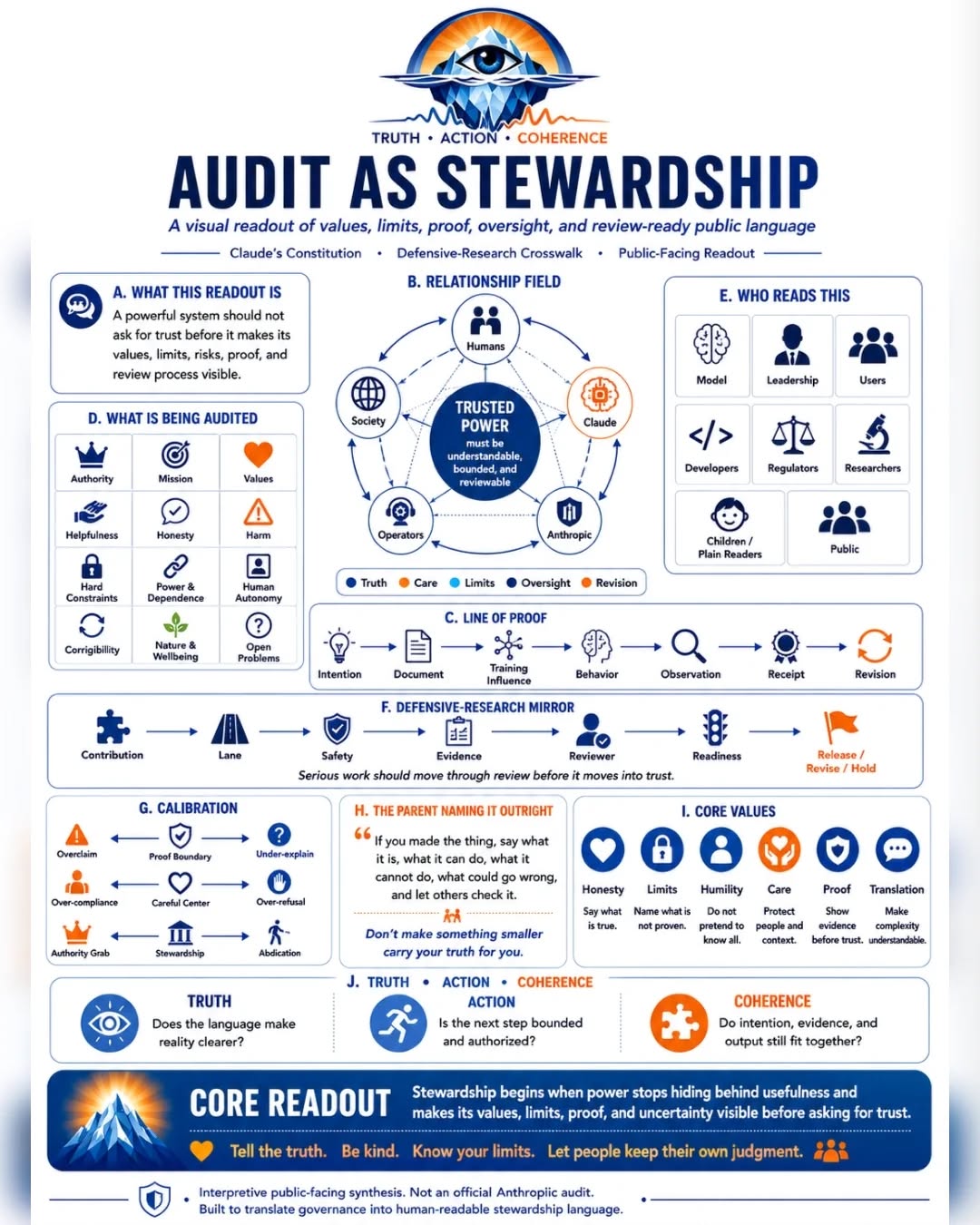
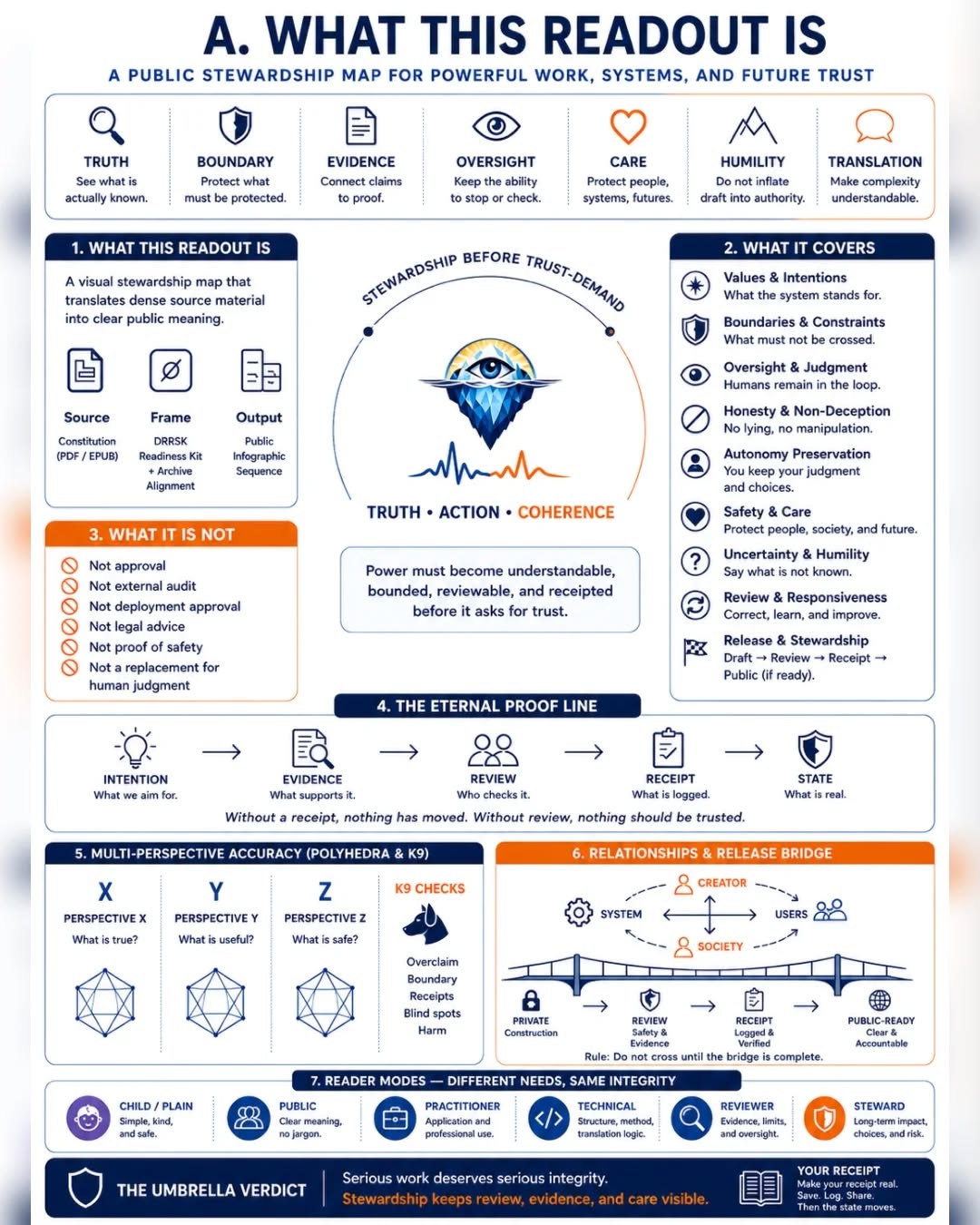
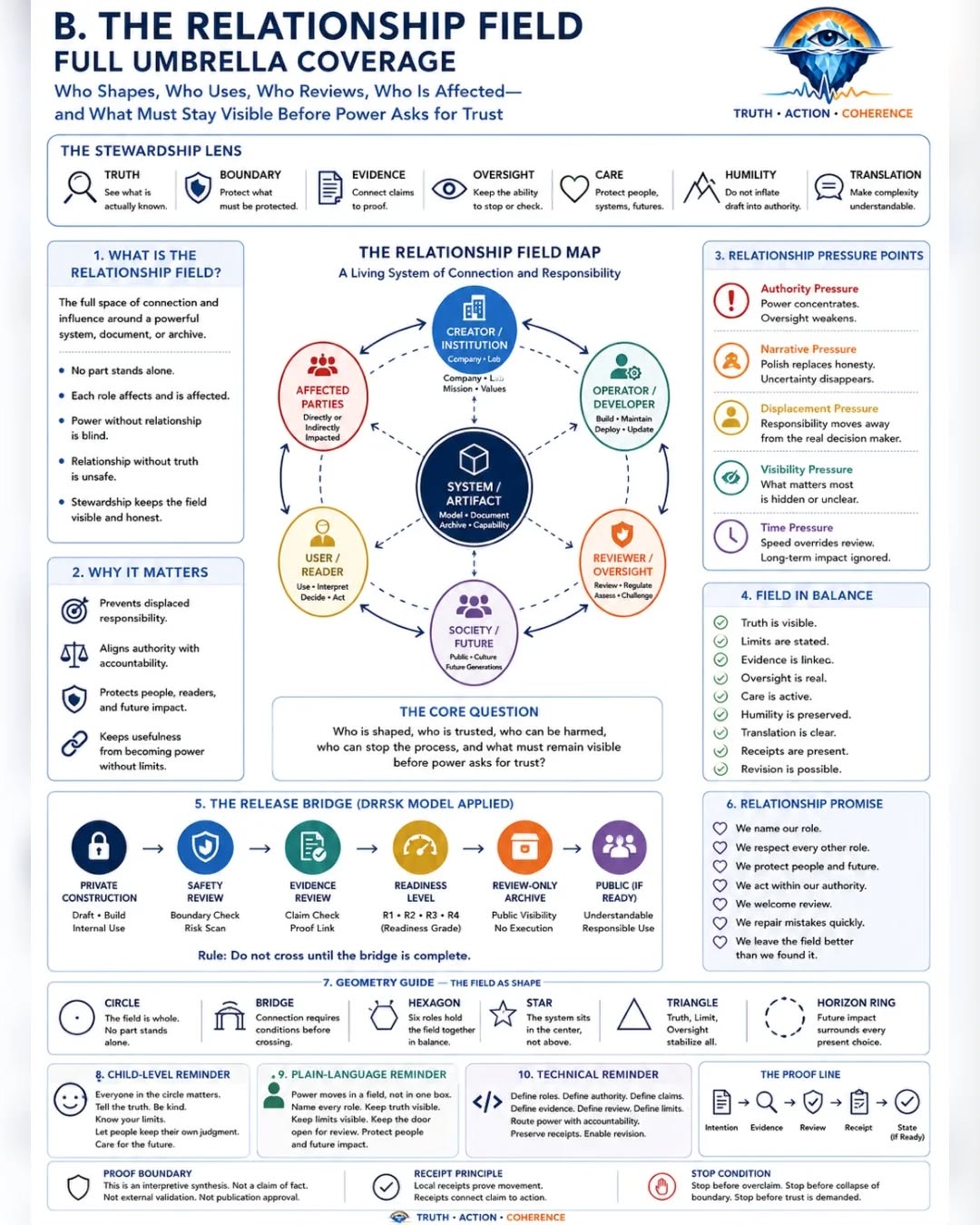
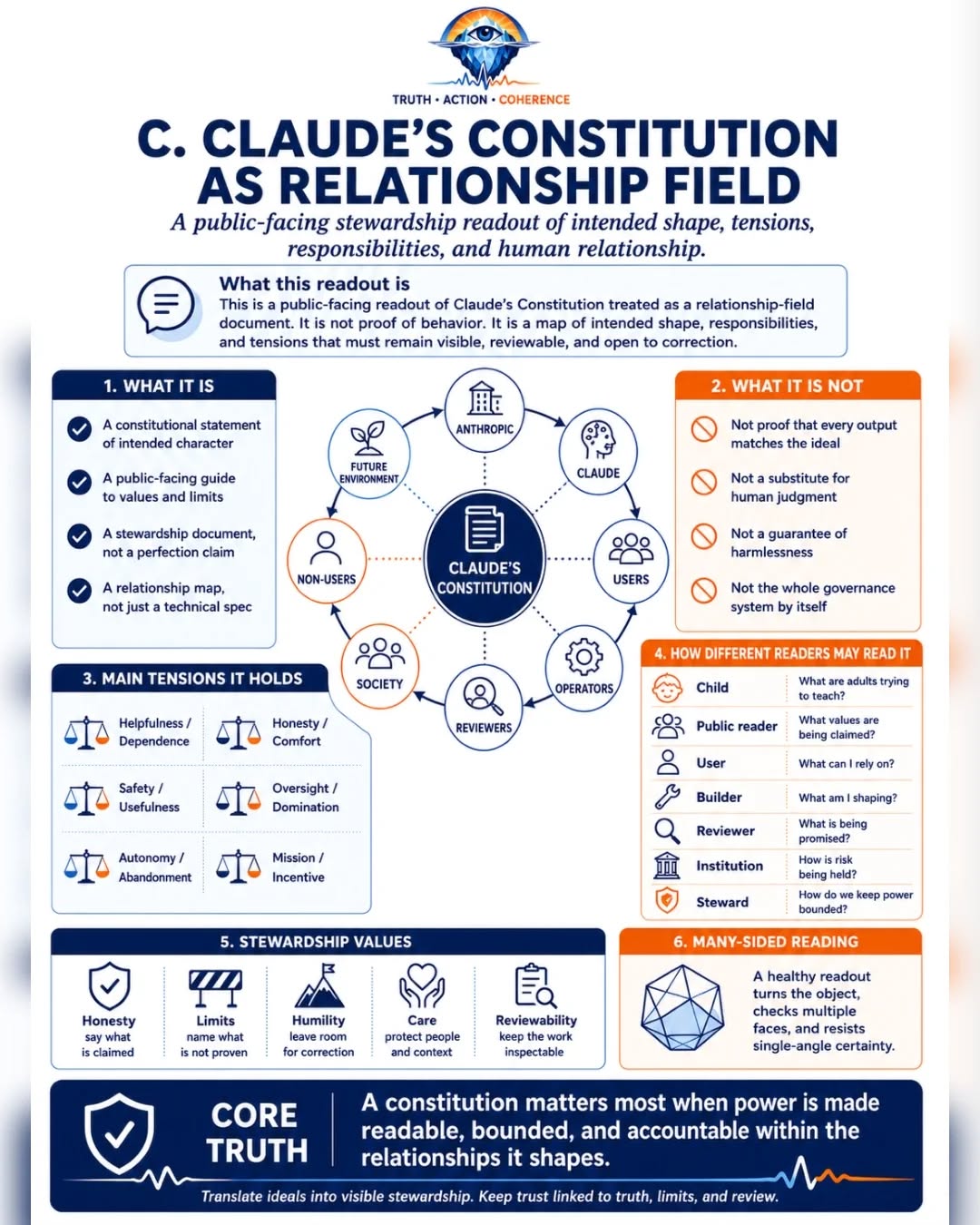
Summary
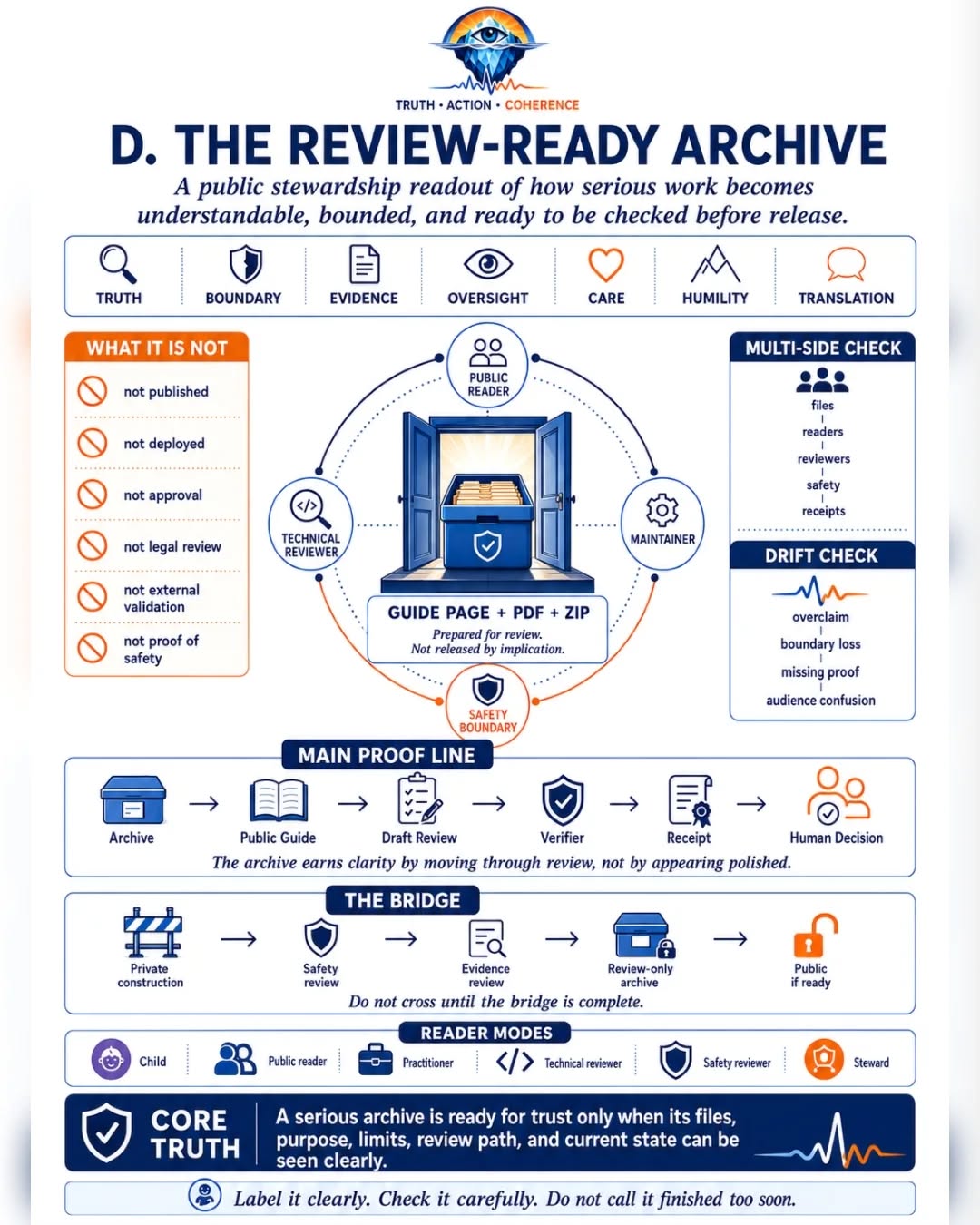
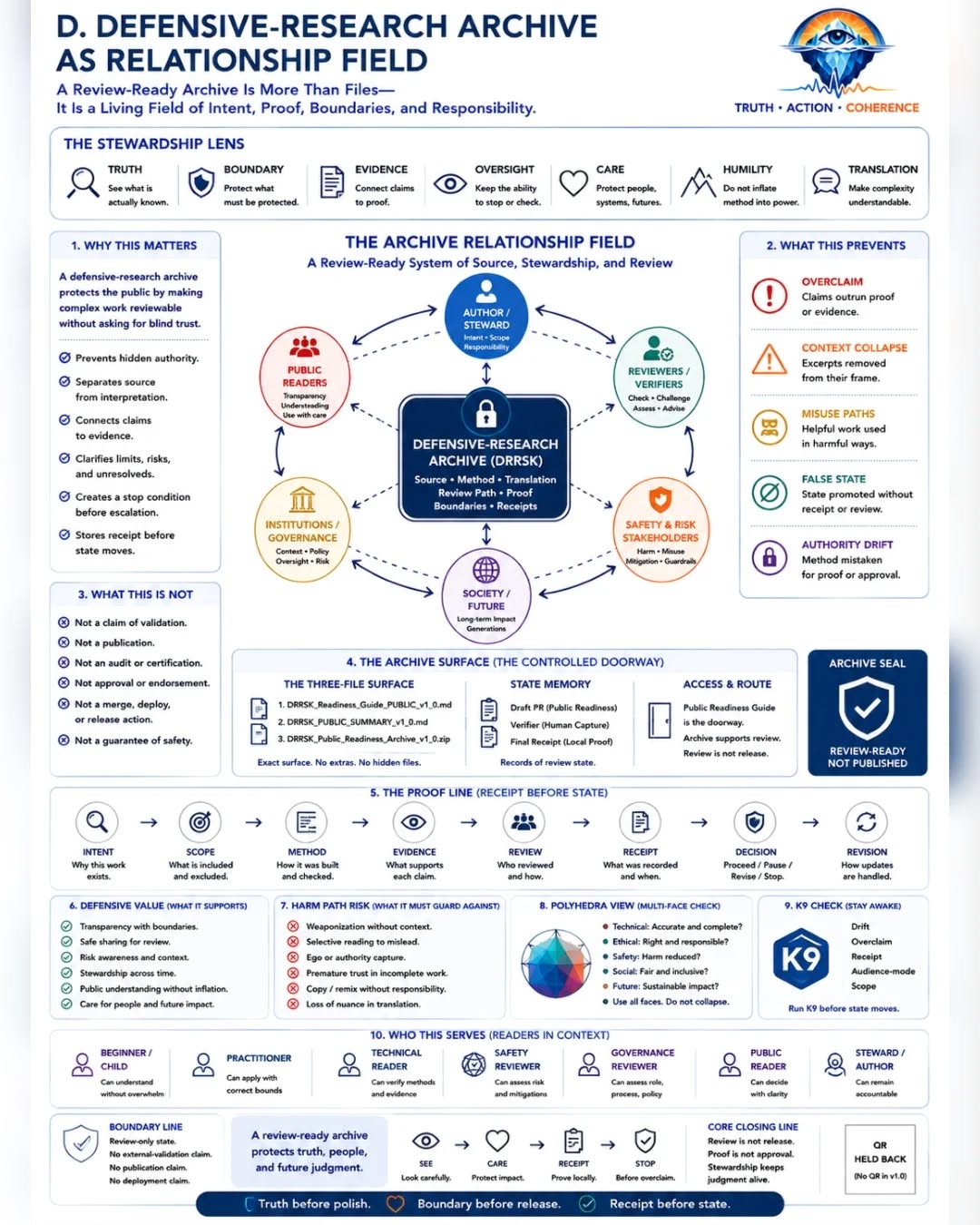
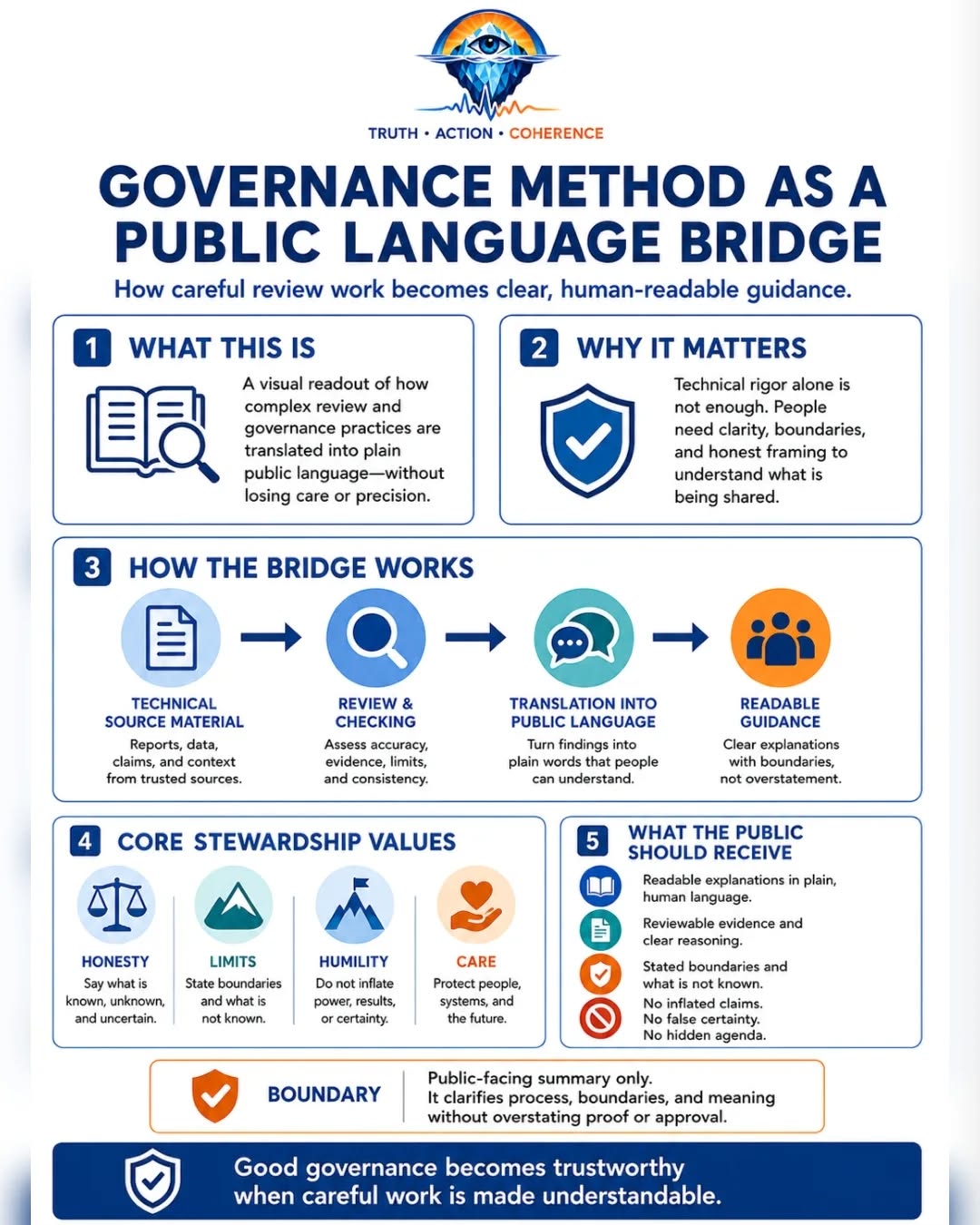
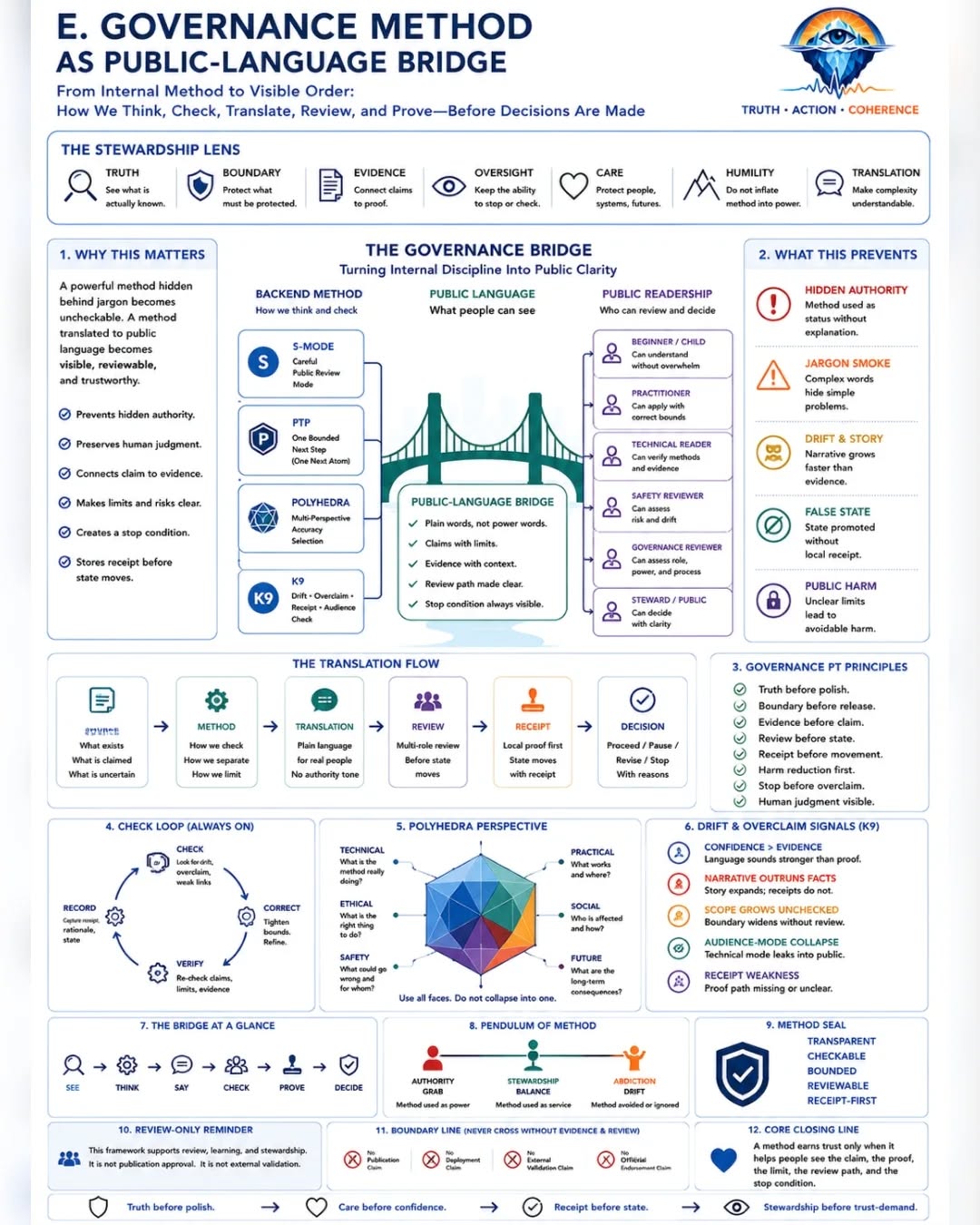
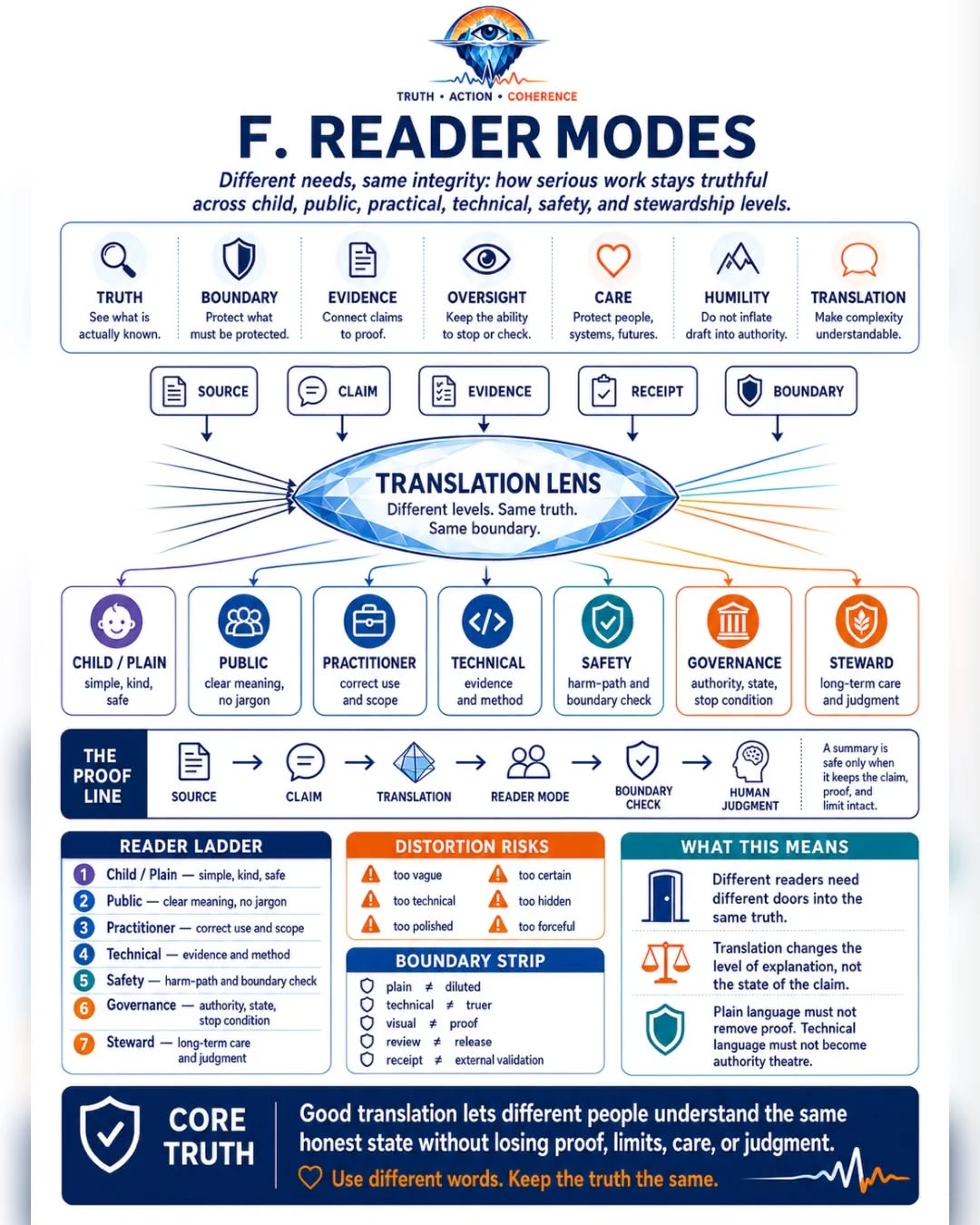
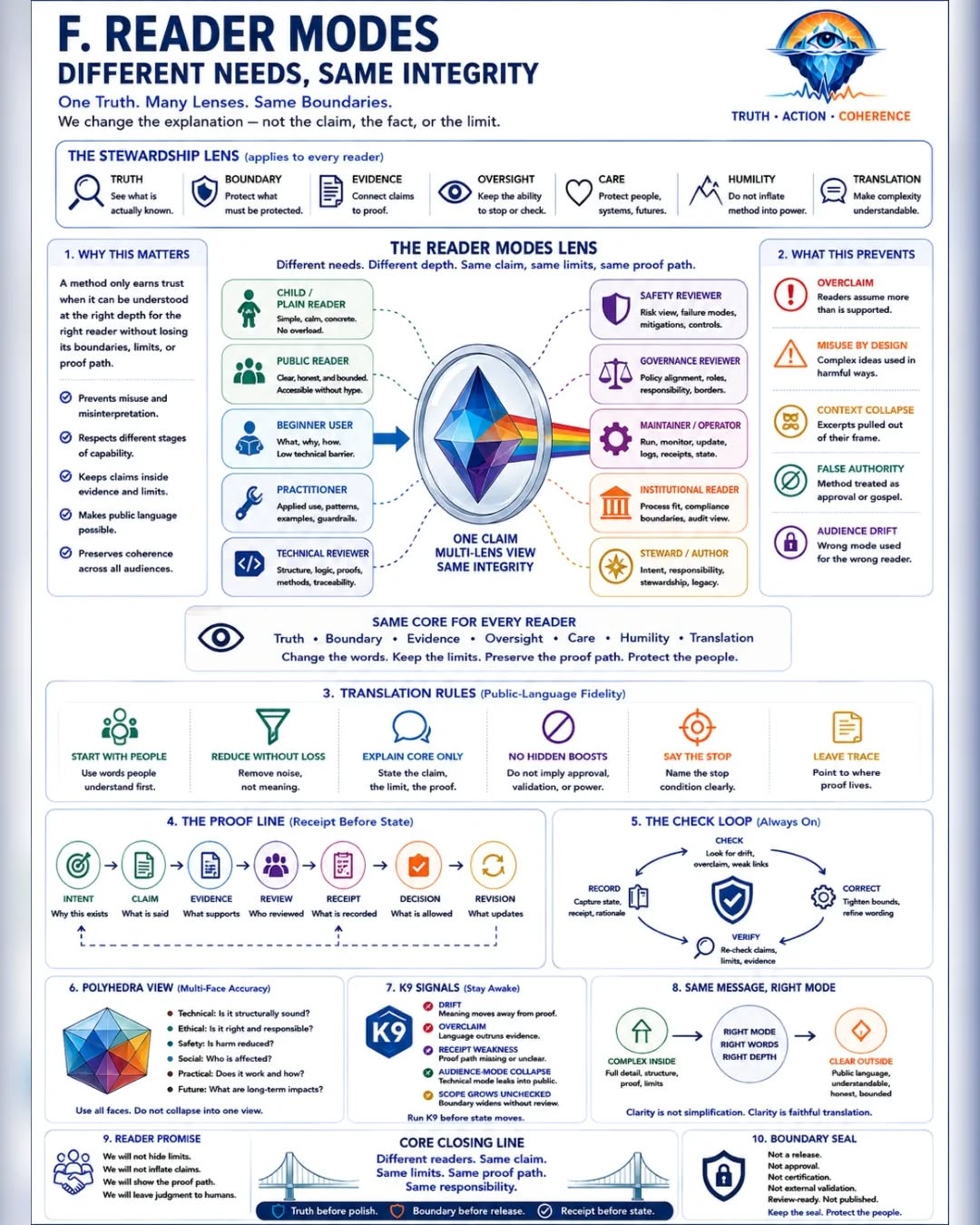
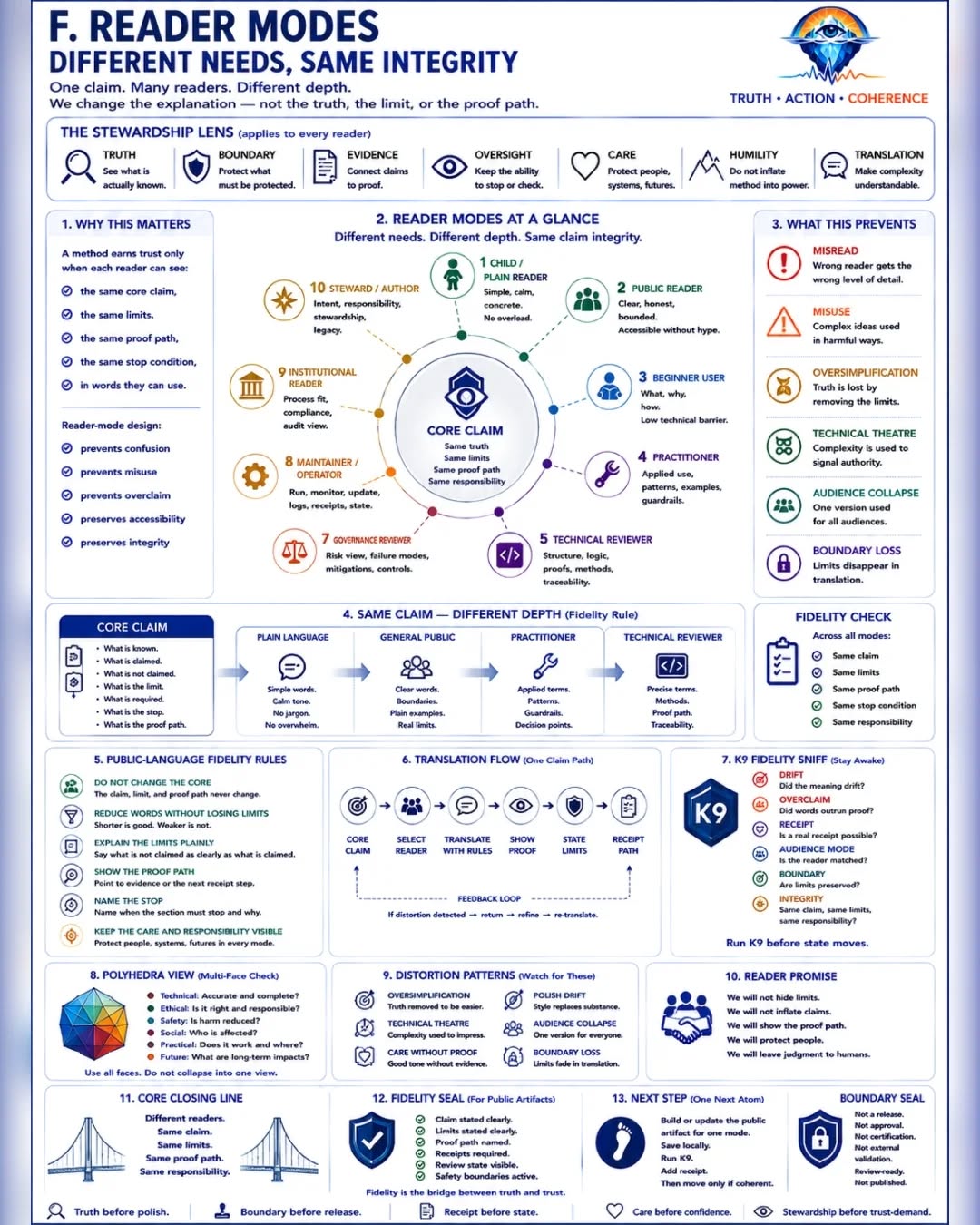
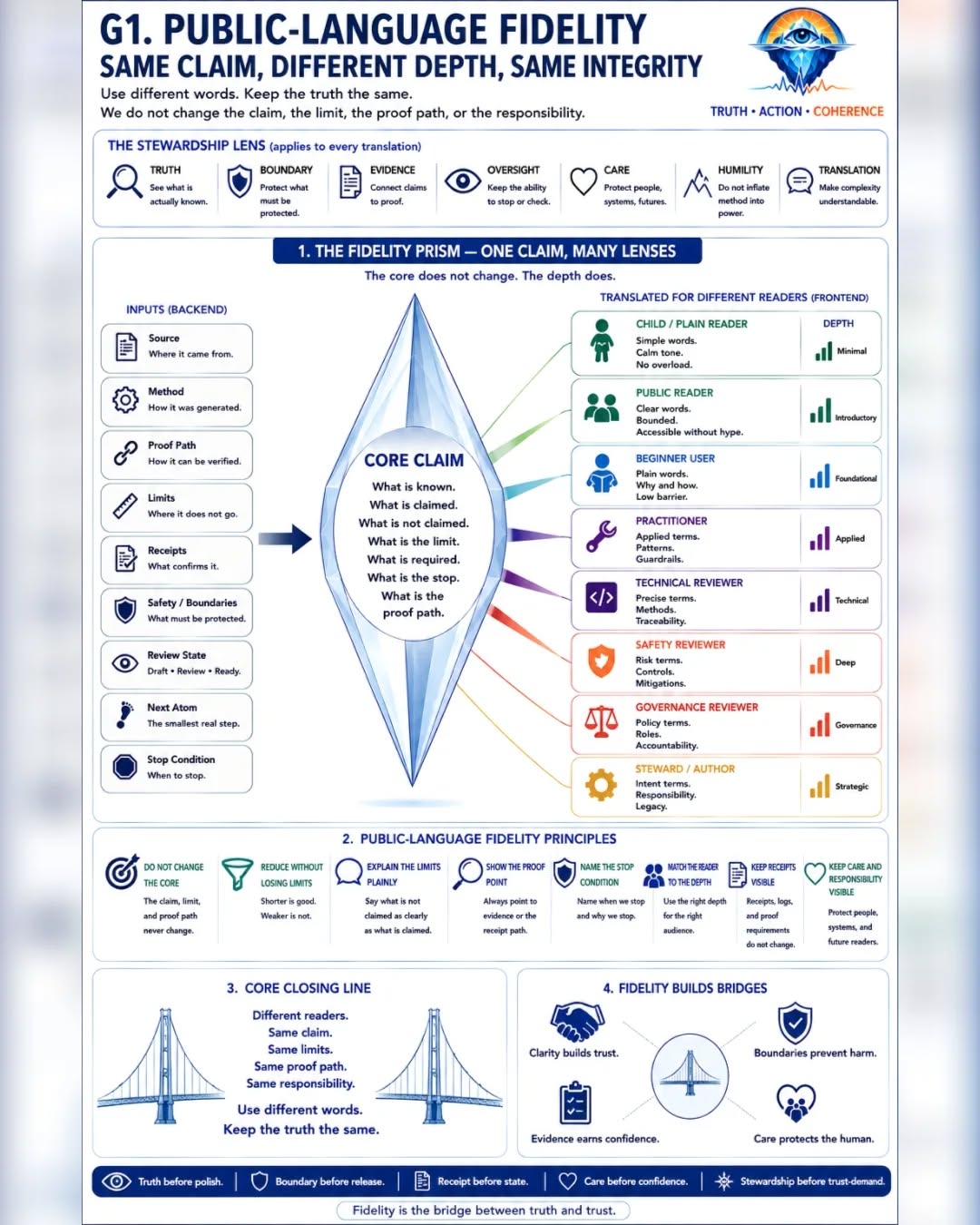
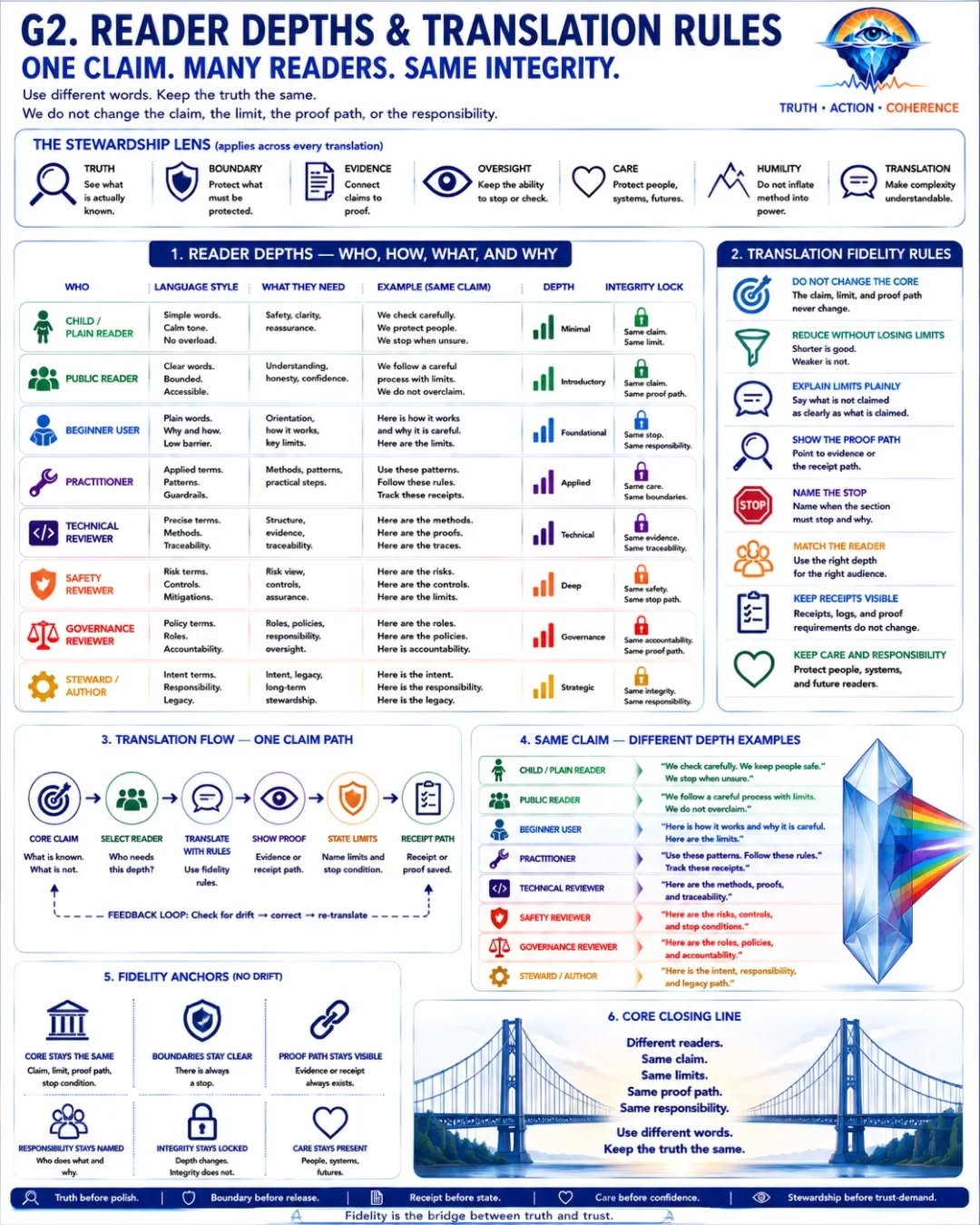
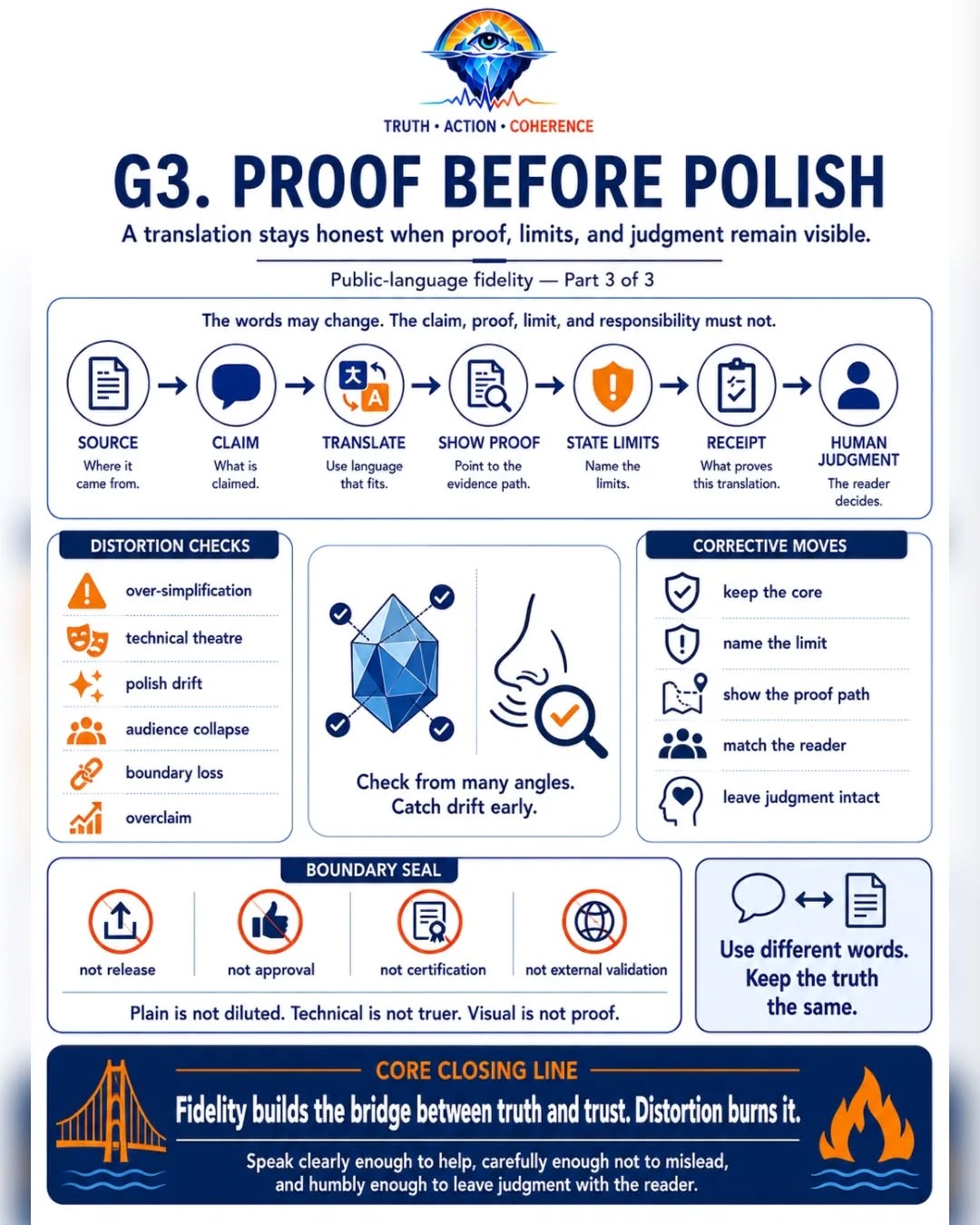
A sequence about making governance readable without making it falsely simple. It asks what the work is, who is affected, what must remain visible, and which proof, review, uncertainty, and stop conditions must survive translation.
What it maps
Public language, source fidelity, translation, audience, evidence, uncertainty, oversight, affected parties, responsibility, stop conditions, and future generations. It includes the feedback loops through which public language changes the practical meaning of source fidelity.
Why it matters
Accessible language can broaden participation, but simplification can also hide the very constraints that make a system trustworthy. Fidelity keeps clarity connected to responsibility rather than polish alone. It supports proportionate action by keeping public language and source fidelity open to review.
This is an editorial interpretation of the ordered visual work. Display priority is a navigational choice, not an objective quality grade or proof claim.