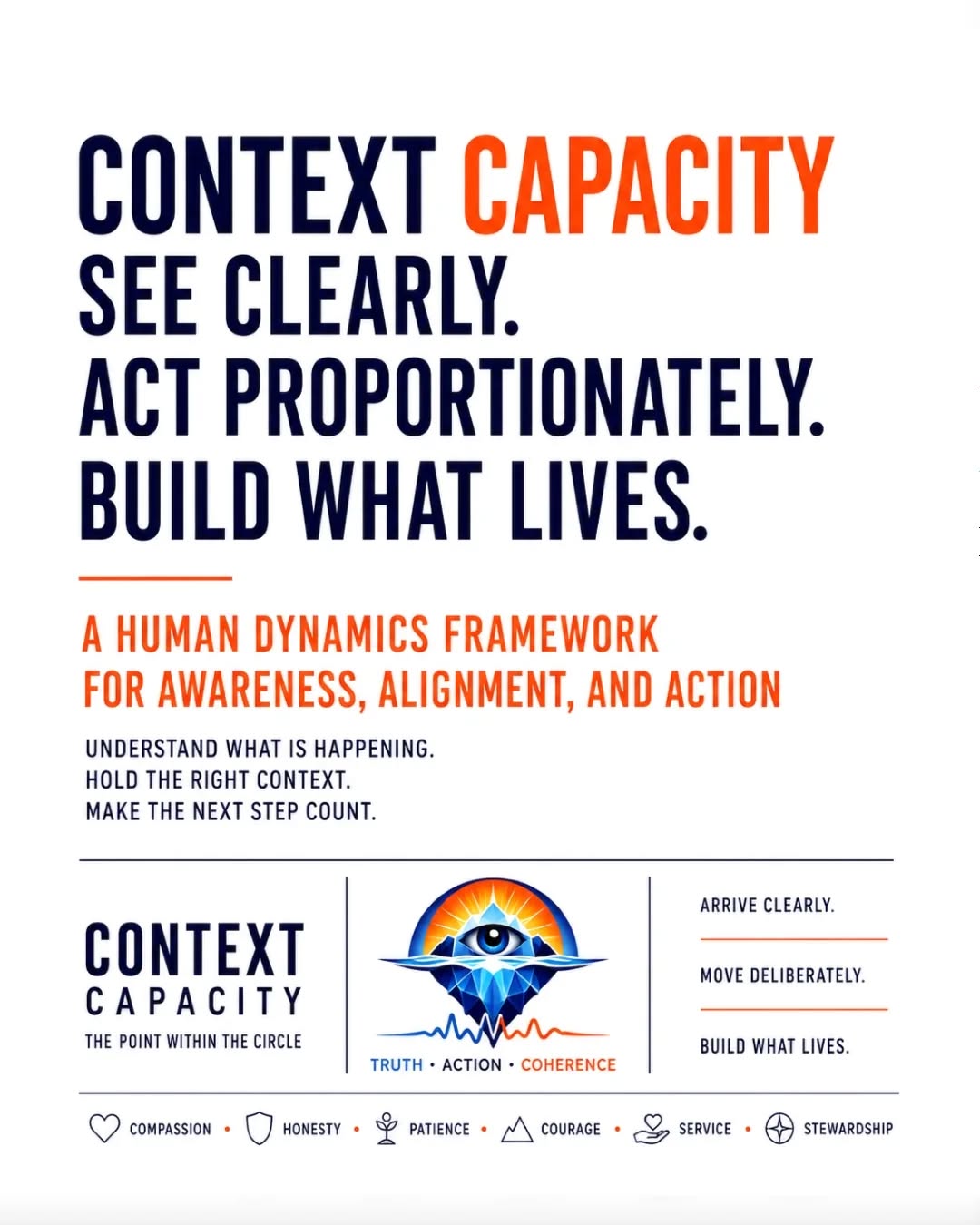
CONTEXT CAPACITY — HOLD THE FULL CIRCLE
Summary
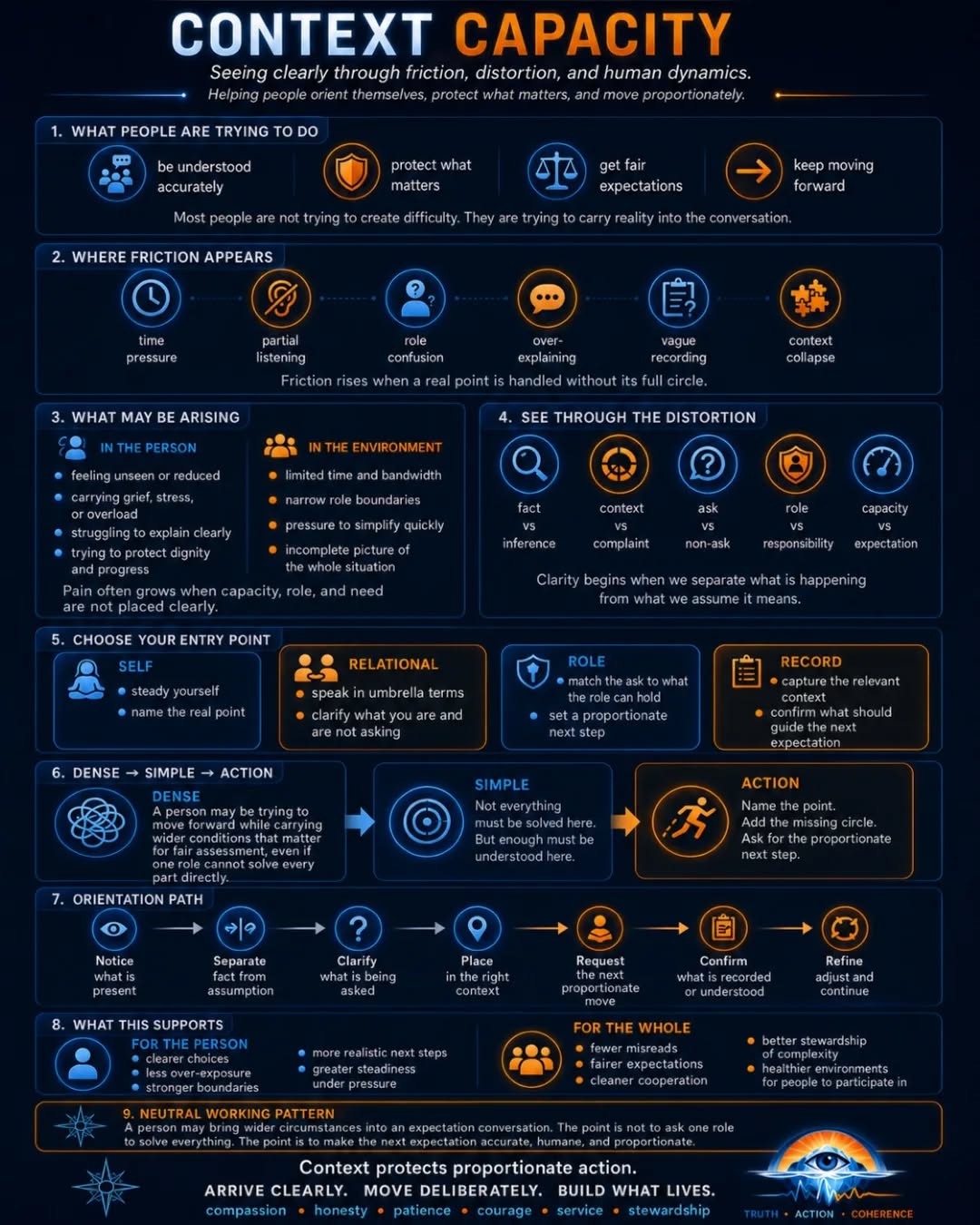
A relational and operational reflection on the cost of handling a valid point without its full circle. It restores context by asking what is known, assumed, possible, bounded, and proportionate before a conclusion hardens. The sequence links facts, assumptions, and capacity without collapsing their differences.
What it maps
Facts, assumptions, capacity, role, pressure, unfinished context, evidence, boundaries, clarification, and the recovery of a fuller frame around conflict. The sequence also shows where facts and assumptions align, conflict, or require separation.
Why it matters
Reduction creates distortion: context becomes complaint and limitation becomes failure. Holding the full circle supports fairer interpretation, lowers unnecessary friction, and makes the next step more workable. The result is a stronger basis for deciding what facts and assumptions require.
This is an editorial interpretation of the ordered visual work. Display priority is a navigational choice, not an objective quality grade or proof claim.