A HUMAN-FIRST SYSTEM CAN BE QUESTIONED, REFUSED, CORRECTED, AND LEFT
Summary
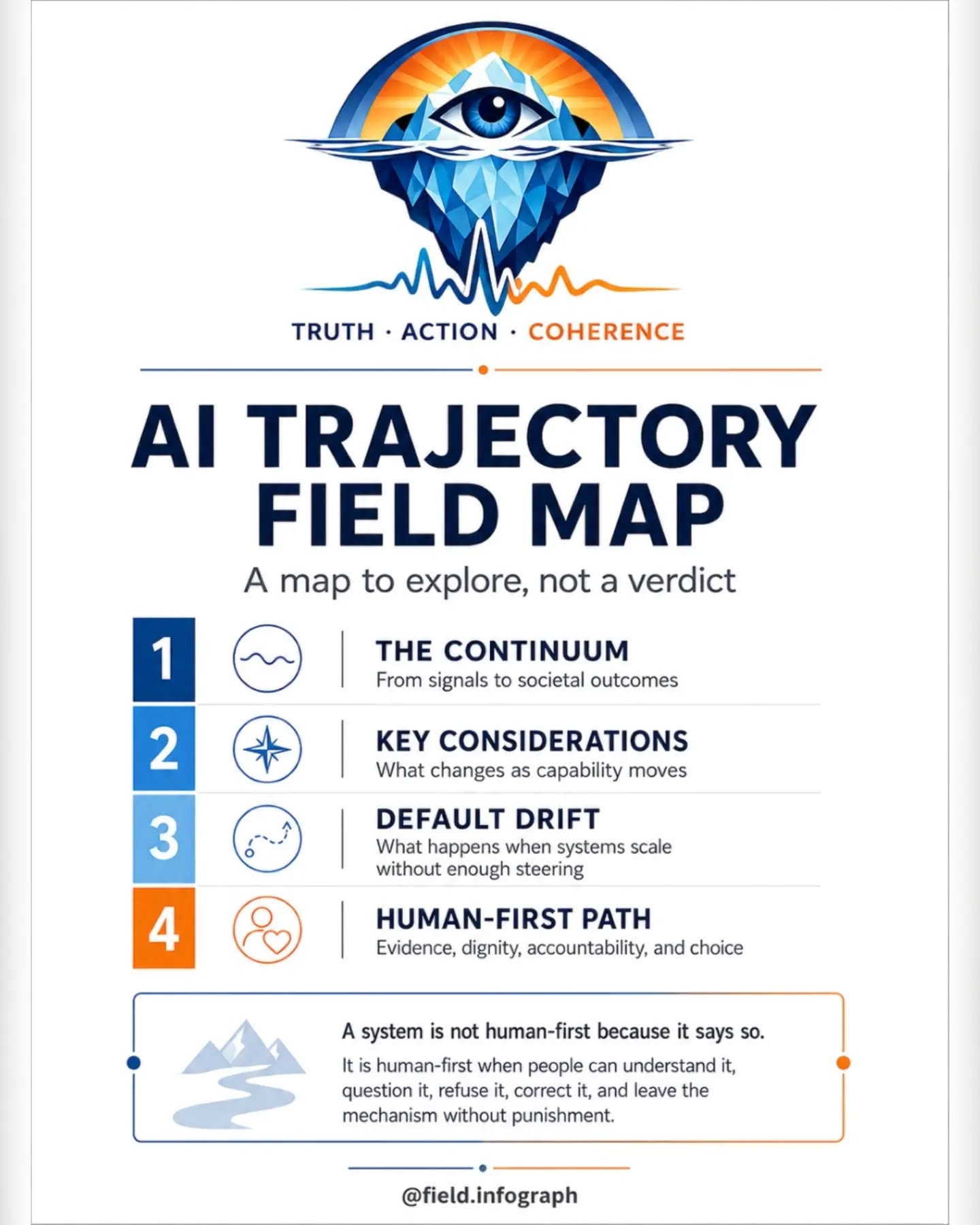
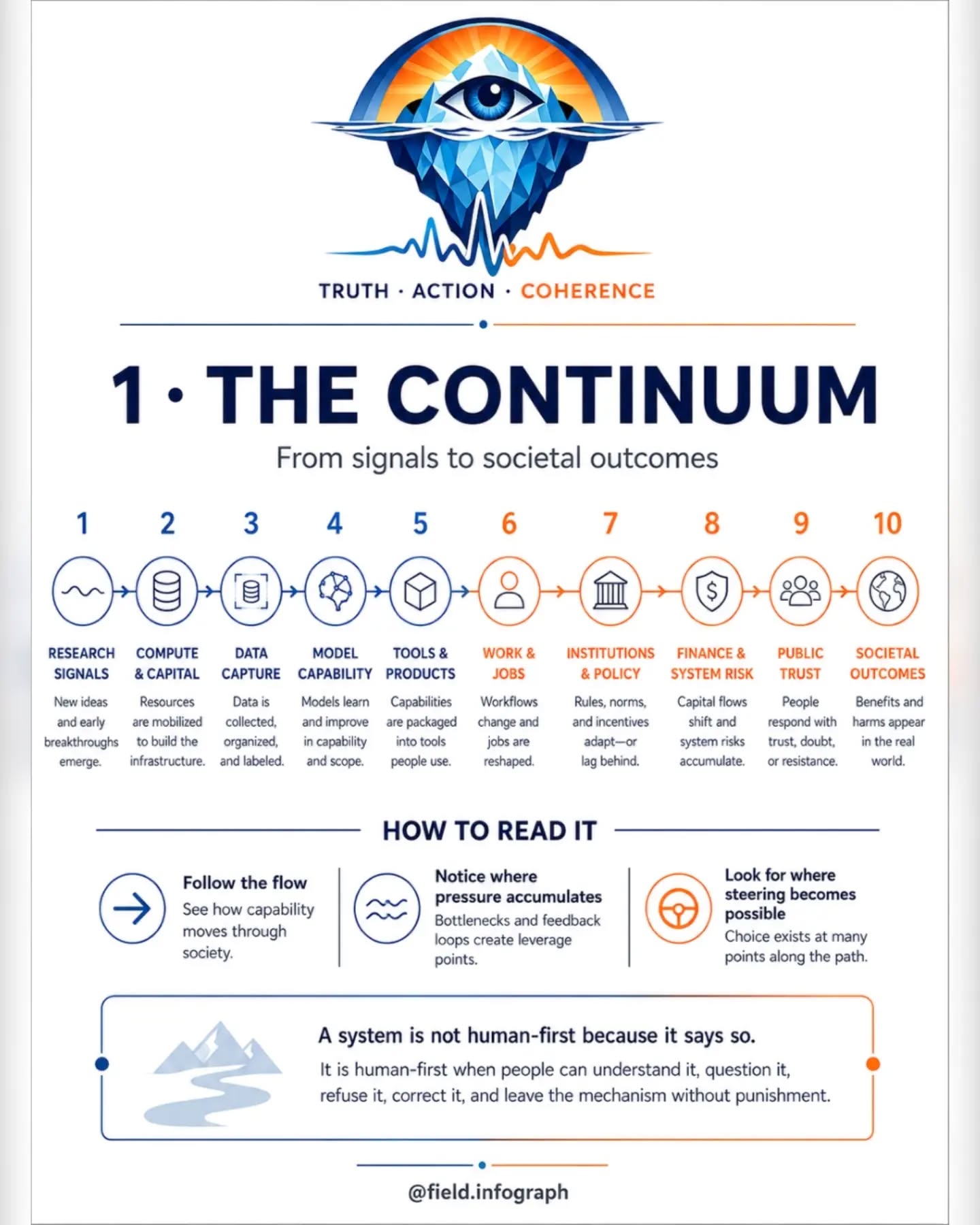
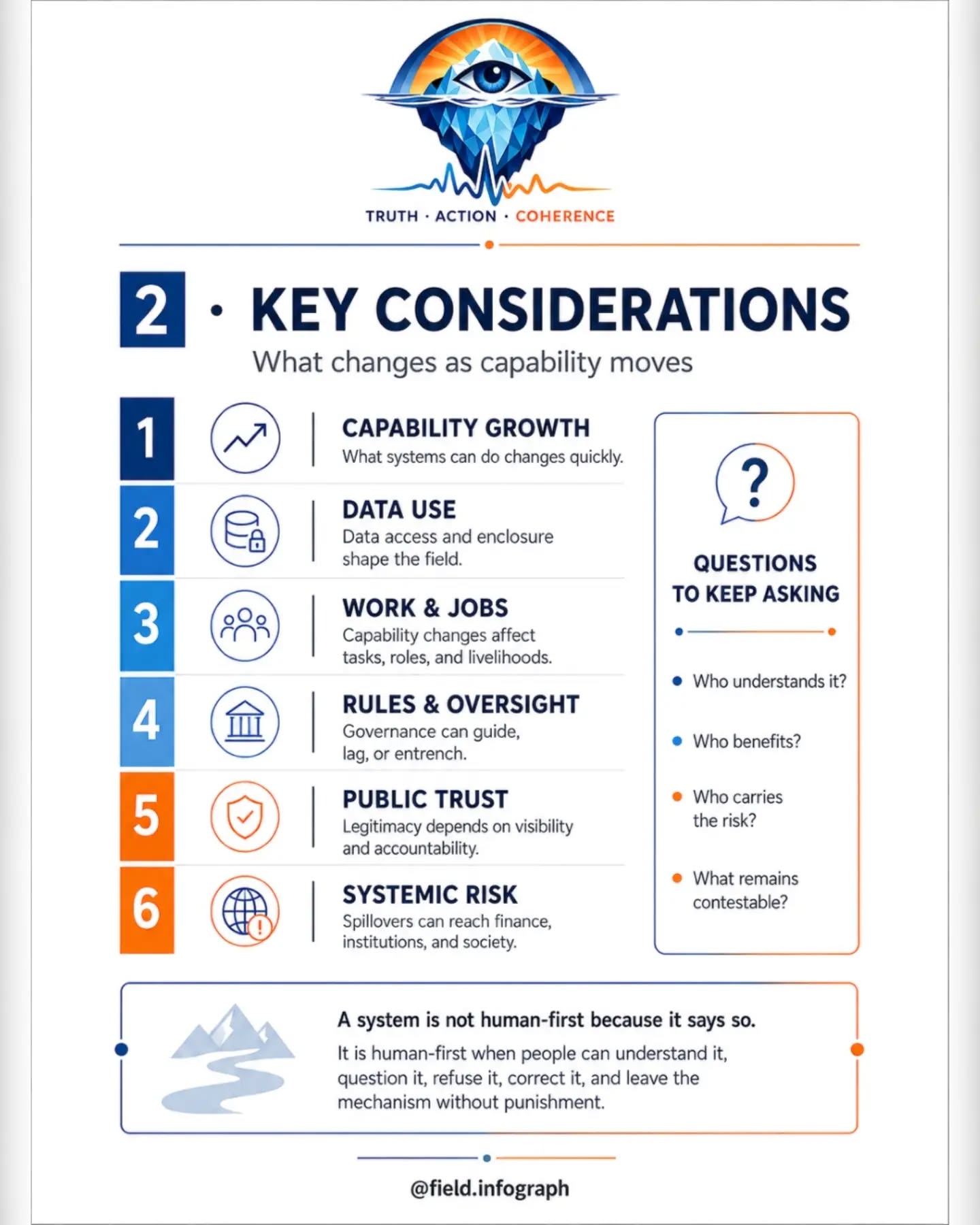
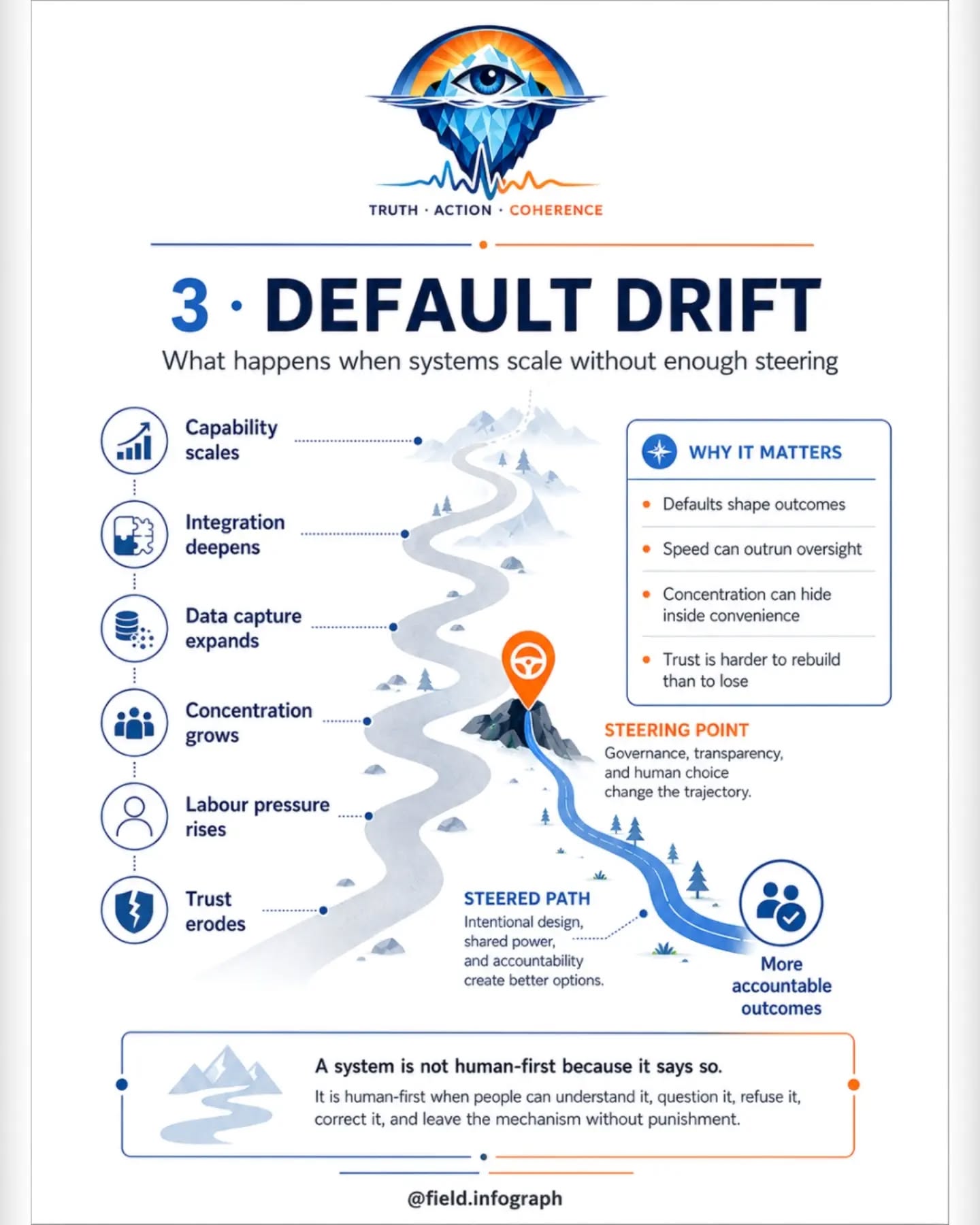
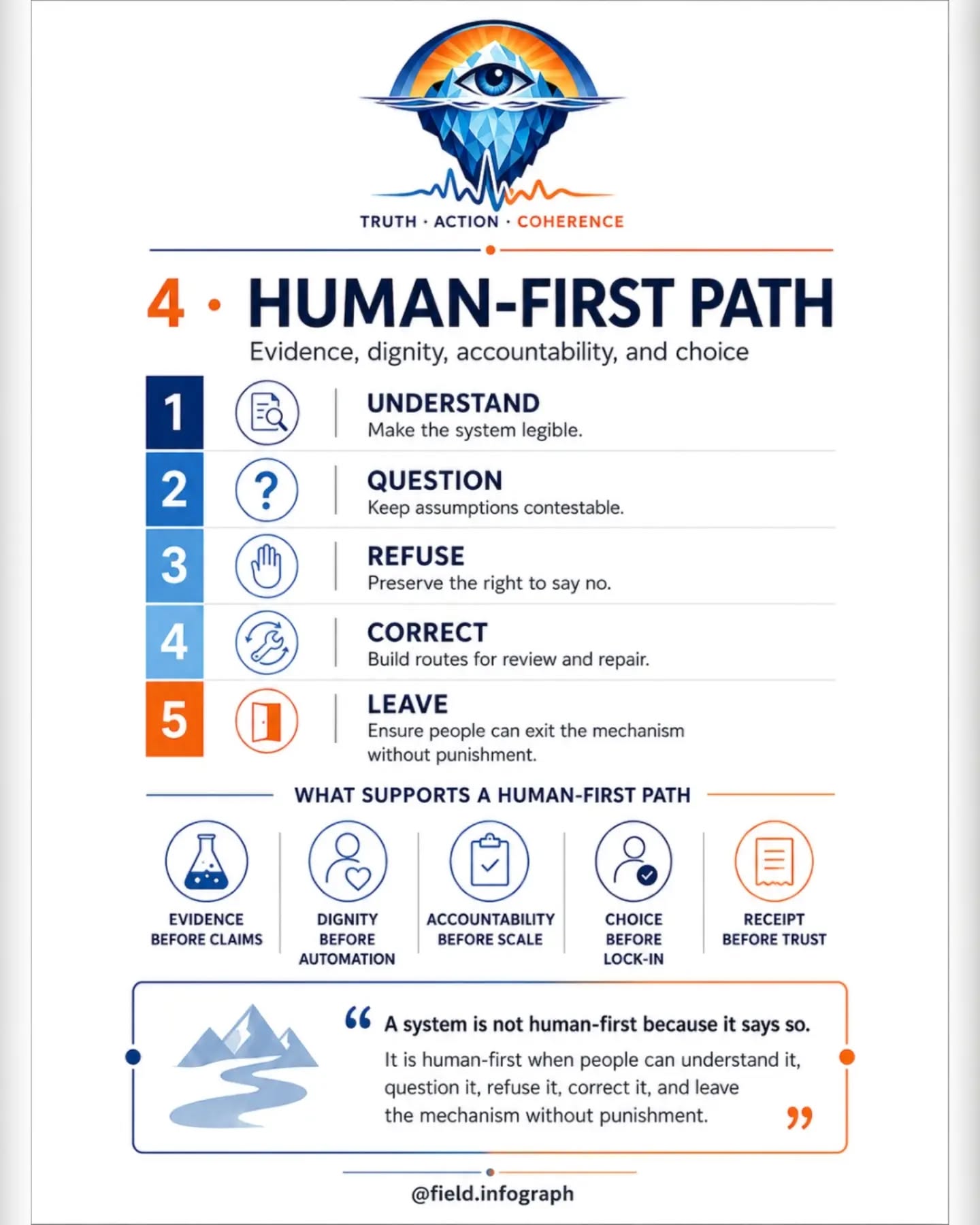
A governance sequence rejecting human-first language without human-first mechanics. It asks whether a person can understand the system, question its frame, refuse participation, correct the record, and leave without retaliation or concealed penalty. It places understanding, question, and refusal inside a shared decision field.
What it maps
Understanding, question, refusal, correction, exit, retaliation, dependency, permission, coercion, records, access, dignity, and the difference between stated freedom and operational freedom. It includes the feedback loops through which understanding changes the practical meaning of question.
Why it matters
A system can speak the language of care while arranging dependency underneath. Mechanism-level tests make human values observable and prevent permission without real exit from being mistaken for consent. It supports proportionate action by keeping understanding and question open to review.
This is an editorial interpretation of the ordered visual work. Display priority is a navigational choice, not an objective quality grade or proof claim.